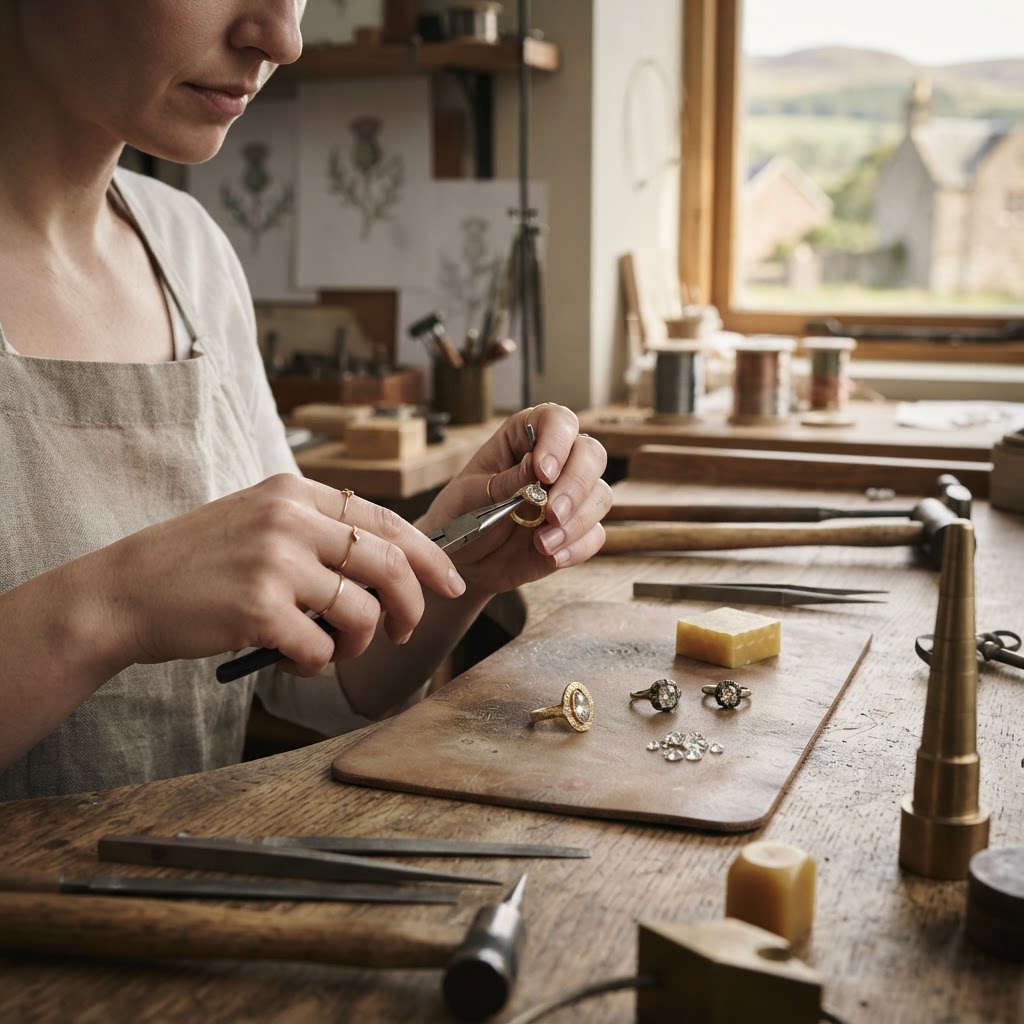
Heirloom jewellery redesign in Lanarkshire for new designs
An heirloom doesn’t have to keep its original design to remain part of your story. Heirloom jewellery redesign in Lanarkshire starts with assessing...
An heirloom doesn’t have to keep its original design to remain part of your story. Heirloom jewellery redesign in Lanarkshire starts with assessing the piece, deciding which gemstones or metal can be reused, then shaping a new design around how you’ll wear it. The result could be an updated ring, a better fit or an engagement ring designed around an inherited stone.
It’s understandable to want to preserve the important parts of a piece while changing details that no longer suit you. The key decisions are practical: the condition of the materials, the design you want and how the finished jewellery should fit and function.
This guide explains how heirloom jewellery is assessed, remodelled and altered, including the choices involved in redesigning it as an engagement ring. You’ll also learn how a project moves from an initial idea to a finished piece, so you can identify the details that matter before taking the next step.
Key Takeaways
- Use hallmarks to identify common precious metals: 375 indicates 9ct gold, 750 indicates 18ct gold and 925 indicates sterling silver.
- Before choosing a new design, consider which gemstones and metals can be reused and whether different gold types can be combined.
- The remodelling process moves from assessing the piece and shaping a design to making the finished jewellery; timescales depend on the project.
- For inherited jewellery that needs altering, the condition of each gemstone helps determine whether it can be used in the redesigned piece.
- An inherited gemstone can form the starting point for an engagement ring redesign, with the setting and overall design planned around it.
Metal hallmarks and combining gold types
Identify the metal before deciding how an heirloom can be remodelled. Hallmarks offer useful clues, while the design plan determines whether existing gold can be incorporated or needs another treatment.
Look for these common marks on gold and silver pieces:
- 375 indicates 9ct gold.
- 750 indicates 18ct gold.
- 925 indicates sterling silver.
Use a mark as a starting point, not as the only factor in your design decision. A ring and a necklace may carry different hallmarks, even if they look similar in colour. Record each mark and the item it belongs to before planning a combined design. If no clear mark is visible, leave the metal type open until the piece is assessed.
Different gold types can be used in one design. For example, 9ct gold can form a band while 18ct gold is used for settings. This can retain more than one inherited item while making their roles in the new piece clear. Decide which metal should form each part, then consider how its colour will sit beside the other gold. A Bespoke Design Service can help organise these choices into a single design plan.
Refining or replacing other metals
Consider white gold, platinum and other metals separately from yellow gold. One option is to refine the existing metal; another is to put its value towards a piece made with new metal. Compare these routes with your intended design. The choice depends on whether retaining the material or achieving the planned finish matters more.
Keep each metal identified during planning so you can compare the original materials with the requirements of the new design. For example, an inherited platinum piece may be considered for refining, or its value may contribute towards new metal. The same decision applies to white gold and other metals. Let the design, rather than colour alone, guide your choice.
Reusing or adding materials
Existing gemstones and metals can be reused in a redesign where suitable. First, list the available stones and metal pieces; next, assign each one a role in the new design. If the layout needs a different balance, new metal or gemstones can complete it. Compare any proposed additions with the heirloom’s colour, shape and intended use.
A gemstone might become the centre of a redesigned ring, with smaller stones arranged around it. Alternatively, the design may retain the original band and introduce a new setting. These examples show why each component should be assessed separately. Keep, refine, replace or add materials according to the design plan, rather than assuming the whole heirloom must remain unchanged.
For a practical starting point, group pieces by hallmark, then note any gemstones and the role each could play. A 375-marked band and a 750-marked setting, for example, could be considered for separate parts of one design. Record which original materials are priorities to retain. This gives the design process a clear set of materials and decisions to work from.
Remodelling heirloom jewellery into new designs
Rings, necklaces, bracelets and earrings can all provide components for a new design, depending on their materials and condition. In Lanarkshire, as in Glasgow, the core decisions are what can be reused, what the new design requires and how the piece will be made.
Choosing heirloom pieces to redesign
Start by listing each piece and its components. An inherited ring might contribute a gemstone, while a necklace could provide metal for a different design. Earrings may hold stones that can be arranged in a new setting. Consider the intended item, the condition of each component and the features you most want to retain.
Then group the materials by their possible role. A small gold pebble design, for example, requires 5g of gold. This gives a concrete reference point when considering how much existing material might contribute. If the heirloom contains less gold than the chosen design needs, the plan can account for additional material. The required amount depends on the finished design.
Planning a new design
Remodelling turns selected materials into a design with a defined shape and arrangement. Computer-aided design (CAD) can help show how a piece may look before it is made. Review the stone placement, setting proportions and how the inherited material fits the new form.
Use the design stage to resolve practical choices before production. A ring with one central stone needs a different layout from one with several smaller stones. A small gold pebble design also has specific material requirements, so compare its form with the gold available. Clear decisions help identify whether new metal or gemstones may be needed.
Approving designs and estimates
Approval is the point when the proposed design can move towards making. Check the details that affect the finished piece: its shape, material allocation and gemstone positions. If you want a change, address it before approving the design so the agreed plan and estimate match.
Project estimates depend on the materials, the amount of new work and the design’s complexity. A straightforward remodel using existing components involves different decisions from a detailed setting with additional materials. A 50% deposit secures a jewellery remodelling project in the studio diary. Before committing, align the approved design, estimate and deposit arrangement.
After approval, the design may be developed through detailed CAD renders or further hand-drawn designs, depending on how the piece will be made. These steps turn the agreed layout into production instructions. Keep the approved version as the reference for the final result, particularly when the project combines inherited stones with new materials.
How does the remodelling process work?
A remodelling project moves from assessment and design to approval and making. The materials, complexity and workshop schedule shape its budget and timescale.
Reviewing guide prices and budgets
Set a budget by defining the work, rather than treating every inherited piece as the same project. A simple alteration involves different materials and making steps from a complete redesign with several gemstones. The metal, stone settings and amount of new work all affect the estimate. List the outcomes you need, such as resetting one stone or redesigning several pieces.
Make sure the proposed work and estimate align. A three-stone ring using inherited diamonds, for example, involves different design decisions from a new setting for one stone. A guide price is a starting point, not a substitute for a project-specific estimate. Compare the materials, design work and making steps included, then set your budget around the agreed scope.
Understanding costs and deposits
Remodelling costs reflect the design’s complexity, the metal and settings used, and whether existing materials can be incorporated. Sketches or CAD renders may form part of the design stage. Before approving the project, make sure the estimate explains the planned work and states when a deposit secures a place in the workshop schedule.
Making a remodelled piece generally takes between four and eight weeks, although it can take longer depending on the artisan’s availability. Build your schedule around the agreed design and production stage. Keep the written estimate and deposit record together, along with the project scope, payment stages and expected making period.
Before handing over inherited jewellery, keep a written description of each item, including visible hallmarks and stones, and take photographs. Retain existing insurance documents separately, alongside the handover record and agreed work. This creates a clear reference for the item and project without treating a receipt as proof of insurance cover.
When looking for heirloom jewellery redesign in Lanarkshire, look for a service that assesses inherited materials and plans a new design. Glasgow is another location to consider, but the useful comparison is the process: assessment, a defined design, an estimate and a clear making schedule.
An assessment before redesign should record the metal marks, the number and condition of gemstones, and any visible damage. These details help show which materials may be suitable for reuse and which parts need a different design approach. A condition check is not the same as a monetary valuation; it informs the practical decision about whether each component can be incorporated.
Use these steps to organise the project:
- Make an inventory of each inherited item and its visible components.
- Agree the intended design and the materials it will use.
- Review the estimate, deposit terms and making schedule before approval.
Altering inherited and heirloom jewellery
The main risks are losing original details, changing the piece’s appearance and finding that a gemstone is unsuitable for reuse. Assess each component and agree which features must remain before work begins.
Planning changes to inherited pieces
Begin with an inventory of the item, its gemstones and visible details. Record what you want to keep, such as an engraved date, a particular setting or the original stone. Then describe the change you need, such as making a ring wearable or turning a brooch into a pendant. This separates essential features from parts open to redesign.
Match the requested change to the piece’s materials and condition. A gemstone intended for a new setting needs to be assessed for suitability before reuse. The setting must also suit the stone and the proposed design. If a necklace has several stones, decide whether to retain them together or use them in separate pieces.
Write down the design priorities before agreeing to alteration:
- Identify the feature that must remain unchanged.
- List the materials you want considered for reuse.
- Describe how the finished piece should be worn.
For example, keeping a central stone may preserve the piece’s main feature while allowing a different band or setting. A clear priority list helps focus the design discussion and prevents secondary details from overtaking the main purpose.
Considering alteration risks
Changing a piece can affect more than its shape. A new setting may change how a gemstone sits, while removing an old detail can alter the appearance that made the heirloom recognisable. Decide which features are essential before approving a design. Keep photographs of the original piece as a reference for its visible details.
Gemstone condition is another key consideration. A stone intended for remodelling should be checked for suitability before it is used in the new design. If its condition or shape does not fit the plan, the design may need to change. Include this assessment before settling on a final arrangement.
Material reuse also has limits. A design may not accommodate every component from the original item, especially when the intended form differs substantially. For instance, stones from a cluster ring might need a different layout in a simpler ring. Decide whether your priority is preserving the original arrangement or adapting the materials to a new form.
Finally, compare the proposed design with your written priorities. Check the stone placement, setting, retained details and intended use separately. Record any agreed changes before work proceeds. This gives the design a clear reference and helps distinguish deliberate alterations from features that should remain part of the heirloom.
Engagement ring redesign
An inherited stone can become the starting point for an engagement ring, with the setting designed around it. The main decision is whether the stone’s condition, shape and size suit the intended design. Assess these details before choosing a setting, band or additional stones. This keeps the plan focused on the heirloom component rather than forcing it into a standard ring design.
Begin by defining what must remain recognisable. A ring might retain its centre stone but use a different band, or combine an inherited diamond with smaller stones. A three-stone arrangement can also give separate inherited gemstones clear positions. The right layout depends on the stones available and the proportions needed for the finished ring.
Stone condition affects the design options. Assess a gemstone for suitability before planning its new setting. Its shape and condition inform how it can be positioned and secured. If a stone does not suit your preferred layout, adjust the design rather than assuming every inherited detail must be reproduced.
Use a structured design sequence:
- Identify the inherited stone or stones and the features to preserve.
- Choose a ring layout, such as a single centre stone or a three-stone arrangement.
- Plan the band, setting and any additional materials around the selected stones.
- Review the proposed design before it moves into making.
A design can be developed through detailed hand-drawn plans or computer-aided design renders, depending on how the ring will be made. These representations make the setting, stone positions and overall proportions easier to review. Check that the proposed band and setting support the intended appearance before approving the final design.
Consider daily wear as well as appearance. A low-profile setting creates a different outline from a raised setting, and the band affects how the ring sits on your finger. Decide whether the original ring’s shape, engraving or another detail should remain visible. Record these priorities alongside the chosen stone arrangement so every design decision serves a clear purpose.
Before approval, compare the design with the original piece and your priorities. Confirm which gemstones are reused, where each stone sits and which details have changed. If the design includes additional stones or metal, make sure those elements appear in the plan. A clear, approved design gives the making stage a specific reference.
For an engagement ring design built around your inherited stone, book an engagement ring design appointment.
Jewellove: Loose Diamonds
Jewellove offers ways to plan a new ring when an heirloom stone is not the only material in the design. Browse Loose Diamonds if you’re considering an additional stone, or use the Ring Maker to compare ring designs and organise your choices. The Bespoke Design Service helps shape a design around your requirements, while the Diamond Quiz helps narrow down diamond options.
These tools are useful once you’ve decided which inherited features to retain and what the new ring needs. Compare the available choices with your design priorities before settling on a direction.
Visit Jewellove to explore the options.
Make a clear plan for your redesign
Start with the feature you most want the new piece to retain. It might be a particular stone, an engraving or the familiar outline of a ring. Use that priority to guide the design, then decide which details can change to make the jewellery work for you now.
For heirloom jewellery redesign in Lanarkshire, bring your ideas together before discussing a design. Note the pieces you want to use, their intended purpose and any features that must remain. This gives the design conversation a clear starting point and helps turn an initial idea into a considered plan.
Jewellove can help you explore a design direction that fits your requirements. When you’re ready, take the next step and discuss your redesign.
A well-defined plan gives you a practical way to move forward with confidence.
Frequently Asked Questions
How much does heirloom jewellery redesign cost in Lanarkshire?
The cost depends on the design, materials and work required. A simple change using an existing setting differs from creating a new ring around inherited stones. Additional metal, new gemstones, detailed settings and design development also affect the estimate. To set a workable budget, list the pieces to be redesigned and the features you want to retain. Then compare the proposed work with that brief before approving it.
How long does a bespoke jewellery redesign take?
Making a remodelled piece generally takes between four and eight weeks. This refers to the making stage, so the full project schedule also needs to account for agreeing the design and approving it for production. A detailed setting or revisions to the proposed design can affect the sequence. Ask for the expected making period alongside the project stages so you can plan around the ring’s intended use.
What is the process for redesigning inherited jewellery?
Start by documenting each item, including its visible details and any stones you want to retain. Next, define the new piece’s purpose and the features that matter most. The design plan then maps the inherited components to the proposed jewellery. Review the agreed layout and estimate before authorising the work. For a Lanarkshire project, photographs and a written inventory provide a useful reference during design discussions.
Can a jeweller reuse the original gemstones and precious metals?
Yes, existing gemstones and precious metals can be considered for reuse in a new design. The gemstone’s condition and the design requirements determine whether it suits its planned position. Metal can also be incorporated where it works with the new piece. For example, an inherited stone may become the centre of a ring, while the original metal forms part of its setting or band.
Which jewellers in Lanarkshire offer heirloom jewellery redesign?
Clare Blatherwick offers jewellery redesign and remodelling in Lanarkshire. Scarlett checks gemstones for suitability, and lead jewellery designer Jacqui works on remodelling projects.