Custom Eternity Ring Design in Glasgow, from Appointment to Making
A custom eternity ring for clients in Lanarkshire takes shape through choices about gemstones, setting, metal and personal details. A design...
A custom eternity ring for clients in Lanarkshire takes shape through choices about gemstones, setting, metal and personal details. A design discussion helps you compare these elements before production begins. The result depends on how the choices work together, not on one decision alone.
Choosing a ring for an anniversary or another milestone brings practical questions as well as design decisions. You may be weighing how the stones will sit, which metal suits the design and what details to settle before developing the ring.
This guide explains how bespoke design and personalisation work, what to consider when comparing metals and gemstones, and how a design can progress towards production with Jewellove. It also outlines the factors that shape the process, so you can organise your preferences before taking the next step.
Key Takeaways
- Map the milestone and design preferences you want the ring to represent before comparing gemstone arrangements.
- Prepare for the appointment by organising your design ideas and the details that will shape the production process.
- Consider whether gemstones or metal from jewellery you already own could be incorporated into a new design.
- Use Jewellove’s Ring Maker, Bespoke Design Service, Loose Diamonds and Diamond Quiz to organise design and gemstone choices.
Eternity rings for anniversaries and other milestones
An eternity ring can mark an anniversary, the birth of a child or another personal milestone. For example, a couple might choose diamonds to mark a wedding anniversary, while coloured gemstones can represent a birth month or shared preference. A bespoke eternity ring for someone in Lanarkshire can reflect that meaning through its stone type, arrangement, band and finish. Start by identifying the milestone. This gives the design a clear reference point.
A bespoke eternity ring lets these choices work together, rather than treating stone selection as the only decision. Consider whether a continuous line of stones suits everyday wear or whether a design with a plain section is more practical for your routine. Alongside the gemstone choice, note preferred colours, band width and whether the ring will sit beside wedding rings. These details help define the design brief before making begins.
A full eternity ring has stones set around the complete band. Resizing can be difficult because changing the band may disturb the settings or stone spacing. Options include choosing the correct size before making or selecting a half-eternity design with an unset section, which allows more scope for adjustment.
When comparing stone quality, consider each stone’s appearance, consistency and suitability for its setting. With diamonds, look at how cut, colour and clarity affect the overall appearance when stones sit alongside one another. Certification records grading information, so match each report to the stone it describes. Review the documentation alongside the stones rather than relying on a description alone.
Gemstone eternity rings use coloured stones instead of, or alongside, diamonds. A row of sapphires, for example, creates a different colour pattern from a band of diamonds. Check that the chosen stones form a consistent sequence in colour and size, especially when the design repeats a pattern around the band. Compare the stone type with the metal and setting before finalising the design.
Handmade wedding rings and eternity rings can be designed to sit together, but their profiles and widths matter. Include the wedding ring in the design discussion, or use a clear photograph if it is unavailable. A curved or fitted profile may be considered when a straight band leaves a visible gap. Matching the metal and finish can create continuity, while a contrasting gemstone arrangement makes the eternity ring distinct.
Use a simple decision sequence: identify the milestone, choose diamonds or coloured gemstones, then compare full and partial stone coverage. Next, consider how the band will sit alongside existing wedding rings. If you are comparing several gemstones, inspect their colour and proportions as a group, not just one at a time. This makes differences in the finished pattern easier to assess.
For a milestone ring, record both the symbolic choice and practical requirements. Note the intended wearer’s ring size, the rings it must fit beside and any preferred gemstone colours. These details give the maker clear parameters for a custom design and connect each decision to the finished ring.
Appointment process and production timeline
Use a design discussion to turn your preferences into a clear brief for a ring in Glasgow or Lanarkshire. Bring notes on the band profile, metal, setting and preferred stones. If the ring will sit alongside another band, include it in the comparison. Discuss how each choice affects layout, fit and comfort. A clear brief also gives later decisions a reference point.
For people in Lanarkshire, a design consultation can help develop a bespoke ring. Made-to-measure options allow the design to follow the wearer’s requirements. A 3D design is a separate visual format, not a requirement for custom work. Sketches, stone selections and design references can also guide discussion and approval.
Use the appointment to compare styles against practical needs. For example, a low setting may suit someone who wants fewer raised details, while a broader band changes the ring’s proportions. Discuss how stones will be arranged, the band’s profile and how the finished design should sit against existing jewellery. Record agreed choices so the production brief stays consistent.
- Bring reference images or a written list of preferred styles.
- Share the intended ring size and any fit requirements.
- Identify the metal and stone choices under consideration.
- Note how the ring should sit alongside other jewellery.
After the design discussion, the production brief needs to capture the agreed details: ring size, metal, setting, stone arrangement and finish. Review the design information before making begins. A change to stone size or band width can affect neighbouring settings, so settle those proportions as part of the same review.
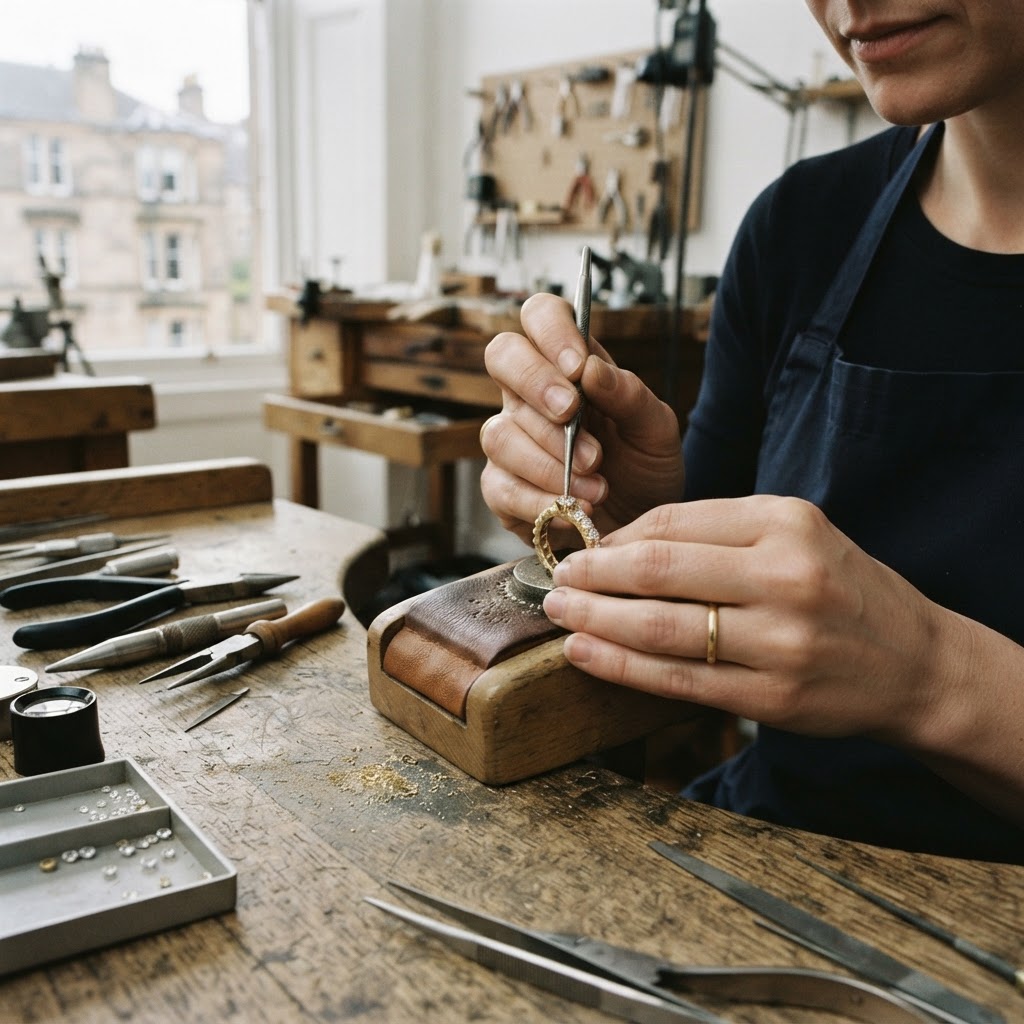
Making follows the agreed design. The maker forms the band, prepares the settings and places the stones. The process varies with the design: a patterned arrangement requires the stones to align across the band, while a simpler layout has fewer linked details. Final checks focus on fit, finish and secure settings.
Production timing depends on the design’s complexity and selected materials. A ring with a repeated gemstone pattern involves different making steps from a plain band with a small group of stones. Confirm the agreed sequence and any design decisions that must be final before work starts. This helps set clear expectations without assuming every bespoke ring follows the same schedule.
To progress your design, organise your preferences into a short brief, then use a bespoke ring design service to develop the details. Keep the appointment focused on choices that affect the final ring: fit, proportions, stone layout and finish. Those decisions give the workshop a usable specification.
In-store customisation and personalisation
Use a design discussion to turn personal preferences into clear decisions. Start with the purpose of the ring, such as marking an anniversary or complementing engagement rings. Then organise ideas into practical categories: gemstone, setting, band shape, metal and finish. This makes it easier to compare options without changing several parts of the design at once.
Personalisation can come from the stones themselves, their arrangement or details on the band. A row of blue gemstones, for example, creates a different pattern from diamonds set at regular intervals. Compare stone shapes and sizes together. A design with mixed shapes needs a deliberate order, while matching stones create a more even visual sequence. The setting should support the chosen pattern and suit the band’s proportions.
Existing jewellery can also inform the design. Gemstones from jewellery you already own can be incorporated into a new ring. Include the piece in the design discussion, or prepare clear photographs if it is unavailable. Identify which stone should be reused and what role it should play. For example, an inherited gemstone could sit at the centre of a new arrangement, with smaller stones alongside it.
Reusing a stone connects the new ring to an existing piece, but it also affects the design brief. The stone’s shape, size and condition influence how it can be set. Decide whether the design should highlight the gemstone or integrate it into a repeated pattern. Record the agreed placement alongside the band shape and setting, so the finished design reflects the intended balance.
Browsing styles can help define what to keep and what to change. Save examples of band profiles, stone layouts and finishes, then label each preference. One image might show a narrow band, while another shows a preferred gemstone colour. Separate those details rather than treating each reference as a complete design. This gives the design discussion useful comparisons and keeps the process focused.
- Choose the feature that matters most, such as a reused stone or a specific colour.
- Compare gemstone shapes and settings as a complete arrangement.
- Record the band profile, finish and relationship to existing rings.
- Use photographs or saved examples to communicate visual preferences.
Bespoke jewellery can coordinate with wedding rings without matching every detail. A similar metal finish, for instance, can create continuity, while a contrasting stone arrangement gives the eternity ring its own identity. Consider how the two rings sit together, whether worn separately or alongside one another. These practical comparisons help keep personal details compatible with the intended fit.
Before approving the design, review the selected stones, their placement and the band’s overall proportions. Check that each personal detail has a clear purpose. A short written record of those choices provides a useful reference as the design moves from discussion to making.
Metal affects an eternity ring’s colour, feel and relationship with other jewellery. A close colour match can create a coordinated set; a contrasting metal can make each piece distinct. Look at the ring in the context where it will be worn, rather than choosing from a colour description alone.
Platinum offers a naturally white-toned option for a band and can suit a design where the metal should sit quietly alongside diamonds. Yellow gold can add warmth, while white gold gives a cooler look. The choice changes the overall contrast between the band and its stones.
Compare the same design in each metal before settling the specification. Check how the setting looks, how the band’s colour works with the stones and how the ring sits alongside other pieces. If an existing wedding ring is yellow gold, a yellow-gold eternity ring can create continuity. Platinum alongside that band creates a deliberate contrast.
The design also affects how much metal is visible. A narrow band with closely set stones shows less uninterrupted metal than a wider band with open space between settings. Consider the profile from above and from the side. A raised setting may show more metal around each stone, while a lower profile changes the ring’s outline. These details matter when matching a wedding ring.
Metal choice can influence the design process as well as appearance. The selected material must work with the planned band shape and setting. For example, a detailed pattern of stones needs a layout that holds its spacing around the band. Discuss the intended proportions alongside the metal choice, so the decisions are assessed together rather than in isolation.
- Compare colour: Place platinum, yellow gold, white gold and rose gold beside existing jewellery.
- Check the setting: Consider how the metal frames each stone and affects the overall pattern.
- Assess the set: Look at the eternity ring beside the wedding ring and engagement ring.
- Record the choice: Include metal colour, band profile and setting in the design specification.
Precious metals can also carry personal significance. An existing family piece, for instance, may influence the colour or finish chosen for a new ring. Reusing your own metal is another design option. Treat it as a separate decision: the material, quantity and intended use affect how it can be incorporated.
Before approving the design, review the chosen metal alongside the stone layout and neighbouring rings. A consistent finish can link several pieces, while a different metal creates a clear visual distinction.
How much does a bespoke eternity ring cost in Glasgow?
The cost of a bespoke eternity ring depends on its specification, not one fixed design feature. The main factors are the stones, the metal, the setting and the work involved. A ring with a continuous line of diamonds has different material requirements from a band with fewer stones or a coloured-gemstone pattern. Define these choices first to understand what shapes the final quote.
Stone selection can change the total substantially. The type, size, quality and number of stones all affect the materials required. For example, compare a design using smaller stones around the band with one using larger stones spaced across it. Their appearance, setting needs and total stone requirements differ. Ask for the proposed selection to be itemised, so you can compare design options on the same basis.
Metal is another cost factor. Compare the same stone layout in each metal. This helps separate the effect of the metal choice from changes to the setting or band. A broader band, for example, requires more material than a narrower profile.
Design complexity also matters. A straightforward, repeated arrangement follows a different making process from a pattern combining varied stone shapes or distinctive settings. Consider which details are essential to the design. If a particular gemstone colour is the priority, simplifying the band or setting may preserve that feature while changing other parts of the specification.
- Stones: Compare gemstone type, size, quality, quantity and arrangement.
- Setting: Assess how each stone is held and how the pattern is constructed.
- Personal materials: Reusing your own gemstones or metal can affect the design plan.
- Changes: Keep the comparison consistent by changing one specification at a time.
Existing materials may affect the choices involved. Your gemstones can be incorporated into a new ring, and your metal can be reused in an eternity ring design. The stones’ shapes and sizes influence their placement. The amount and form of the metal affect its use in the new band. Include these materials in the design discussion from the outset.
To compare proposals, ask for each version to state the same details: stone type and arrangement, metal, band profile and setting. This makes the effect of each change easier to assess. A clear specification also helps distinguish a material change from additional design work.
Arrange a design discussion to develop a specification for your ring.
Jewellove: Loose Diamonds
Jewellove offers Loose Diamonds and tools to help organise ring design choices. Use the Ring Maker to explore design options, or take the Diamond Quiz to narrow your diamond preferences. The Bespoke Design Service is a next step when you have a clear direction and want to develop a personal ring design.
For a custom eternity ring in Glasgow, these options can help you compare stones and organise preferences before developing the design. Start with the Diamond Quiz if you are still deciding on stones. Use the Ring Maker to explore how design choices come together.
Visit jewellove.co.uk to explore the design tools and services.
Turn your design preferences into a clear next step
A custom eternity ring in Glasgow starts with choices that reflect how you want the ring to work alongside your existing jewellery. Before moving forward, decide which design points are settled and which still need comparing. You might have chosen the metal but still be weighing stone options, or have a gemstone in mind without a final setting.
Jewellove offers Loose Diamonds, a Ring Maker and a Bespoke Design Service to support your next decisions. Use the Ring Maker to organise design preferences, browse Loose Diamonds when comparing stones, or develop a more individual brief through bespoke design. Bring the details you have already decided and identify the questions that remain open.
A focused design discussion can turn your preferences into a practical direction. Take the next step when you’re ready to develop your ring.
Your design can move forward one clear decision at a time.
Frequently Asked Questions
Which jewellers in Glasgow make custom eternity rings?
Jewellove offers a Bespoke Design Service for ring design through its online platform, rather than an in-person Glasgow showroom. For customers in Glasgow and Lanarkshire, the Ring Maker can help organise design choices, while a Ring Design Consultation supports development of a bespoke brief. Use these options when you want to compare a design digitally and refine the details before deciding how to proceed.
What custom eternity ring designs and diamond or gemstone options are available in Glasgow?
Jewellove offers eternity rings, Loose Diamonds, a Ring Maker and a Diamond Quiz. Start by deciding whether the design should centre on diamonds, then use the available tools to explore ring choices and organise preferences. The Diamond Quiz can help narrow diamond selection; the Ring Maker supports design exploration. If you prefer coloured gemstones, make that clear in your design brief.
How long does it take to design and make a custom eternity ring in Glasgow?
There isn’t one timeline that applies to every bespoke ring. The design stage depends on how quickly you settle the ring size, metal, stone selection and setting. Making time then depends on the agreed specification and the work involved. To plan around an anniversary or another date, establish design decisions early and discuss the production sequence during your Ring Design Consultation.
Which metals and ring settings are best for a custom eternity ring?
The best combination depends on the ring’s appearance, fit and how it will sit with existing jewellery. Choose a setting that suits the selected stones and band design. For a practical comparison, assess the complete ring profile, including how the setting sits against neighbouring bands.
How do Glasgow jewellers compare with online custom eternity ring retailers?
The jeweller offers design consultations in person or online, and can send gemstones for customers to view at home during online consultations. Diamonds and gemstones at the Glasgow showroom come with certification from a leading grading laboratory.