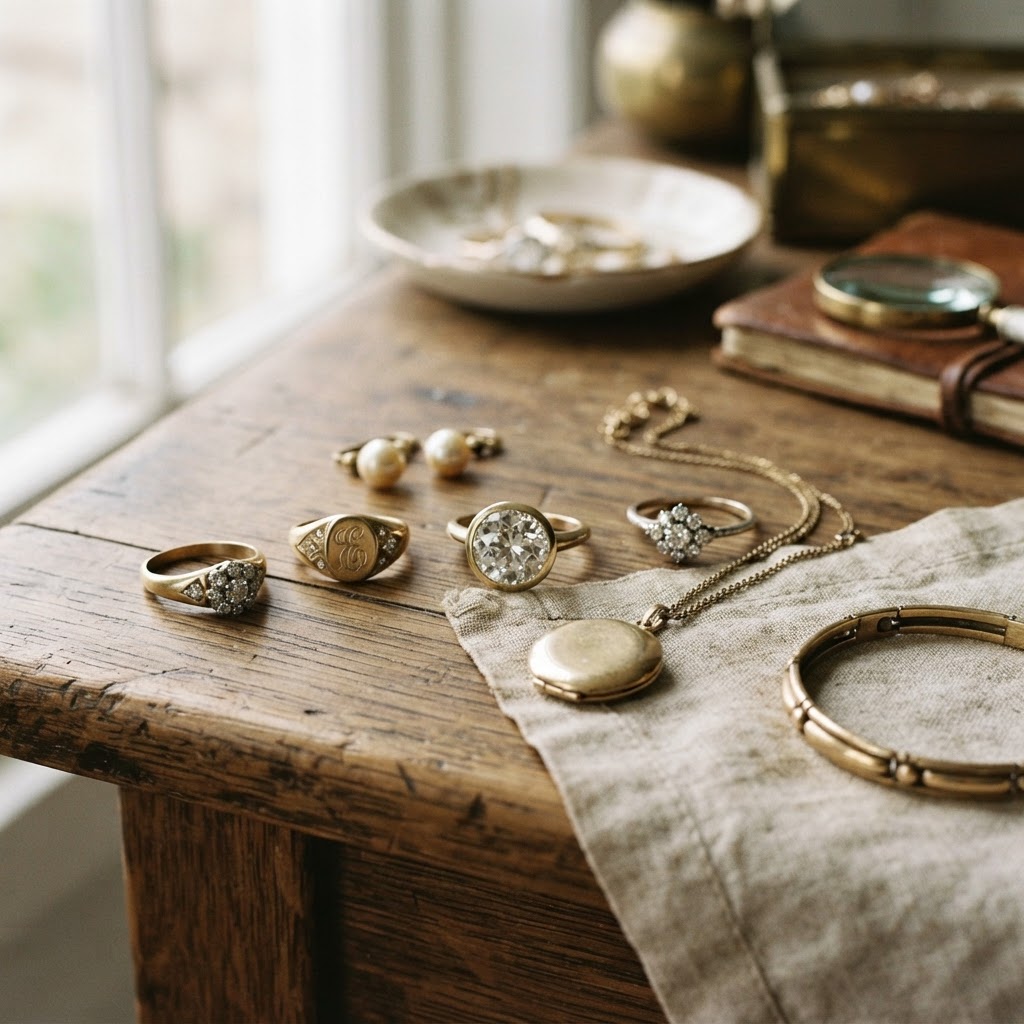
Inherited jewellery: decide whether to sell, redesign, gift or keep it
Selling isn’t the only practical choice: deciding what to do with inherited jewellery can mean keeping it, passing it to someone in the family,...
Selling isn’t the only practical choice: deciding what to do with inherited jewellery can mean keeping it, passing it to someone in the family, selling it or redesigning it. Inherited diamonds can be set in a new ring, but their condition should be assessed before resetting. The right option depends on the piece’s sentimental value, family wishes and whether its current design suits the person who will wear it.
It’s understandable to feel uncertain about changing or parting with a piece that carries family history. You don’t have to decide everything at once. Separate what the jewellery means to you from what you want to do with it, then consider its condition and how it could be used.
This guide explains how to weigh keeping, gifting, selling and redesigning inherited pieces. It covers what to consider before resetting gemstones, how to preserve an heirloom’s history and how a bespoke design can give inherited stones a new form. Use these factors to compare the options and choose a next step that suits your circumstances.
Key Takeaways
- Compare sentimental value, condition and intended use before choosing to keep, gift, sell or redesign a piece.
- Discuss family preferences before passing jewellery on, and record who will receive each item.
- Have inherited gemstones inspected before resetting them, then consider whether a new design would make them wearable.
- Gather family records, photographs and previous documents to help preserve an heirloom’s history.
- Explore a bespoke design or ring-making tool when you want to plan a new piece around inherited stones.
1. Is it better to sell inherited jewellery or redesign it?
There isn’t one best choice for every heirloom. Compare its condition, likely value, sentimental importance and intended use. A piece with family meaning may be worth keeping or redesigning, even if its current style doesn’t suit you. A piece without personal significance may be easier to sell or pass on.
Before selling, arrange a professional valuation. It can help distinguish a piece’s potential value as a complete item from the value of its metal and stones alone. Those figures can differ, particularly for antique or vintage jewellery. A formal written appraisal isn’t necessary for every sale, but a valuation can inform your decision about a piece with potential significance or value.
Clarify the valuation’s purpose. An insurance appraisal and an estimate of what a piece might sell for on the secondary market answer different questions. Don’t treat one as a substitute for the other. Request the assessment that matches your decision, then compare the result with the piece’s condition and any restoration it may need.
To identify and assess inherited jewellery in the UK, inspect each piece for marks, materials, visible damage and loose stones. Jewellery described as gold, silver, platinum or palladium must have a hallmark to guarantee its authenticity and quality, according to the UK Government. Gather any receipts, previous valuations or gemstone reports, and record which documents belong to each item.
Inherited jewellery forms part of estate administration, so tax and probate depend on the wider estate and who has authority to distribute its assets. Establish whether the piece has been allocated to you before selling or trading it. The value of one item alone doesn’t settle the estate’s tax position.
Restoration can affect your decision. Older pieces may be worn or have insecure settings, and repairs can take time and money. If you don’t want to take on that work, selling may be a practical option. If the design matters, have the piece assessed before making changes. Careless restoration can alter or remove antique and vintage details.
Resetting offers another route. A ring’s stones could become a pendant, or separate heirloom elements could inform a new design. Consider which details you want to retain, such as a central stone or original setting. A bespoke jewellery design can help translate those choices into a wearable piece.
Selling and trading aren’t the same. Selling turns the item into money; trading exchanges it as part of another purchase. If an inherited collection includes fine timepieces alongside jewellery, specialist buyers such as Luxury Time NYC offer insight into how professional trade-in and valuation processes work for high-end items. Compare what each option means for your priorities, and don’t assume the metal value reflects the full value of a complete heirloom. Decide based on its condition, history and future use, not appearance alone.
2. Passing jewellery on to family or a family friend
Passing an inherited piece to someone who values it can keep its family story alive. Start by asking who would genuinely like to wear or care for each item. A relative may feel a strong connection to a brooch, while another may prefer a ring or pendant. Don’t assume the closest relative is automatically the most interested recipient.
Make a simple inventory before discussing options. Note each piece’s description, condition, stones and any known family connection. A photograph beside each entry helps relatives refer to the same item. Record preferences separately, so a shared discussion doesn’t become a contest over who speaks first or remembers the heirloom most clearly.
To divide jewellery fairly, agree on the process before allocating pieces. Ask each person to identify items with particular meaning, then compare those requests with wearability and the collection as a whole. Fairness doesn’t have to mean giving everyone an identical number of pieces. It can mean using shared criteria and explaining each decision consistently.
Consider a selection process. For example, relatives could take turns choosing from the remaining pieces, with the order agreed in advance. If one person wants a ring and another prefers its stones in a different form, discuss whether redesigning it could create separate pieces. The family may also choose to keep an item together when its history matters more than individual ownership.
Passing jewellery to a family friend can make sense when that person had a close relationship with its former owner. Explain the connection and ask whether they want the piece before making plans. A gift shouldn’t create an obligation to wear jewellery that doesn’t suit the recipient. Their preference matters, including if they would rather keep it safely than wear it.
Keeping an heirloom doesn’t require wearing it every day. You might hold onto a piece because another generation could value it later, or because it carries family history. Write down who originally owned it, who received it and any story attached to its design. Keep that record with the jewellery so its meaning doesn’t rely on family memory alone.
If several relatives are interested, make decisions item by item. One person might keep a necklace intact while another receives a ring. If a piece can be redesigned into more than one wearable item, discuss that option together rather than dividing it without agreement. Shared planning can preserve the stones and give each recipient a meaningful connection.
Once you’ve agreed on a recipient, record the handover and any family story in writing. Include the item’s description and the recipient’s name. This simple record reduces confusion later, especially when similar pieces move between relatives. It creates a clear family decision rather than leaving an heirloom’s next owner uncertain.
3. Resetting inherited diamonds and gemstones
A diamond or coloured gemstone can be reused in a new mount, but inspect it before planning the design. A jeweller should assess each stone for damage and other factors that affect whether it can be reset. A chip near an edge, for example, may affect how securely the stone can be held. The original setting may also show how the stone was positioned and protected.
Assess the gemstone separately from the surrounding metal. Note the stone type, visible condition, colour and cut, then record any identifying details from existing reports. Keep stones in their original settings until they’ve been inspected. Removing them without a plan can cause damage or make it harder to track which stone came from which piece.
Value depends on more than the amount of gold or the size of a diamond. The stone’s condition, quality, shape and documented history can all inform an assessment. A report or receipt may help identify a gemstone, but it doesn’t replace an examination of its current condition. Record what is known and distinguish documented details from family recollections.
Before choosing a new mount, decide what you want the heirloom to become. A ring may be redesigned as a pendant, or a loose central stone may suit a necklace. Some wearers even incorporate smaller gems into custom body jewellery or modern accent pieces, where material safety and skin compatibility are essential; for advice on safe metals and designs, BodyJ4You offers helpful guidance. Smaller stones can also be arranged around a main gem if their condition and sizes work together. Sketch the intended piece and identify which original elements matter most, such as the centre stone or a distinctive setting.
- List each gemstone and its current position in the jewellery.
- Record chips, abrasions, loose settings or missing stones.
- Mark the details to retain, such as a diamond’s original arrangement.
These notes create a useful design brief and help prevent stones from being mixed up when several inherited pieces are involved. If a necklace has several gems, photograph their positions before work begins. A clear record links each stone to its original item and family history.
Choose the new mount to suit the stone, not just a preferred style. A high setting may expose a stone to knocks, while a lower profile may suit frequent wear. The setting must fit the stone’s shape and condition. Before settling on its structure, discuss how the piece will be worn, whether as an everyday ring or an occasional pendant.
Redesign can preserve a significant gemstone while changing a form that made it difficult to wear. It may also bring stones from separate heirlooms together in one coordinated piece. Keep the original mount and any removed components with the family records. They retain information about the first design, even when the diamond or gemstone takes on a new role.
4. Understanding an heirloom’s history and sentimental value
A piece’s family history can shape its meaning as much as its design. Record the original owner, known occasions and how it passed between relatives. Add family photographs or written recollections where they help explain its significance. An engagement ring, for example, may represent a marriage, while a pendant may have been worn at family gatherings.
Gather related receipts, previous appraisals, gemstone reports, original boxes, warranties, family records and photographs. Keep notes with the corresponding item, rather than in a separate folder without clear labels. These details can help future relatives understand what they have inherited and preserve information about the gemstones and original design if the piece changes later.
Sentimental value is personal. Ask what the piece represents, who might want to wear it and whether its present style suits them. A relative may value an engagement ring because of its connection to a particular person, even if they rarely wear rings. Another may prefer a redesign that keeps the central stone but changes the setting.
Take time before making an irreversible decision. One family account describes a mother who inherited jewellery about twenty years earlier and never wore it. The example shows why ownership alone doesn’t determine whether a piece feels meaningful. Discuss its story with relatives and explain what you know before deciding to keep, gift or alter the heirloom.
Inherited jewellery should be evaluated and, if it is worth enough, fully insured. Insurance costs depend on the cover and the item’s assessed value, so there is no single cost for every piece. Keep any valuation and supporting records together, so the item’s identity and documented value remain clear.
Before wearing or storing a piece, inspect it for wear or damage. Check that stones are securely mounted before wearing it. Store it in a dry, fabric-lined box and check it occasionally. These steps help reduce avoidable damage to a sentimental item while it remains unworn.
Cleaning also requires care with the item’s materials and condition. Identify the metal and gemstones before choosing a cleaning method, especially if the piece includes delicate or previously repaired details. Avoid vigorous handling if a stone feels loose or a setting looks worn. Keeping the item dry and separate from other pieces can help prevent scratches while it awaits assessment.
Preserving an heirloom’s financial and sentimental value may mean leaving it unchanged. It may also mean redesigning it for regular wear, provided important family details remain understood and recorded. Note what you want to retain, such as an original setting or a gemstone linked to a relative. That record helps explain the piece’s history to the next generation.
5. Deciding whether to keep, gift or sell inherited pieces
Use the same decision process for each item rather than treating a collection as one choice. Write down what the piece means, whether anyone wants it and what keeping it involves. A brooch connected to a family event may call for a different decision from an unworn chain with no known story. Comparing them makes the next step clearer.
Begin with your own preference. Would you wear the item as it is, wear it after redesign, or prefer someone else to own it? Separate the piece’s history from its current appearance. An engagement ring may carry strong family meaning even if its style doesn’t suit you. That distinction can point towards keeping it unchanged, adapting it or gifting it.
Then consider other relatives’ wishes. Ask whether anyone has a particular connection to the piece, rather than offering the whole collection without context. A family member may want to keep an heirloom but rarely wear it. That can still be a meaningful choice. Agree who will care for it and record its story for future generations.
Selling may suit you when no one feels attached, or when you don’t want to take on the work needed to restore a piece. Before deciding, consider whether you would regret losing the object itself, its story or both. If the meaning matters more than the original form, redesign may preserve a visible connection while making the jewellery more wearable.
Compare each option with its practical consequences. Keeping a piece means storing and maintaining it securely. Gifting means finding a recipient who wants it and explaining its history. Selling means the item will leave the family. Redesign means changing its original form. Naming these outcomes helps you compare what each choice preserves and changes.
There’s no need to force a decision immediately. One account describes waiting nearly a decade after a mother’s death before deciding what to do with inherited jewellery. It illustrates how time can change what feels manageable. If you’re unsure, record the options and revisit them later rather than making an irreversible choice during a difficult period.
For a final comparison, score each item against three questions: Does it have personal meaning? Will someone use or value it? Does its condition or care raise a practical concern? Strong personal meaning may favour keeping or gifting. A willing recipient supports passing it on. Little attachment and no intended use may make selling more suitable.
Decide item by item, then record the outcome and reason. For example, note that a ring will stay in the family because of its history, while an unworn bracelet will go to a relative who wants it. This gives the decision a clear basis and helps relatives understand how the pieces were allocated.
Jewellove: Loose Diamonds
Jewellove can help if you’re planning a new design around inherited jewellery. Its Bespoke Design Service lets you explore a piece that suits your preferences, while the Ring Maker helps you compare ring designs. If you’re considering a separate diamond, browse the Loose Diamonds selection or use the Diamond Quiz to organise your preferences.
These options suit situations where keeping the original piece unchanged doesn’t fit your plans, but you want to make a considered design choice. Keep any inherited gemstones and their history in mind as you explore the possibilities. To discuss your design, contact Jewellove or visit jewellove.co.uk.
Choose a clear next step for your heirloom
Make your next step specific. Choose one piece and write down what you want to happen to it, whether that means keeping it unchanged, sharing it or exploring a new design. If you’re still unsure what to do with inherited jewellery, set a date to revisit the decision rather than leaving it unresolved.
If you’re considering a redesign, Jewellove’s Bespoke Design Service and Ring Maker can help you explore a design. Its Loose Diamonds selection may also be relevant if you’re considering a new diamond alongside the inherited piece. Shape your ideas around the jewellery and the outcome you want.
A considered decision can respect an heirloom’s history while giving it a clear place in your life. Take the next step when you’re ready.
Frequently Asked Questions
Can diamonds from inherited jewellery be put into a new ring?
Yes, an inherited diamond can be reset in a new ring if its condition suits the proposed setting. Design the mount around the stone’s shape and proportions, rather than choosing a ring design first and forcing the diamond to fit. For example, a low-profile setting may suit someone who wears rings frequently. Keep the original mount separately, as it may have family or design significance.
How do I find out if inherited jewellery is valuable?
Look beyond the weight of the metal when assessing value. A distinctive design, identifiable gemstones, documented history and the item’s completeness can all affect its assessment. Note any signatures, maker’s marks or matching components, such as a brooch’s original fitting. A qualified valuation can help distinguish insurance value from a likely resale figure. Keep those purposes separate when deciding what information you need.
Is it better to sell inherited jewellery or redesign it?
Sell a piece if you have no attachment to it and don’t want to wear or preserve it. Redesign may suit you if you want to keep a particular stone or family detail but would prefer a different form. For instance, a ring that doesn’t suit your style could become a pendant. Compare the outcome you want, not just the original item’s appearance.
Is inherited jewellery hallmarked?
Not every inherited item will have a visible hallmark, so inspect the metal carefully or use a magnifier. According to the UK Government, jewellery described as gold, silver, platinum or palladium must have a hallmark to guarantee its authenticity and quality. A hallmark relates to the precious metal, not the gemstone, the piece’s age or its current value. Record any marks you find.
Not sure what you inherited?
Start by separating the items and photographing each one individually. Note its shape, colour, visible marks and any matching pieces, such as earrings that appear to belong together. Avoid polishing away marks or making changes before you understand the item. In Lanarkshire, family members may recognise a design or remember who wore it, helping establish its history.
Quick answer: What should you do with inherited jewellery?
Choose an outcome for each piece: keep it, gift it, sell it or explore a redesign. If you’re deciding what to do with inherited jewellery, first consider whether you want to use the item, preserve its story or part with it. You don’t need to make the same choice for every piece. A family ring and an unused chain may have different answers.
How do I get inherited jewellery valued, and what does a valuation cost in the UK?
First decide what you need the valuation for, such as insurance records or a potential sale. The work involved depends on the items and the detail required: documenting a collection with gemstones and supporting records differs from assessing one straightforward piece. Set out the scope before the valuation begins and agree the fee in advance. Keep the resulting document with records for the relevant item.
Should I sell, keep, wear or redesign inherited jewellery?
Choose based on how you want the piece to fit into your life. Wear it if it suits your routine and feels comfortable. Keep it safely if its history matters, even if you don’t wear it. Gift it when someone else has a stronger connection, or consider redesign if a particular element matters more than the original form. Different pieces can take different paths.