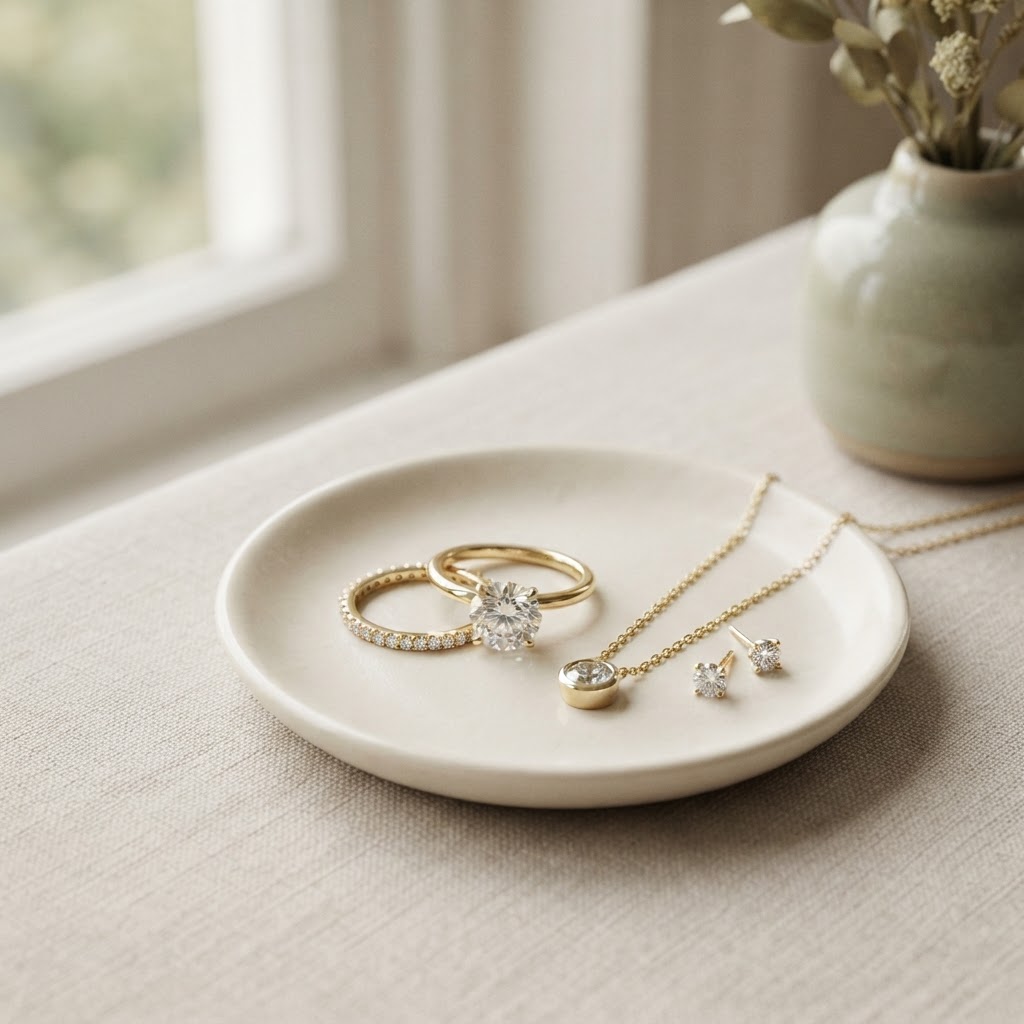
Lab Grown Diamonds: Resale Value and Personal Worth
A lab-grown diamond is usually a purchase for use and personal meaning, not a financial investment. For anyone asking whether lab-grown diamonds are...
A lab-grown diamond is usually a purchase for use and personal meaning, not a financial investment. For anyone asking whether lab-grown diamonds are a good investment, the practical answer is usually no: in the UK, lab-grown diamond rings often resell for 30% to 60% less than their original purchase price. Resale depends on the diamond’s specification, condition and buyer demand.
A lower purchase price can make a lab-grown diamond appealing, but it does not mean the stone will hold its value. Grading details help you assess what you are buying, while ethical and environmental considerations may also shape your decision. This article explains resale prospects, what grading can tell you, and how to weigh financial value against the meaning a diamond holds for you.
Key Takeaways
- Assess lab-grown diamonds as purchases for personal use, rather than relying on resale to deliver a financial return.
- Compare the diamond’s grading, cut and condition, as these factors can affect buyer interest if you sell later.
- Consider how production methods and sourcing priorities fit your ethical and environmental preferences.
- Separate financial value from personal meaning when deciding what matters most in an engagement ring.
- Use clear grading information to compare loose diamonds and make a more informed selection.
Is a lab grown diamond an Investment?
Usually, no. In the UK, lab-grown diamond rings often resell for 30% to 60% less than their original purchase price. Treat one primarily as jewellery for personal use, not as an asset expected to appreciate.
Lab-Grown and Mined Diamond Prices
Lab-grown diamonds typically cost 30% to 70% less than mined diamonds, giving buyers more choice within a set budget. That difference matters if size, cut or clarity is the priority, but a lower retail price doesn’t predict a stronger resale value. A lab-grown diamond may be two to three times larger than a mined diamond bought for the same price. Carat measures weight, not the diamond’s face-up dimensions, so compare the cut and measurements too. Explore diamond specifications to compare stones on like-for-like details.
Future Value of Lab-Grown Diamonds
Future value means what a buyer might pay later, not the price you pay at retail today. Lab-grown diamond production can scale, and technological improvements have increased supply. This can put pressure on retail and secondhand prices, so a stone bought today may compete with newer diamonds produced at lower cost. Demand has grown over the last decade, but that has not created dependable resale growth. Treat appreciation as uncertain, not as a reason to choose a particular stone.
Secondhand Lab-Grown Diamond Prices
Secondhand prices reflect what a buyer will pay for a used stone, not what it cost new. Lab-grown diamonds sold secondhand are usually priced at 10% to 30% of their original retail cost. This differs from the UK estimate that lab-grown diamond rings often resell for 30% to 60% less than their purchase price. The figures describe different resale contexts, so don’t treat them as interchangeable. Condition, specification and demand all influence the offer; the resale market is still developing, and prices can vary significantly.
Retail Prices and Resale Prices
Retail price is what you pay a jewellery business; resale price is what a later buyer offers. The figures differ because the original price includes more than the loose diamond. UK retail costs can include craftsmanship, grading, retail margin and VAT. These costs are not fully recovered when jewellery is resold. A ring’s resale price can also depend on its condition and whether buyers want its particular setting or diamond specification.
For example, someone comparing two rings may value a clear grading record, a desirable cut and a well-maintained setting. These details can reassure a buyer, but they do not make a retail purchase a reliable investment. Choose based on what you can afford and the value you expect from wearing the ring. If resale matters, allow for a likely gap between the original retail price and a future secondhand offer.
Resale considerations when buying an engagement ring
Consider resale before choosing an engagement ring, even if you plan to keep it. The diamond’s type, condition and buyer demand can all affect a later offer.
Resale Value and Depreciation
Depreciation is the difference between an engagement ring’s purchase price and its later resale value. Lab-grown diamonds generally sell secondhand for less than their original retail price, so do not buy one expecting to recover the full cost. Before choosing a ring, consider whether you could accept a lower future offer. Keep the grading documents and purchase records together, and care for the ring.
Resale Compared with Natural Diamonds
Natural diamonds may retain a slightly higher resale percentage than lab-grown diamonds, but they generally still sell below retail. Typical commercial mined diamonds may resell for 20% to 50% of their retail price. Lab-grown diamond rings in the UK often resell for 30% to 60% less than their original purchase price. These are broad market patterns, not like-for-like valuations: specification, condition and demand shape each offer.
Rare or coloured lab-grown diamonds do not automatically avoid this pattern. Coloured and very rare lab-grown stones still have lower resale value than natural diamonds. Buyers may associate rarity with lasting value, but rarity alone does not ensure a higher offer. Assess the specific stone and setting rather than assuming an unusual colour will make an engagement ring easier to resell.
Diamond Investments Compared
Are lab-grown diamonds a good investment compared with gold, stocks or natural diamonds? Usually not. Diamonds are less readily saleable than gold, and lab-grown stones generally have lower resale value than natural diamonds. Stocks and gold are different assets, so a ring’s resale prospects are not comparable to their investment performance. If resale matters, weigh how you expect to use the ring against the possibility of selling it below retail.
For example, when choosing between a lab-grown and natural centre stone, separate two questions: which ring suits your preferences, and how much resale uncertainty can you accept? Natural diamonds can sometimes retain a higher percentage of their value, but they still generally sell below their original retail price. Neither option makes an engagement ring a dependable route to financial gain.
Taxes and Fees on Buying or Selling
For UK buyers, retail diamond prices include VAT, along with costs such as craftsmanship, grading and retail margin. These costs are not fully recovered when jewellery is resold. Resale value is what a buyer offers for the ring, not a refund of its original retail price. Any transaction or intermediary charge depends on how the ring is sold, while the seller’s tax position depends on their circumstances. Factor these differences into your budget.
Ethical and environmental considerations
Lab-grown diamonds are produced without mining, which may matter if you want an alternative to mined stones. Their environmental profile still depends on production, particularly the electricity used. Compare your sourcing preferences with the production footprint rather than treating “lab-grown” as a complete measure of sustainability.
This distinction helps when weighing an ethical preference against environmental impact. Do not assume a diamond made in a laboratory has no environmental cost. Production uses energy and water, so the methods and resources behind a stone remain relevant. When comparing diamonds, consider avoiding mining separately from energy consumption, water use and the information available about production.
Mining avoidance and ethical priorities
Lab-grown diamonds do not require mining, which can matter to people who want to avoid mined stones. That addresses one ethical concern, but it does not settle every question about production. You may also consider how a diamond was made and whether its seller provides useful information about its origin. An ethical choice depends on which sourcing concerns matter most to you.
Consumer priorities reflect this interest. A De Beers Group survey found that 60% of consumers want sustainably sourced diamonds, while 30% of millennials were willing to pay a premium for ethically and sustainably sourced products. These survey findings describe preferences, not proof that one diamond type meets every ethical or environmental standard. Use them as context, then assess the specific sourcing information available.
Energy, water and environmental impact
Production figures show why mining avoidance doesn’t automatically mean a lower footprint. Lab-grown diamond production uses 250 million joules of electricity per carat, compared with 538.5 million joules for mined diamond production. The reported water figures are 18 gallons per carat for lab-grown diamonds and 126 gallons per carat for mined diamonds. These measures compare resource use, but they don’t by themselves describe every impact.
A cited environmental analysis reports an environmental-footprint figure of 0.028 grams per carat for lab-grown diamonds, compared with 57,000 grams per carat for mined diamonds. The figures should be understood as the analysis’s reported metric, not as a complete account of every environmental effect. Electricity generation, production methods and the scope of an assessment all shape how such comparisons should be interpreted.
For a practical comparison, make three checks: whether avoiding mining matters to you, what production information is available, and which environmental measures you are comparing. For example, someone prioritising no mining may favour a lab-grown stone, while someone assessing environmental impact may also focus on production energy and water. Neither preference alone establishes the full footprint.
Choose according to the priorities that matter to you. Lab-grown diamonds remove mining from the sourcing process, but their production still uses resources. Comparing sourcing and environmental factors gives you a clearer basis for deciding than relying on a broad “ethical” label.
Financial investment versus personal value
A financial investment is bought with the expectation of a future return. A lab-grown diamond may instead be valued for its appearance, wearability or role in a personal milestone. Separate these measures before choosing: resale potential concerns what another buyer may pay, while personal value concerns what the diamond means to its owner.
What the diamond is, and what it means
Lab-grown and mined diamonds share the same optical and chemical properties. In 2018, the Federal Trade Commission stated that a diamond is a diamond whether grown in a laboratory or mined. That describes the material, not its resale prospects. Buyers can therefore distinguish the diamond’s physical characteristics from its origin and from the meaning attached to owning it.
For example, someone choosing an engagement ring may prioritise a cut, size or design that suits their partner. Those preferences can make the ring personally valuable, even if a future buyer values it differently. The distinction matters: a resale price measures another buyer’s demand, not the memories or significance the original owner attaches to the ring.
Popularity does not guarantee financial return
Demand for lab-grown diamonds has increased over the last decade, but popularity alone does not establish investment performance. A product can attract more buyers and still have weak resale prospects. Production can scale, and improvements in technology have increased supply. Greater availability can affect prices, so market interest is not evidence of future appreciation.
Consider two different aims. Someone buying a diamond to wear may value the choice, size and design available within their budget. Someone buying an asset expects a future sale to provide a return. The same stone may meet the first aim without meeting the second, so define its intended use before weighing the purchase.
Comparing diamonds with other assets
Diamonds are less readily saleable than gold. Reselling a diamond depends on finding a buyer for its particular characteristics, rather than simply owning a recognised material. This matters if access to cash is a priority. Gold and diamonds also have different markets, so do not assess a jewellery purchase as though it were interchangeable with another asset.
Popularity offers context, not a forecast. Demand for lab-grown diamonds has grown, but that does not remove resale uncertainty. Ask whether the purchase still makes sense if you later sell it for less than its retail cost. If your decision depends on financial gain, personal meaning does not resolve the investment risk.
Assigning personal value
Personal worth can come from daily wear, a design choice or an event such as an engagement. These are individual measures, not market prices. For instance, a ring chosen to suit its wearer’s preferred shape may remain meaningful even if resale buyers favour a different style. Treat enjoyment and financial return as separate outcomes, then decide which matters most to you.
Certification and grading
Grading records a diamond’s characteristics, while certification documents an assessment for buyers. For a lab-grown diamond, these details help establish what the stone is and support comparisons when buying or selling. They do not set a future resale price. The market, the diamond’s condition and buyer demand still affect what someone may offer.
What a grading report records
A grading report describes measurable features, including carat weight, colour, clarity and cut. These affect a stone’s appearance and how buyers compare it with alternatives. For example, two lab-grown diamonds with the same carat weight can differ in cut quality and clarity. Read the full report to compare their characteristics beyond a headline specification.
Carat refers to weight, not size. A report’s measurements and cut information therefore add context that carat alone cannot provide. Compare stones using matching recorded details. Do not treat one grade as a complete measure of appearance or future value: buyers may weigh the combination of features differently.
Why certification matters for resale
GIA or IGI certification can build buyer confidence when reselling a lab-grown diamond. A report gives prospective buyers documented details to review rather than relying only on a seller’s description. Keep the original report with the purchase records and diamond. If the stone is separated from its documentation, matching the paperwork to that specific diamond becomes more difficult.
Certification supports buyer confidence, but it does not guarantee a particular resale price. A buyer may consider the report alongside the diamond’s condition, cut and current demand. For example, a well-documented stone may attract a different offer from another diamond with similar grades, as buyers assess the complete item and their own preferences.
Lab-grown origin and chemical properties
A lab-grown diamond has the same optical and chemical properties as a natural diamond. The difference is its origin: one is created in a laboratory, while the other is mined. A report can identify a stone as laboratory-grown, helping buyers understand what they are comparing. Clear identification matters because origin can affect buyer preferences and resale demand.
When reviewing a report, match its details to the diamond you are considering. Compare the stated origin, measurements and grading information with the stone and its paperwork. This creates a more reliable record for a future sale. It also helps distinguish a lab-grown diamond from a natural one without confusing shared chemical properties with identical resale prospects.
Using grading information in a purchase decision
Start with the features that matter most for how you plan to use the diamond. If appearance is your priority, compare cut and measurements; you may instead focus on clarity or colour. Then consider how the report could support a future resale discussion. This keeps your decision grounded in documented characteristics, rather than the assumption that a certificate or particular grade will preserve value.
Jewellove: Loose Diamonds
Jewellove offers loose diamonds for shoppers comparing lab-grown stones before choosing a finished piece. Use the grading details and resale considerations in this guide to organise your priorities, such as cut, colour, clarity and personal meaning. The Diamond Quiz can help narrow your preferences, while Ring Maker lets you explore designs around a selected diamond. For a design tailored to your requirements, use the Bespoke Design Service. These options support your selection; they do not change how resale value is determined or guarantee a future return.
Contact Jewellove to discuss your diamond or design choices.
Make your next choice with clarity
Before choosing a stone, decide what you want from the purchase. If future resale matters most, set a clear limit on how much uncertainty you can accept. If daily wear, design or personal significance matters more, use those priorities to compare your options. Whether lab-grown diamonds are a good investment depends on the outcome you expect: financial return or value from owning and wearing the piece.
Jewellove offers loose diamonds, Ring Maker and a Bespoke Design Service to support stone selection and ring design. Use these options to organise your preferences and move from research towards a choice that suits your purpose. A clear design brief can help align your design, grading and budget considerations.
Keep your priorities in view and make the decision that suits you.
Frequently Asked Questions
What affects resale value?
Resale value depends on whether a diamond’s documented identity and condition match what buyers want. Keep the grading report, original receipt and repair records together. A loose stone can be easier to assess on its own; a mounted diamond also involves the setting and its condition. For example, someone comparing two similar stones may favour the one with clear paperwork and no visible damage.
What about very rare or coloured lab diamonds?
Rare or coloured lab-grown diamonds may appeal to buyers with specific preferences, but colour does not guarantee a stronger resale offer. Coloured and very rare lab-grown stones still have lower resale value than natural diamonds. Someone interested in a distinctive hue may value it highly, while another buyer may prioritise a conventional colour or cut. Treat rarity as a feature to compare, not proof of future appreciation.
What is the current resale market for lab diamonds?
The resale market is still developing, so demand and prices can vary significantly. Buyers may compare a secondhand stone with newly produced lab-grown diamonds, particularly as production scales and supply grows. That competition can affect offers, even for a stone with clear grading paperwork. If you sell, assess the specific diamond and setting rather than relying on one market-wide resale expectation.
Do lab-grown diamonds hold their value or appreciate over time?
Lab-grown diamonds generally do not hold their original retail value, and you should not assume they will appreciate. Improvements in production technology can increase supply and put pressure on new and secondhand prices. A stone may remain attractive to its owner without gaining financial value. For example, someone buying a ring for regular wear can judge its worth by its use and personal significance, separately from any later sale.
What is the resale value of lab-grown diamonds in the UK?
Secondhand lab-grown diamonds are usually sold for 10% to 30% of their original retail cost. UK lab-grown diamond rings often resell for 30% to 60% less than their original purchase price. These figures describe different resale contexts, so they shouldn’t be combined into one guaranteed valuation. The stone’s details, condition, setting and buyer demand influence the amount offered in an individual sale.
How much have lab-grown diamond prices fallen in recent years?
One reported market estimate put retail prices for gem-quality lab-grown diamonds at about half their level over the previous two years. This describes a broad price movement, not the change for every diamond. A particular stone’s price depends on its specifications and the market for comparable stones. Falling prices for newly produced diamonds can also affect what buyers consider reasonable for a secondhand stone.
How do lab-grown and natural diamond prices compare in the UK?
Lab-grown diamonds typically cost 30% to 70% less than natural diamonds. The difference means buyers may compare stones of different sizes within a similar budget, but carat weight alone doesn’t establish equivalent appearance or quality. Compare cut, colour, clarity and measurements together. Retail prices also include the ring setting and other retail costs, so compare loose stones with loose stones, rather than a finished ring with a diamond alone. Browsing dedicated loose stone catalogues such as superlightdiamonds.com can help you benchmark these standalone prices across different specifications.
Can you resell or trade in a lab-grown diamond, and where?
You can offer a lab-grown diamond for private resale or approach a jewellery buyer, but acceptance and offers vary. Some jewellers may not buy lab-grown stones, so do not assume you can trade one in. Keep the grading report and purchase records ready, and describe whether the stone is loose or mounted. In Lanarkshire, compare any offer with the diamond’s documented details and the sale conditions.