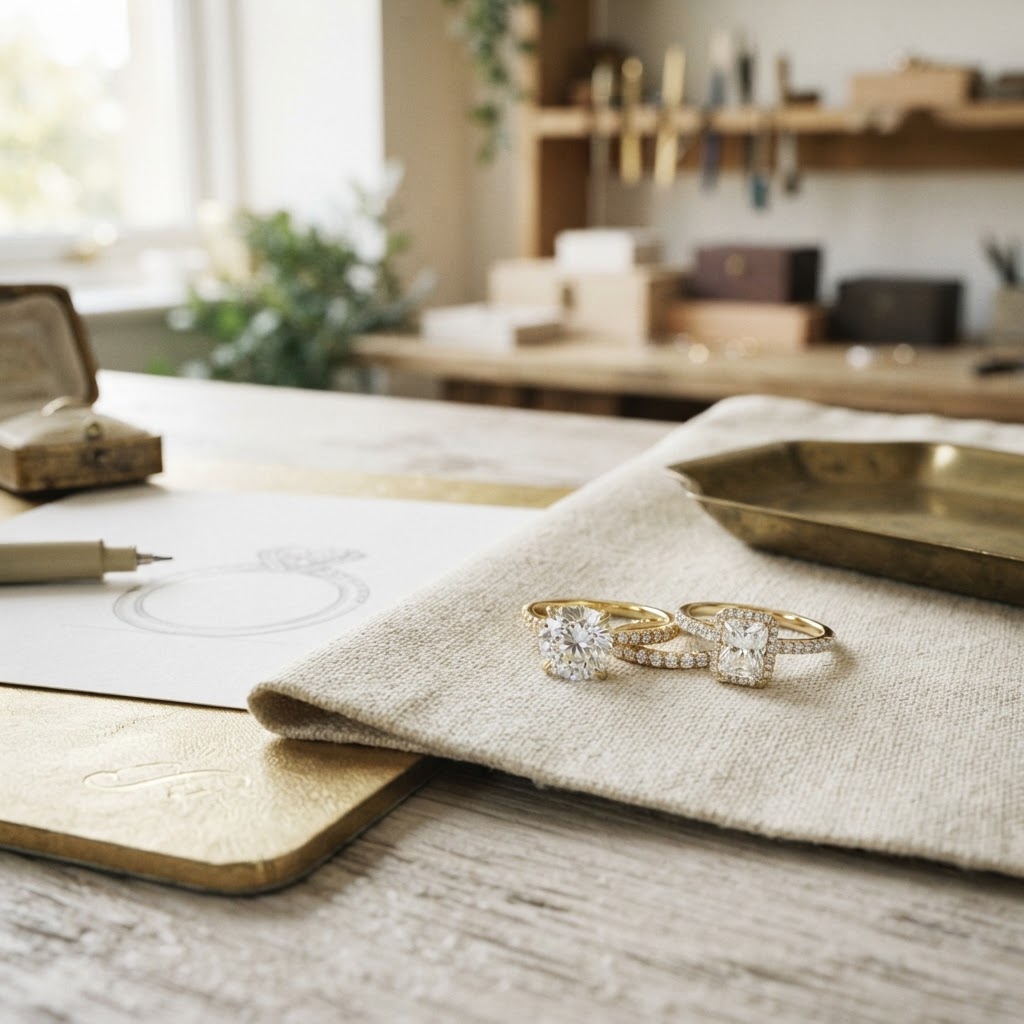
Custom engagement rings in Uddingston: prices and finance
A bespoke ring should fit your budget, not dictate it. There’s no single spend that suits everyone looking for custom engagement rings in Uddingston....
A bespoke ring should fit your budget, not dictate it. There’s no single spend that suits everyone looking for custom engagement rings in Uddingston. The final cost depends on choices such as the diamond, metal and design. Set a comfortable budget first, then use it to guide the specification.
Choosing a custom ring also means planning for the design process, finance terms and made-to-order timing. This guide explains how design choices shape a ring, what affects its cost, how to compare finance options and what can influence delivery times.
Use these details to set your priorities before making design decisions. You can weigh the features that matter against your budget and timing, then choose a practical next step for your engagement ring plans.
Key Takeaways
- Set a budget before choosing a design, then prioritise the details that matter most to keep decisions focused.
- Compare ring components separately: the setting, metal and gemstone all shape the finished design and its cost.
- Allow time for design decisions and made-to-order production, especially when changes are needed along the way.
- Review finance by looking at the full repayment terms, not just the instalment amount.
- Use diamond and ring-design tools to compare options and organise your preferences before settling on a specification.
Bespoke engagement ring design
The process moves from gathering preferences to choosing a design, reviewing its details and placing the order. Check that the diamond’s grading report matches the stone, request documented sourcing information, and inspect the setting, finish and ring construction.
For custom engagement rings in Uddingston, the design brief can also account for an existing heirloom, your partner’s style and a future wedding band. These choices affect both the finished ring’s appearance and how it fits in everyday wear.
Designing a Ring Around Personal Style
Start with details your partner wears regularly. Note whether their jewellery is understated or detailed, whether they prefer warm or cool metal colours, and which pieces they reach for most. A simple solitaire may suit someone who wears minimal jewellery, while a halo setting may fit a preference for more visible detail. Save photographs to use as references during the design process.
Use those examples to shape the brief rather than copy a single ring exactly. Consider daily routines, preferred shapes and whether an heirloom has sentimental value. A redesign might reuse an inherited diamond while changing the setting to better reflect the wearer’s style. This makes bespoke jewellery a practical design process, not simply a search for a striking appearance.
Customising Settings, Metals and Gemstones
Separate the choices into three parts: setting, metal and centre stone. A solitaire keeps the focus on one diamond; a halo adds a surrounding pattern, while a three-stone design creates a different balance across the finger. Compare these styles with your partner’s existing jewellery and the shape of any inherited stone.
Metal colour changes the overall look, so compare options beside jewellery the recipient already wears. A diamond is one possible centre stone, and loose stones can be assessed before finalising the setting. If the engagement ring is intended to sit beside a wedding band, consider how the two profiles meet. Record these preferences through Jewellove’s Ring Maker or Bespoke Design Service before settling the design.
Planning a Ring Budget
Build the budget around your priorities, not a rule about what an engagement ring should cost. Decide whether the centre stone, metal, setting detail or heirloom reuse matters most. Then compare designs while keeping those priorities constant. For example, changing intricate setting details may alter the specification without changing your preferred diamond shape.
Request an itemised specification before approving a design. It should identify the selected materials, stone and setting, so you can compare like with like and see which choice affects the total most. Allow for practical requirements too, such as a wedding band that fits alongside the ring.
Designing and Ordering a Custom Ring
Prepare a short brief with preferred styles, ring size information, budget limits and any heirloom details. During a custom ring design consultation, use that brief to compare settings, metals and gemstone options. Record the decisions in one place, including any changes made after reviewing the design.
Before placing the order, read the specification against the agreed brief. Check the diamond details, sourcing documentation, metal, setting, size and how the engagement ring will sit beside a wedding band. Confirm the order only when those details align. A showroom visit may help with comparing proportions in person, whilst saved photographs keep the design reference consistent.
Made-to-order jewellery and delivery times
Made-to-order delivery depends on the design, selected materials and production stages. A ring using a readily available diamond may follow a different schedule from one needing a sourced stone or revised setting. Agree the expected dispatch window before placing the order, and allow time for delivery and inspection in your plans.
When comparing bespoke design services in Uddingston, Lanarkshire or Glasgow, assess the same details for each: what the design process covers, whether reviews discuss similar commissions, and what the written warranty includes. Read the warranty terms for scope, exclusions and claim steps, rather than relying on a general promise or review summary.
For a handmade ring, establish how the design moves from approved specification to finished piece. A change to the band width or centre-stone setting can affect production, so keep a final written record of materials, measurements and design before work begins. This gives you a shared reference for checking the finished ring against the agreed plan.
For Uddingston and the wider Lanarkshire area, an online design process can make it easier to develop a ring without planning a studio visit. Jewellove’s Ring Maker and Bespoke Design Service help organise design details and preferences. Keep requested changes and your final specification in writing, so the process stays clear from approval through delivery.
If you’re comparing Lanarkshire options with jewellers in Glasgow, use consistent criteria rather than treating location as proof of quality. Consider travel for design discussions, opportunities to review fit, and how later adjustments would be arranged. An online process may suit a settled brief; an in-person discussion can help when proportions or details are easier to assess together.
Before approving a delivery date, identify what could change the schedule. Stone selection, design revisions, sizing and the order of crafting stages can all affect timing. Share any fixed proposal or wedding date at the outset, then leave room for transit and inspection after dispatch. Avoid building plans around a delivery estimate that hasn’t been agreed.
After delivery, compare the ring with its specification and keep its paperwork together. For resizing, maintenance and aftercare, read the written terms for adjustment options, cleaning guidance and repair arrangements. If the ring feels loose or a stone appears to move, stop wearing it and arrange an assessment. This can reduce the risk of further damage or losing the stone.
Keep the diamond details, metal, ring size, warranty terms and care instructions together. This record can support future servicing and help explain the original design if the ring needs resizing. The same organised approach applies to wedding rings and other diamond jewellery, whether handmade or produced to a specific design.
Bespoke engagement rings
A bespoke engagement ring starts with a design brief, then turns selected details into a complete specification. Set your priorities in order: overall shape, centre stone, setting, metal and personal details. For example, someone drawn to a clean silhouette might prioritise a single stone and a plain band, while another person may prefer a more detailed design.
A collection can help you find a starting point, but it needn’t dictate the final design. Use a solitaire, halo or three-stone ring as a reference, then identify what you’d keep and what you’d change. That comparison makes bespoke decisions easier to record and gives the design process a clear direction.
Stone choice is one part of the brief. Compare the appearance, shape and documentation of each candidate, and record any preferences about origin. If considering a grown diamond, include that choice explicitly alongside other precious stones. This keeps the discussion focused on the stone’s role in the design, rather than treating every option as interchangeable.
Metals affect the ring’s colour and the way its details appear. Compare metal colours with jewellery the wearer already uses, then consider how the chosen metal works with the centre stone and setting. A contrasting combination may make the stone stand out; a closer match can create a more unified appearance. Record your preferred combination before approving the specification.
Use personal details selectively. An engraved date, a family stone or a feature drawn from an existing ring can make the design personal without adding unrelated decoration. For an heirloom redesign, document which original elements should remain and which should change. A clear brief helps preserve the intended connection while giving the finished ring a different form.
Think beyond the proposal, too. If the engagement ring will be worn beside a wedding band, compare the rings together for profile, spacing and visual balance. A low-profile setting, for example, may sit differently beside a straight band than a more raised design. Resolve this pairing during the design process, rather than treating the wedding ring as a separate decision.
Before approving the final version, review the full specification as one record. It should identify the selected stone, setting, metals, size and any engraving or reused elements. Check that the design reflects your original priorities, not just the latest adjustment. This final comparison helps keep each detail purposeful and gives the ring a distinctive, enduring character.
For a practical starting point, create a short preference list with three headings: essential, optional and excluded. Add an example under each, such as a preferred stone shape, an optional engraving and a setting to avoid. This simple structure turns an open-ended design process into decisions you can compare, refine and approve.
Finance options and starting prices
There isn’t one starting price for a bespoke engagement ring. The specification drives the total: stone, metal, setting and design details all affect the amount. A diamond engagement ring with a larger centre stone, for example, differs in specification from one with a smaller stone and a simpler setting. Compare complete specifications rather than headline prices alone.
To set a budget, decide the maximum total you can afford before selecting details. Then rank the stone, setting and metal by importance. If the centre stone is your priority, simplify other elements first. If matching wedding bands matter more, include that requirement in the design brief. This makes it easier to assess how each choice changes the ring’s overall cost.
Payment routes can include paying from savings or using a credit option, depending on what’s available to you. Treat borrowing as a separate decision from choosing the ring. Before agreeing to finance, compare the deposit, instalments, interest, fees and total repayable amount in the written terms. A lower monthly instalment can still mean a higher total if repayment lasts longer.
Use a simple comparison record. List the ring specification, cash price, deposit, each repayment amount, repayment period and total cost. For example, compare two offers for the same setting and stone rather than a detailed ring against a basic design. List any wedding bands separately, so ring costs don’t become mixed with other planned spending.
An appointment with a jeweller in Glasgow or elsewhere can help clarify how design choices affect a quotation. Ask for the stone and setting to be listed separately, then note which adjustment changes the total. A workshop-made detail or an exceptional finish may alter the specification, so compare those features against the priorities set at the start.
Keep the final decision tied to the written figures, not a suggested spending rule. There is no required proportion of income that determines what an engagement ring should cost. Set a limit that leaves room for other commitments, then consider whether a bespoke engagement ring fits that limit before approving the design.
For a clear next step, create two versions of the specification: essential features and preferred extras. Compare their totals and finance terms side by side. This shows which choices are central to the design and which can be adjusted without losing its overall look. Use that comparison to make a considered decision about both the ring and its payment.
What customisation options are available for ring settings, metals and gemstones?
Customisation works best when you consider each choice as part of the whole ring. Start with the setting, then compare metal colour and gemstone shape with the wearer’s existing jewellery. A low-profile setting, for example, creates a different outline from a raised centre stone. The right combination depends on the desired appearance, comfort and how the ring will be worn.
Settings determine how a stone is held and presented. A claw setting leaves more of the centre stone visible, while a bezel surrounds its edge with metal. A halo places smaller stones around the centre, adding a defined border. In a three-stone layout, side stones frame the centre. Compare these arrangements from above and from the side, not only in a front-facing image.
Metal choice changes the ring’s colour and visual contrast. Yellow gold creates a warm tone, while white gold offers a paler finish; platinum is another option to compare. Look at each metal beside the wearer’s usual jewellery and the chosen gemstone. Also consider the band’s width and profile. A fine band creates a different balance from a broader one, particularly with a prominent centre stone.
Gemstone customisation includes the type, shape and arrangement of the stones. A round diamond, for instance, creates a different outline from an oval or pear-shaped diamond. Side stones can echo the centre stone’s shape or create contrast. For a coloured gemstone, compare its hue with the metal and surrounding stones. Record your preferred stone shape and setting before comparing designs.
Practical details matter alongside appearance. Check how the setting’s edges feel against neighbouring fingers and whether the ring will sit comfortably beside a wedding band. A raised setting may need more space beside a straight band than a lower profile. If the ring is intended to stack with other jewellery, compare the pieces together before settling on the design.
Use a simple comparison sheet with separate lines for setting, metal, centre stone, side stones and band profile. Change one feature at a time. For example, compare the same diamond in a claw and bezel setting, then assess the visual difference. This makes each decision easier to evaluate and keeps the final specification clear.
Jewellove: Loose Diamonds
Jewellove helps you develop ring ideas into a defined design using loose diamonds and the Ring Maker. If you’re comparing stone options, the Diamond Quiz can help organise your preferences. For a design built around your chosen details, Jewellove’s Bespoke Design Service is a practical next step.
Use these tools when you have a budget, style direction or gemstone preference to explore. Compare loose diamonds first, then use the Ring Maker to consider how a stone and setting work together. If you’re still deciding, start with the Diamond Quiz and use its prompts to clarify your priorities.
Visit jewellove.co.uk to explore the design tools and loose diamonds.
Turn your ring plan into a clear brief
The next step is to turn your preferences into a design brief you can use to make decisions. Note the features you consider essential, the details you’re open to changing and the questions you still need answered. For anyone planning custom engagement rings in Uddingston, this keeps the design process focused on personal priorities rather than assumptions about what a ring should include.
Jewellove offers loose diamonds, a Ring Maker and a Bespoke Design Service to support different stages of the process. Explore loose stones when comparing diamonds, use the Ring Maker to organise design choices, or consider bespoke design when you want to develop a ring around specific preferences. Start with the step that best matches your plans.
A considered brief gives you a practical starting point. Take the next step when you’re ready to shape your ideas into a ring design.
Frequently Asked Questions
How much should I spend on an engagement ring in the UK?
Spend an amount that fits your budget and existing financial commitments; there’s no required UK spending rule. Set a firm maximum before comparing ring designs, and include planned wedding costs in your wider budget. If considering finance, compare the total repayable amount and fees, not just the monthly instalment. A ring’s price depends on its stone, setting, metal and design, so prioritise the features that matter most.
How do I choose the right ring for my partner?
Start with what your partner already wears. Note the metal colour, ring profile and whether their jewellery is simple or detailed. A discreet wearer may prefer a low-profile design; someone who favours visible detail may prefer a halo or three-stone setting. Check ring size discreetly and consider whether the engagement ring needs to sit beside a wedding band. A saved photograph of a favourite piece can help turn preferences into a clear brief.
Which jewellers in Uddingston make custom engagement rings?
Jewellove serves the Lanarkshire market through an online platform, rather than a stated Uddingston showroom. Its Ring Maker, Bespoke Design Service and loose diamonds are relevant options for people planning custom engagement rings in Uddingston. Use the Ring Maker to organise design choices, or explore bespoke design if you want to develop a ring around specific preferences. This lets you begin comparing options without assuming a local shop visit is part of the process.
What nearby jewellers in Glasgow or Lanarkshire offer bespoke engagement rings?
Jewellove’s online platform serves readers in Lanarkshire, with a Bespoke Design Service and Ring Maker for developing engagement-ring ideas. The online format lets you work on the design without a Glasgow showroom visit. Start by listing your preferred stone, setting and metal, then use those requirements to guide the design. This gives you a structured way to decide whether a bespoke ring suits your plans.
How much does a custom engagement ring cost in Uddingston and nearby areas?
The total depends on the ring specification, not whether you’re in Uddingston or Glasgow. The centre stone, metal, setting and added design details all affect the amount. To understand a quote, compare the same specification across options and separate the stone from the setting where possible. This helps show which feature is driving the difference. Set your spending limit first, then adjust design details to keep the chosen ring within it.
What is the typical lead time for a bespoke engagement ring?
There isn’t one standard lead time for every bespoke ring. The schedule depends on the design process, stone selection, material sourcing and production steps. Revisions can add further work, so settle the specification before the order moves into making. If you’re working towards a proposal or wedding date, include it in your planning and leave time to receive and inspect the finished ring.
Can I bring my own diamond or redesign an existing ring?
A design brief can include a diamond or ring you already own, but suitability depends on the stone’s condition, measurements and the setting required. For an existing ring, identify which parts you want to retain, such as the centre stone or metal, and which should change. Jewellove offers loose diamonds and bespoke design to help you explore a new specification. If you want to reuse existing materials, include that as a specific design requirement.
What are the resizing, maintenance and aftercare options for custom engagement rings?
Check the written terms for resizing options, cleaning guidance and repair arrangements. If the ring feels loose or a stone appears to move, stop wearing it and arrange an assessment.