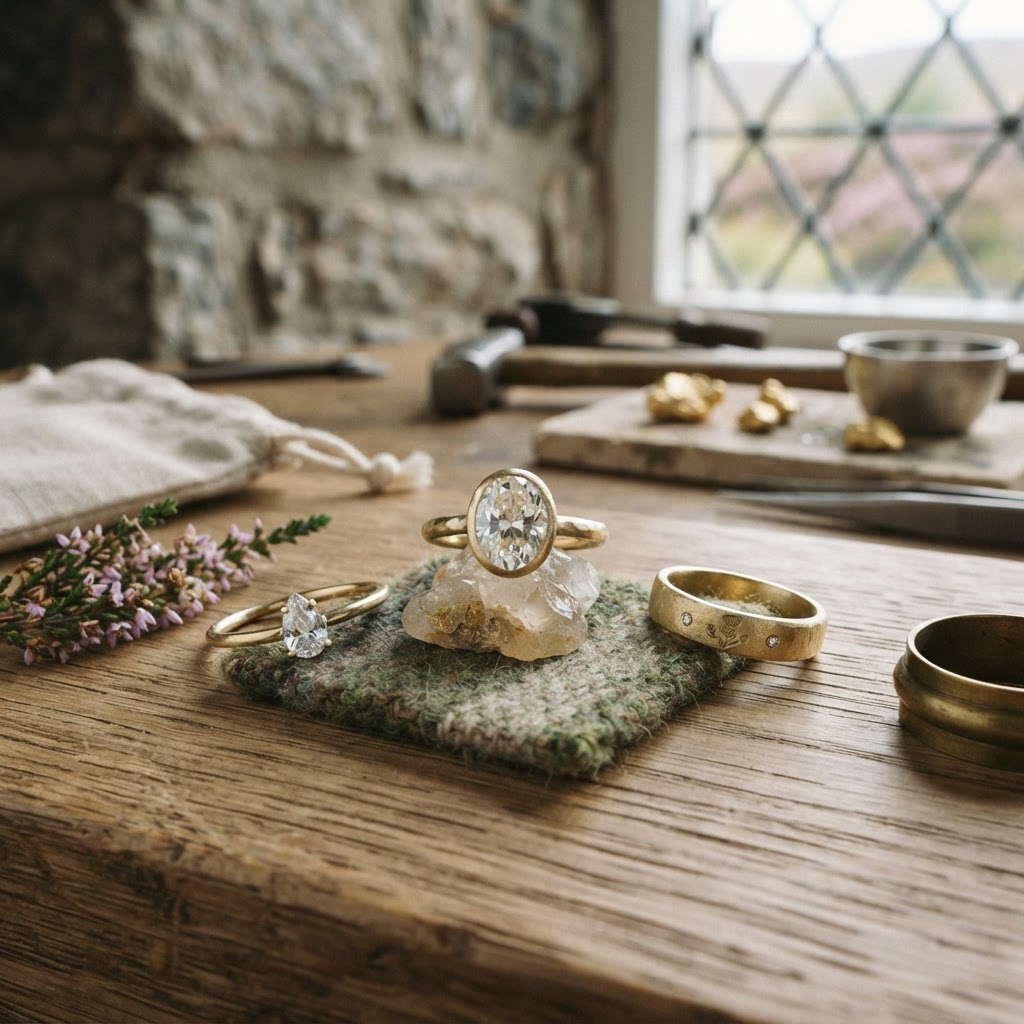
Ethical engagement rings in Scotland, from style to sourcing
A ring’s design and its sourcing are separate choices. When choosing ethical engagement rings in Scotland, compare the style, materials and...
A ring’s design and its sourcing are separate choices. When choosing ethical engagement rings in Scotland, compare the style, materials and information available about their origins. The right option depends on your priorities, whether that means a particular stone or metal, British craftsmanship or a bespoke design.
Start with a design that suits the wearer: consider the stone shape, setting, band and how the ring will feel day to day. Then assess sourcing and craftsmanship separately, so your decision rests on clear priorities rather than a label alone.
This guide covers how to compare ring styles, assess responsible sourcing and explore British-made and bespoke designs. It also explains how to include Scottish jewellers in your search and compare your options systematically.
Key Takeaways
- Compare stone shape, setting and band to narrow down a style that suits the wearer’s preferences and daily routine.
- Assess responsible diamond sourcing by looking at the origin information and sourcing standards attached to a stone.
- Separate where a ring is made from where its materials are sourced when comparing British-made options.
- Use a bespoke design to bring specific preferences together in one ring, from the choice of stone to the setting and band.
- Explore Scottish jewellers’ engagement and wedding ring options to compare designs and decide which route best fits your priorities.
How do I choose an engagement ring style?
Start with the wearer’s everyday preferences. Note whether they wear yellow gold, white gold or silver-coloured jewellery, and whether they favour simple or detailed settings. Then compare stone shapes: round brilliant, oval, pear, marquise and emerald cuts each create a different outline. A solitaire focuses attention on one stone, while a halo or three-stone design adds surrounding detail.
Use a short comparison process before choosing a design:
- Choose a metal colour and ring profile that match jewellery already worn.
- Compare stone shape, setting height and band width.
- Consider how the ring’s details will sit alongside a future wedding ring.
- Set a spending limit before comparing stones and precious metals.
Engagement ring prices vary with the stone, its characteristics, metal, setting and amount of handcrafting. On the market, engagement rings typically range between £1,400 and £2,000, with a median of about £1,700. Treat this as a market snapshot, not a quote for a particular ring. A design with a larger centre stone or additional stones can differ from a simple solitaire, even when the metal is similar.
Gold and moissanite offer different design possibilities. Yellow, white and rose gold change a ring’s overall colour, while the setting determines how prominently its stone sits. Moissanite can serve as the centre stone or feature in a detailed design. Compare the stone, metal and setting together rather than choosing each in isolation.
Ring size affects comfort and fit. Measure the intended finger, then consider whether the band is narrow, wide, plain or set with stones, as these features affect how it feels. Resizing depends on the ring’s construction: a plain band may allow a different adjustment from a continuous stone-set band. Remodelling can retain a stone while changing the setting, metal or overall design.
For a bespoke engagement and wedding ring set, write down the features you want before comparing designs. List preferred stones, metals, setting style, band shape and details you want to carry across both rings. A design consultation can turn these priorities into a cohesive layout. Consider how the rings will sit together, particularly if either has a raised setting or stones along the band.
Consider finance separately from ring design. Set your total budget, then review any deposit, payment schedule, fees and total payable shown for an option. Don’t choose a more expensive design simply because payments are spread over time. Compare the full commitment with your budget and keep the stone, metal and setting within that limit.
Ethical and responsible diamond sourcing
When choosing ethical engagement rings in Scotland, assess a diamond’s quality separately from its sourcing history. A grading report describes characteristics such as colour, clarity and cut. On its own, it doesn’t explain where the stone was mined, who handled it or how it reached the jeweller. Treat these as separate parts of your decision.
Look for sourcing information that can be traced to the individual diamond. Useful details include its origin, its route through the supply chain and the standards the seller uses. A broad label such as “ethical” or “conflict-free” doesn’t replace a clear explanation. Compare the information for each stone rather than relying on a general claim about a collection.
A GIA grading report can help you assess a diamond’s characteristics, but it doesn’t certify its sourcing. Read it alongside the seller’s information about origin and supply chain, and check that it corresponds to the diamond you’re considering. Compare the grades with the stone’s appearance, since the report and a visual assessment answer different questions.
Lab-created and lab-grown diamonds are made in a controlled setting rather than mined from the earth. They are diamonds; moissanite is a different gemstone with its own appearance and properties. A lab-grown diamond may suit someone seeking a non-mined stone, but it still has a production supply chain. Ask about its production origin and available documentation, then compare its appearance and characteristics with other stones.
Recycled diamonds are recovered from existing jewellery or other previously used materials and returned to the market. Reusing an existing stone can avoid sourcing a newly mined one. Ask whether the diamond itself is recycled: recycled metal or a vintage design doesn’t mean the centre stone has also been reused. For example, recycled silver in a setting says nothing about the diamond’s history.
Can a vintage or antique engagement ring be a more sustainable option? It can be, because reusing an existing ring may reduce demand for newly mined materials. The benefit depends on the ring’s condition, the work needed to adapt it and whether replacement stones or metals are newly sourced.
Use these steps to compare options:
- Separate grading information from sourcing evidence.
- Record the origin and chain-of-custody details provided for each stone.
- Compare mined, lab-grown, recycled and vintage options on the same basis.
- Review the setting too: its metal, texture and any additional gemstones form part of the sourcing picture.
A ring can combine a distinctive design with diamonds, coloured gemstones or a silver-toned setting. Assess appearance, quality and provenance separately. This helps you weigh trade-offs against your priorities without treating one label as proof of the entire supply chain.
Ethically sourced and British-made engagement rings
When comparing Scottish jewellers, look for specific details about whether a ring uses recycled gold and traceable information about its diamonds’ origins. A Scottish workshop or British-made label tells you where the ring is crafted, not necessarily where its precious metals or gemstones come from.
Ask specific questions about gemstone sourcing and labour practices: Where was each stone mined or produced, and what information traces its route to the jeweller? Which standards or audits cover working conditions, and which parts of the supply chain do they apply to? Look for answers about the actual stone and setting, not just broad statements about a business.
Assess where a ring is made separately from where its materials come from. A ring crafted in Scotland may use newly mined gold, recycled gold or a combination. A British-made ring may also contain stones sourced elsewhere. Look for a clear description of the workshop’s role, such as making the setting, finishing the band or assembling the design. This clarifies what “made in Britain” means for that particular ring.
Recycled precious metals are reclaimed and reused; recycled gemstones are recovered from earlier jewellery or other existing materials. These are separate claims. A ring might use recycled yellow gold with a newly sourced sapphire, or a reused gemstone set in newly sourced platinum. Assess each material individually, including the centre stone, accent stones and band.
For an ethically sourced sapphire engagement ring, examine the sapphire’s stated origin and the evidence for its traceability. When exploring loose stones through gemstone specialists such as AfricaGems, find out whether each stone is newly mined, lab-created or reused. These terms describe different origins, but don’t establish the conditions under which every material was handled. A sapphire set in platinum raises separate sourcing questions about the gemstone and the metal.
Use a simple comparison record for each ring you’re considering:
- Metal: record whether the gold or platinum is recycled, newly sourced or mixed.
- Gemstones: note the stated origin and whether each stone is new, lab-created or reused.
- Traceability: record what documentation follows each material through its supply chain.
- Labour: note which stages and workers are covered by the jeweller’s standards or audits.
- Making: identify which work takes place in a Scottish or British workshop.
Compare this information before choosing a ring size or planning how the ring will sit on the finger. A clear material record is also useful when a design combines a recycled band, a traceable sapphire and newly sourced accent stones. Apply each claim only to the material it describes. “Ethical”, “British-made” and “recycled” aren’t interchangeable labels.
When comparing Scottish jewellers, look for specific ring descriptions that state whether the ring uses recycled gold and provide traceable information about its diamonds’ origins.
Bespoke engagement rings
A bespoke ring brings your preferences together in one coordinated design. Begin with a written brief covering stone type, metal colour, setting, band profile and practical requirements. For example, a round diamond in a low four-claw setting creates a different outline from an oval sapphire in a halo. “Bespoke” means designed for specific requirements; it doesn’t, on its own, describe the stone’s origin or where the ring is made.
Use a structured design process to keep decisions manageable:
- Record priorities: list the preferred stones, metals, colours and details to include or avoid.
- Set boundaries: decide which features are essential and which can change.
- Compare layouts: consider how stone shape, setting height and band width work together.
- Review sourcing: assess the origin and documentation of each stone and metal separately.
Start with the centre stone. A diamond engagement ring can feature a single centre diamond, accent stones or both. A sapphire offers a coloured alternative, and its hue can guide your choice of metal. Yellow gold can create a warm contrast with a blue sapphire, while white gold gives the design a cooler appearance. These are visual comparisons, not claims about sourcing.
Next, consider how the ring will be worn. A raised setting makes the centre stone more prominent, while a lower profile creates a more compact shape. A narrow band puts greater visual emphasis on the stone; a wider band changes the balance. For a handcrafted design, include practical details in your brief, such as your preferred band shape and whether the ring should sit close to a wedding ring.
Designing both rings together can resolve questions of fit and proportion early. A straight wedding ring, for example, may sit differently beside an engagement ring with a raised setting or projecting stones. A shaped band can follow the engagement ring’s outline. Plan each ring separately, then review their combined profile and metal choices.
Tie cost decisions to the design rather than assuming bespoke work has one fixed price. The centre stone’s type and characteristics, the amount of precious metal, the setting and the complexity of handcrafted details all affect the specification. Prioritise what matters most, such as a particular sapphire or distinctive band, then adjust secondary details to fit your budget.
Before approving a design, check the written specification against the intended result. Review the stone type, shape, setting, metal and band profile. Make sure sourcing descriptions apply to each material, not just the ring overall. This final review helps align the design, sourcing priorities and wedding ring pairing.
Scottish jewellers offering engagement and wedding rings
Compare Scottish jewellers by their ring selection, material information and craftsmanship. Assess origin, design and aftercare as separate considerations.
Scottish Jeweller Ring Selection
Consider how a jeweller’s engagement and wedding rings work together. Compare solitaire, halo and three-stone settings, then see whether the wedding ring can sit neatly beside the engagement ring. A selection with different profiles, metals and stone arrangements makes these comparisons easier. Look for details about what is made in the Scottish workshop and which materials come from elsewhere.
Which Scottish jewellers offer Fairtrade or Fairmined gold engagement rings? A jeweller offering either scheme should name it and explain how it applies to the gold in the specific ring. A general ethical-sourcing statement, or a Fairtrade label on another item, doesn’t show that an engagement ring uses certified gold.
Fairtrade and Fairmined Gold
Fairtrade and Fairmined are distinct schemes, so assess them separately. Look for details about the gold in the specific ring rather than assuming yellow gold is certified based on its colour or design. Consider the gold claim separately from information about the diamonds, gemstones and workshop where the ring was made.
Do Scottish jewellers offer bespoke ethical engagement rings, resizing and warranties? Bespoke design, resizing and warranty cover are separate parts of a jeweller’s service. Compare the design process, resizing terms and written warranty conditions individually, rather than treating one as evidence of the others.
Use a consistent record to compare rings. Note whether each is ready-made or designed to order, which precious metals it uses and whether the stone’s sourcing information is specific. For a yellow gold ring with a diamond, for example, record the gold certification and diamond provenance separately. This gives each claim a clear scope.
Meaning can also shape your choice. A design inspired by the Scottish landscape might feature a textured band, while a simple wedding ring may prioritise a smooth profile for everyday wear. Link these preferences to practical details: how the rings sit together, whether the band can be adjusted and what the written aftercare terms cover.
Before choosing, compare the complete offer, not just the display ring. Record the design options, metal sourcing, gemstone traceability, resizing arrangements and warranty terms. This helps you distinguish a locally made ring from one whose materials are also locally or responsibly sourced. The clearest comparisons link each claim to the specific ring, material or service it describes.
Jewellove: Loose Diamonds
Jewellove offers Loose Diamonds for shoppers comparing stones before choosing a ring design. Use the Diamond Quiz to organise your preferences, then explore different settings for your chosen diamond with the Ring Maker. If you have a specific design in mind, the Bespoke Design Service can help develop it around your requirements.
These tools support different stages of the decision. Start with the quiz if you’re still narrowing down your diamond preferences. Use the Ring Maker to compare design combinations, or explore bespoke design for a more individual specification. Include sourcing information for each stone in your assessment.
Visit jewellove.co.uk to explore the options.
Make your next ring decision with confidence
Choosing ethical engagement rings in Scotland is a personal decision, but the next step is practical: turn your priorities into a clear design brief. Note which features are essential, which can change and what sourcing information you want before choosing a stone. This gives you a consistent basis for comparing designs.
Jewellove offers Loose Diamonds, a Ring Maker and a Bespoke Design Service. Use them to compare stones, organise your design choices or develop a ring around specific requirements. Keep your sourcing criteria alongside your design notes, so appearance and provenance remain separate parts of the decision.
A clear brief turns broad ideas into a ring design that reflects your preferences. Explore your options with Jewellove when you’re ready.
Let your priorities guide a thoughtful choice, one decision at a time.
Frequently Asked Questions
Where can I buy ethical engagement rings in Scotland?
In Lanarkshire, Jewellove’s online platform lets shoppers browse and purchase diamonds and rings. A retailer’s location or online service doesn’t establish ethical sourcing. Before deciding, compare the details for the specific stone and metal. Look for clear material descriptions and documentation that matches the ring. This helps distinguish sourcing information from general marketing language, wherever the ring is sold.
What gemstones are considered ethical or responsibly sourced for engagement rings?
No gemstone type alone proves responsible sourcing. Recycled diamonds or sapphires are reused stones, while lab-grown diamonds are created rather than mined. A traceable mined gemstone may also suit someone seeking a documented origin. Compare evidence for the individual stone, including its route to the seller. In a mixed-stone ring, assess the centre stone and accent gemstones separately, as their origins may differ.
How do lab-grown diamonds compare with mined diamonds on ethics, quality and price in the UK?
Lab-grown and mined diamonds differ in origin, but assess each by its characteristics and documentation. A grading report helps compare qualities such as cut, colour and clarity; it doesn’t establish ethical sourcing. Ethical considerations also include production or mining conditions and supply-chain information. Price depends on the diamond’s specifications and ring design, so compare equivalent stones and settings rather than relying on origin alone.
How much do ethical engagement rings cost in Scotland?
A ring’s cost depends on its specification, not just its ethical label. The centre stone’s type and characteristics, metal, setting complexity and additional gemstones all affect the finished design. Bespoke work can also change the specification. To compare options, record the stone, metal and setting for each ring, then compare like with like. A simple solitaire and a multi-stone design aren’t equivalent comparisons, even if both use gold.
What certifications should I look for when buying an ethical engagement ring in the UK?
Keep gemstone grading reports separate from sourcing credentials. A GIA diamond grading report describes a diamond’s characteristics; it doesn’t prove ethical origin. For gold, a Fairtrade or Fairmined claim should name the scheme and apply to the gold in that specific ring. Check what each document covers, including the material and stone identity. A certificate for one component doesn’t automatically verify other materials or labour practices.
How can I compare ethical engagement ring prices and delivery options across Scotland?
Compare rings with matching stone specifications, metals and settings, and record the displayed total separately from delivery charges. When reviewing estimates and terms, use the delivery destination in Scotland and note any stated dispatch timeframe or tracking details. Keep sourcing documents with each comparison. For a Lanarkshire purchase, distinguish an online retailer’s delivery arrangements from a Scottish workshop’s making location: they describe different parts of the purchase.
Do Scottish jewellers offer bespoke ethical engagement rings, resizing and warranties?
Bespoke designs can bring together your preferences for stones, metals, settings and bands. A design consultation can shape them into a coherent layout. Resizing depends on the ring’s construction: a plain band may allow a different adjustment from a continuous stone-set band.