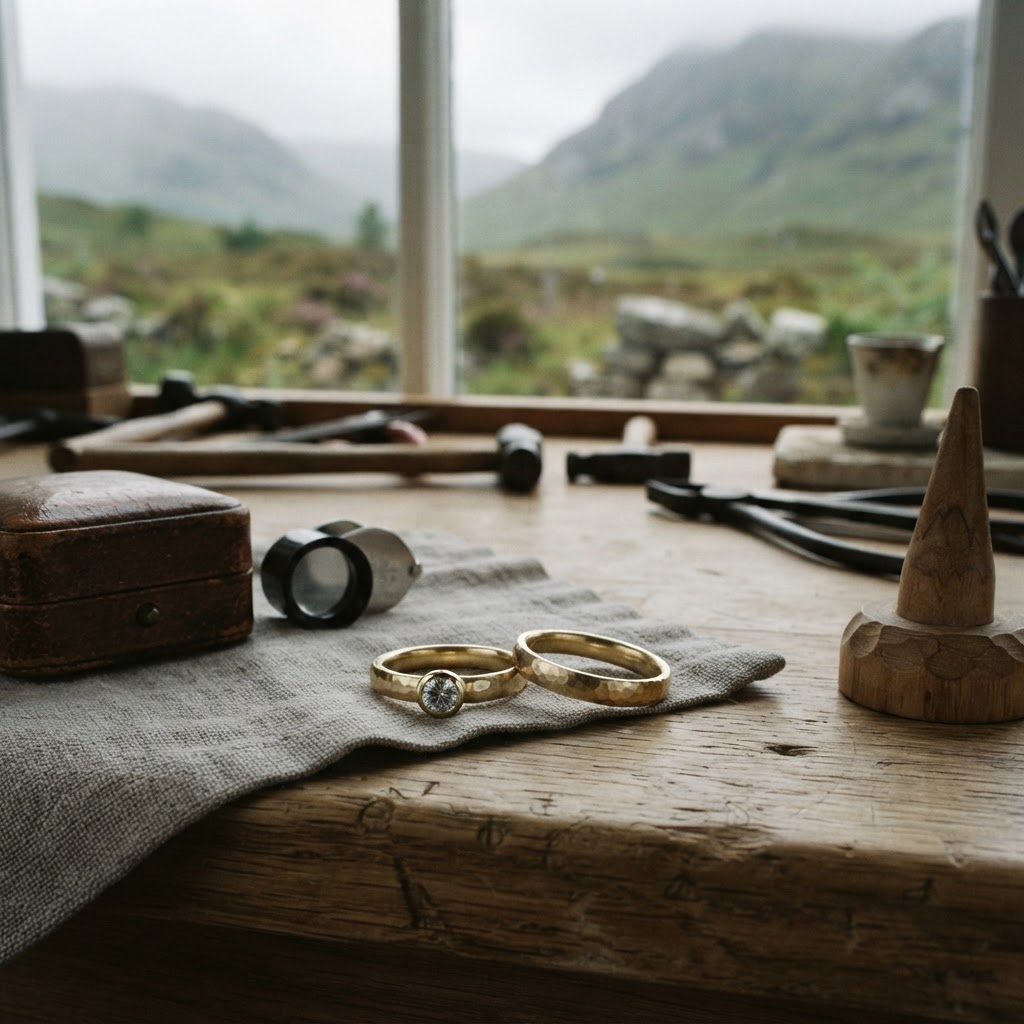
Handmade wedding bands in Scotland, crafted to your design
Handmade wedding bands in Scotland can be designed around your preferred shape, precious metal and gemstone details. A bespoke design gives you...
Handmade wedding bands in Scotland can be designed around your preferred shape, precious metal and gemstone details. A bespoke design gives you control over the ring’s appearance and personal touches. Start by deciding how you want the finished band to look and feel.
Choosing a wedding ring involves more than selecting a design. The metal, width, profile, finish and gemstones all affect the result, so it helps to understand how each choice shapes the finished band.
This guide explains how bespoke bands are designed and handcrafted, how to compare metals and gemstones, and what can affect the overall cost. It also outlines the steps involved, helping couples in Lanarkshire make informed decisions from the first design ideas to the finished ring.
Key Takeaways
- Set your design priorities first, including the band’s shape, finish and any personal details you want included.
- Understand how the chosen metal, gemstones and level of design work shape the making process.
- Allow the design and handcrafting stages to guide your planning, as the work involved affects production time.
- Compare Scottish jewellers by how they approach bespoke design, explain choices and translate a specification into a finished ring.
- Use a design tool or diamond selection service to organise your preferences before moving forward with a bespoke ring.
Bespoke and personalised wedding jewellery
A bespoke wedding ring starts with a design brief, not a fixed catalogue choice. Decide how the band should look, how it will sit beside an engagement ring and which details matter most. A sketch, reference image or written description can turn preferences into a clear design. For handmade wedding bands in Scotland, these choices shape the profile, finish and personal details before the ring is made.
Fit is part of the design. Choose a band size by measuring the finger where the ring will sit, then consider whether the chosen width and profile feel comfortable. A wider band can feel different from a narrow band, even at the same measured size. Try the proposed shape on your hand, and assess whether it moves comfortably over the knuckle and rests securely at the base of the finger.
Personalisation can be visible or discreet. Engraving can add names, a meaningful date, initials or a short phrase inside or outside the band. Keep the wording brief and check its spelling before engraving. A handwritten note, symbol or design motif can also guide the maker. For example, a simple line pattern could appear on both rings, while separate inscriptions keep each one distinct.
Personalised design choices work best when considered together. First, compare the wedding ring’s width and shape with the engagement ring. Then decide whether matching metal, a contrasting finish or a shared detail creates the intended connection. If one ring has a prominent setting, a shaped band may sit more closely alongside it. A straight profile can create a different outline. A custom jewellery design process can organise these choices into a defined specification.
A Scottish example shows how personal material can shape a ring design. Zanna and Timon’s wedding rings were made from wood sourced from the Isle of Bute. The material connected the design to a specific place, rather than relying only on engraving. Their story offers one approach to personalisation: start with a material, location or shared reference, then decide how to incorporate it into the finished bands.
Before approving a design, review the shape, metal, finish, inscription and fit separately. Confirm the engraving is legible at the chosen size and that the band works beside any engagement ring. A clear specification reduces the gap between the original idea and finished ring. Record every agreed detail in writing, including the exact inscription and its position.
Handcrafting and production time
Handcrafting follows a sequence, from preparing the metal to finishing the band. The design and chosen details determine the work involved.
Handmade and mass-produced bands
A handmade band is shaped and finished through individual bench work, following its own design specification. A mass-produced band uses repeatable production methods to create consistent designs. Compare the finish, profile and personal details. For example, a handcrafted ring can have a specific surface texture, while a standard design follows an established pattern.
Production time
Production time depends on the design and the work needed to complete it. A plain band follows a different process from a ring with a shaped profile, textured finish or set gemstones. The metal and any engraving also affect the sequence. Plan around the required design stages rather than assuming every handcrafted wedding ring follows the same schedule.
Making a ring can involve preparing the metal, forming the band, joining its ends, refining the shape and applying the finish. Each step affects the next. For example, polishing comes after shaping, because later filing or adjustments could change the surface. A design with gemstones also needs setting work before final inspection.
Design complexity affects the workflow. A simple, continuous band requires fewer separate operations than a ring with a distinctive contour or several decorative details. A matching engagement ring can also influence the band’s shape. Clear design decisions help establish the required tasks and how they fit into the making process.
Hand finishing gives the maker control over details such as the band’s edge, surface texture and symmetry. A brushed finish, for example, needs a different final treatment from a high polish. Engraving is a separate operation. Settle its position and wording before the finishing stage, so later work does not obscure the inscription.
Use a practical planning sequence: finalise the design, confirm the metal and finish, settle engraving, then schedule making and collection around the wedding date. Keep the engagement ring available if the new band must sit beside it. This gives the design process a reference for fit and shape. A bespoke ring design process can help organise those decisions into a defined specification.
For a Scottish wedding, include travel or collection arrangements in your plan. Keep the agreed design details together, including the finish, setting and inscription. This record gives each stage a clear reference, from preparing the metal to inspecting the completed band.
Jewellery made with precious metals and gemstones
Metal and gemstone choices affect a wedding ring’s appearance, structure and care. Compare gold, platinum and silver alongside any diamonds or coloured stones before settling the design. Each material has distinct visual qualities, so assess the stones and setting together rather than treating the setting as an afterthought.
UK hallmarking uses marks to identify the fineness of precious metals. Whether a ring must carry a hallmark depends on its metal and weight, so include hallmarking requirements in the specification.
Ethical, recycled and Fairtrade metals are distinct sourcing choices. Scottish jewellers may offer these options, depending on their suppliers and the selected metal. Ask for clear details of the metal’s source and any relevant documentation, then compare those details across the materials being considered.
Metal choice affects colour and the overall look of the jewellery. Yellow, white and rose-coloured gold create different contrasts with diamonds and coloured gemstones. Platinum and silver offer other visual options. Compare samples beside the engagement ring, because differences in colour and finish can be more noticeable when the bands sit together.
A diamond’s cut, outline and position influence how the finished ring reflects light. A stone set into the band creates a different profile from one in a raised setting. For example, a central diamond creates a clear focal point, while several smaller stones can form a repeated pattern. The band’s width and setting need to accommodate the chosen arrangement.
Gemstones vary in colour and appearance. A coloured stone can contrast with a plain metal band, while a diamond keeps the focus on reflected light. Decide whether the stone should sit flush with the band or rise above it. This choice affects the ring’s outline and how the setting integrates with the metal.
Use a simple comparison process before finalising the design:
- Choose the metal and compare its colour beside the engagement ring.
- Select a gemstone, then decide its shape and position.
- Review how the setting affects the band’s profile and finish.
- Record the metal specification and sourcing details with the design.
For example, a low-set diamond and smooth band create a different profile from a raised stone surrounded by smaller gems. Reviewing a sketch or sample makes these differences easier to assess. Settle the metal, stone and setting together so each element contributes to a cohesive design.
Bespoke handmade wedding bands in Glasgow
For couples searching for bespoke handmade wedding bands in Scotland, creating your ideal ring begins with clear choices about materials, shape and ordering. Separate these decisions, then compare designs with your requirements and the practical arrangements for receiving the finished ring from Jewellove.
Handmade band costs in Scotland
There is no single price for handmade wedding bands in Scotland. The total depends on the metal, band dimensions, design complexity, gemstones and engraving. A plain gold band and a shaped ring with set stones need different materials and making steps, so compare specifications rather than headline prices alone.
For a useful comparison, record the metal, width, profile, finish and setting details. A wider band may use more metal than a narrower design in the same material. A diamond setting involves separate stone and setting considerations. Review an itemised breakdown to see how each design choice affects the quoted total.
Scottish handmade ring specialists
Shoppers can compare Scottish jewellers whose work includes made-to-order wedding rings. Review portfolios for shaped bands, surface finishes and gemstone settings. Look for clear explanations of how a design brief becomes a ring specification, including how a sketch or reference image is refined before production.
Assess the design information as well as the finished photographs. A useful process addresses fit beside an engagement ring, metal choice, finish and setting. For example, a curved band may sit close to a particular engagement ring, while a straight band creates a different outline. Compare these details with your requirements.
Checks before ordering online
Before ordering online in the UK, review the written specification, ring size, metal, finish, engraving and gemstone details. Check that the measurement applies to the intended finger and band width. Confirm that the design record includes the details you approved, so you can compare the finished piece with your order.
Read the seller’s delivery, returns and resizing terms before paying. Bespoke or personalised items may have different terms from standard stock. Check the metal description and hallmark details, and make sure the gemstone is included in the specification. Keep the order confirmation and design images to refer to when the ring arrives.
Use a final review before submitting your order:
- Match the size, width and profile to the intended wearer.
- Compare the metal and finish with the written design.
- Check each engraving character and gemstone detail.
- Save the order record and delivery terms.
If the band will sit beside an engagement ring, compare their profiles before approving the design. A clear specification helps keep the ring details and ordering arrangements aligned.
Which Scottish jewellers specialise in handmade wedding rings?
For Lanarkshire couples, compare Scottish jewellers by the work they show and the design process they explain. A portfolio should include clear wedding-ring examples, not only engagement rings or general jewellery. Look closely at band profiles, edges, finishes and settings. These details help you assess whether a maker’s work meets your requirements, including when comparing options online.
Check how each jeweller turns an idea into a finished specification. A useful process explains how the metal, width, profile and finish are recorded. For example, a sketch of a curved band should show how its shape relates to the wearer’s existing ring. Clear design records make proposals from different Scottish makers easier to compare.
Use these criteria to organise your comparison:
- Review examples of handmade wedding bands and their finishing details.
- Check whether design changes are captured in an updated specification.
- Compare how gemstone settings and band profiles are explained.
- Look for clear information about ordering and delivery to Lanarkshire.
Photographs show a ring’s appearance, while design explanations reveal how its details work together. A band with a flush-set stone, for instance, has different requirements from a plain, uninterrupted profile. Look for descriptions that connect the setting, band shape and finish. This helps you assess whether the design addresses the features that matter to you.
Consider how the proposed ring will work with jewellery you already wear. If it must sit alongside an engagement ring, check whether the design process accounts for its outline. For matching wedding rings, compare how shared details, such as a finish or motif, can work across different profiles or sizes.
Review the order documentation before deciding. It should identify the agreed design details, including metal, size, finish, engraving and gemstone placement where relevant. For example, a note about a brushed finish should specify which surfaces receive it. Precise descriptions help you compare proposals on the same basis.
For a Lanarkshire order, compare delivery arrangements alongside design and making details. Check how the finished ring will be sent and what information accompanies the order. A specialist’s portfolio, design process and written specification together offer a practical basis for choosing a Scottish maker whose approach suits your requirements.
A cross-border arrangement can make delivery part of the design decision. Zanna and Timon lived in Belgium while arranging their wedding rings. To avoid import taxes, they arranged for their celebrant, Debbie Darby, to receive the rings in Scotland. Their experience shows why couples should discuss the intended recipient and destination before confirming an order. For Lanarkshire couples comparing makers, delivery arrangements matter alongside the ring specification, especially when those arranging the rings are outside Scotland.
Zanna and Timon first saw their wedding rings on their wedding day, just hours before the ceremony. Their experience highlights the importance of understanding what you can review before receiving the rings. Agree on the design information in advance and how the finished rings will reach the chosen recipient. A clear plan for making and delivery can help you feel prepared, even if the rings remain unseen until close to the ceremony.
Jewellove: Loose Diamonds
Jewellove helps you organise ring and diamond choices through its Loose Diamonds, Ring Maker and Bespoke Design Service. Use the Ring Maker to compare design options, or explore loose diamonds when choosing a stone for a wedding or engagement ring. The Diamond Quiz can help structure your diamond selection around your preferences.
Use these tools when you have a design direction but need to compare its components. For example, shortlist a ring shape, then review diamond options that suit it. If your specification is still taking shape, the Bespoke Design Service helps organise your preferences into a ring concept.
Explore ring and diamond options with Jewellove online.
Set your wedding ring design in motion
Before taking the next step, write a short design brief. Note the details you want to keep, the features you are still comparing and the choices that need to work alongside an engagement ring. This gives your ideas a practical starting point and helps keep the final design aligned with your priorities.
For couples considering handmade wedding bands in Scotland, Jewellove offers Loose Diamonds, the Ring Maker and a Bespoke Design Service. These options support different planning stages, from comparing stones to developing a ring concept. Use them when you are ready to turn your preferences into a clearer design direction.
Bring your chosen details together, then decide which option best suits your next step. A clear brief makes it easier to move from ideas to a considered ring design.
Start your design with one clear decision, then build from there at a pace that suits you.
Frequently Asked Questions
Where can I buy handmade wedding bands in Scotland?
Look for Scottish jewellers who show made-to-order work and explain their design process. For handmade wedding bands in Scotland, compare examples, written specifications and ordering arrangements before choosing. Lanarkshire shoppers can browse wedding rings online with Jewellove and use the Ring Maker or Bespoke Design Service to develop a ring concept. These tools help you make design decisions; assess the maker’s process when selecting a handmade piece.
What metals and designs are available for handmade wedding bands?
Options include gold, platinum and silver, with plain, shaped, textured or gemstone-set designs. The right combination depends on the appearance and profile you want. For example, compare a smooth band with a patterned finish, or a simple outline with a diamond design. If choosing two rings, decide whether they should share a metal or have distinct finishes that work together.
Can Scottish jewellers customise or make wedding bands to order?
Yes. A bespoke design can specify the band’s outline, surface finish, engraving and gemstone placement. Jewellove offers a Bespoke Design Service and Ring Maker to help organise ring preferences into a design concept. For a made-to-order piece, provide a clear brief and review the resulting specification before production. This gives the ring’s key features a defined reference.
How long does it take to make handmade wedding bands in Scotland?
Production time depends on the design and the work needed to complete it. A straightforward band has fewer elements to coordinate than a ring with detailed shaping, engraving or gemstone settings. Design approval also affects when production starts, since changes can alter the specification. Plan backwards from the wedding date, allowing time for design decisions, making and delivery arrangements.
What UK hallmarking rules apply to handmade wedding rings?
UK hallmarking marks identify the fineness of precious metals. Whether a handmade wedding ring must carry a hallmark depends on its metal and weight.