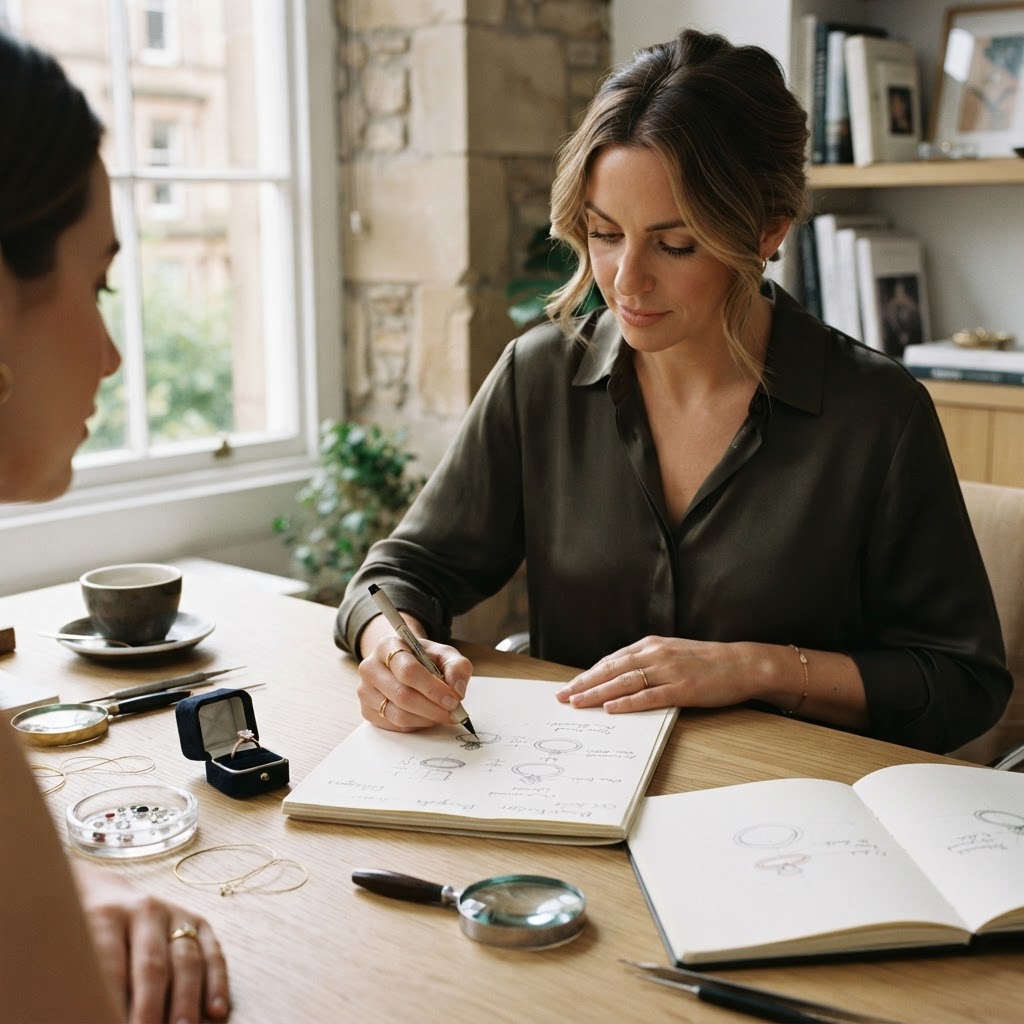
Jewellery design consultations in Glasgow for bespoke sketches
You don’t need to travel to Glasgow to start planning a ring. A jewellery design consultation in Glasgow can turn your ideas for an engagement or...
You don’t need to travel to Glasgow to start planning a ring. A jewellery design consultation in Glasgow can turn your ideas for an engagement or wedding ring into a clear brief and design options. If travel is difficult, begin by organising your preferences and the choices that will shape the design.
It’s reasonable to want to see how an idea might look before settling on a final design. This guide explains what to prepare, how sketches help you compare options, and which details influence the finished ring. It also covers how to review a design and plan your next step, so you can make decisions in a clear order.
Key Takeaways
- Prepare your preferred metal, stone and design details before a consultation to give the sketching process a clear starting point.
- Compare bespoke sketches against practical requirements such as fit, proportions and how the ring will sit alongside other jewellery.
- Use the design discussion to define the key choices for an engagement or wedding ring before settling on a final version.
- Allow for different commission timescales: made-to-order silver rings take 1-2 weeks to deliver, whilst made-to-order gold rings take 4-6 weeks.
- Explore custom jewellery options by deciding which piece type and design details matter most to you.
Bespoke design sketches and choosing a final design
A bespoke design consultation turns your requirements into design decisions, from metal and stone to the ring’s proportions. Use the sketches to compare practical details before approving a final design.
Bespoke design sketches
A sketch translates your brief into visible choices. It can show the outline, setting, stone position and band proportions, helping you compare options such as a plain silver band and a ring with a central stone. Look for clear differences between each version, and note which details are fixed and which can be adjusted, such as the band width or setting height.
Bring reference images or a written list of requirements to keep the bespoke jewellery discussion focused. For a special design, note the intended wearer’s usual activities and preferred fit alongside visual details such as colour and shape. These details give the designer practical criteria for developing and revising the design.
Choosing the final design
Compare each design against the same criteria: appearance, comfort, stone security and how the ring will be worn. For example, a low setting may suit someone who regularly wears gloves, while a more prominent setting changes the ring’s profile. Before manufacture begins, record the chosen metal, stone placement and band shape in the final design.
To compare jewellers on price, materials and service, assess the same design brief against each written estimate. Separate design work, materials, stones and manufacture where these costs are itemised, then compare the stated metal options and what each service includes. Consultation costs depend on the fee structure, so distinguish any design charge from the price of the finished piece.
Consultation process
A jewellery design consultation typically moves from brief to options, review and approval. Describe the piece, its intended use and your preferred materials. The designer can then develop options and discuss changes. A Glasgow consultation should leave you with a clear record of the agreed design and the features that will guide manufacture.
Consultation fees and deposits depend on the jeweller’s terms. Check how a consultation charge relates to design work and whether a production deposit is separate. This distinction helps you compare the commitment required before manufacture without confusing it with the finished jewellery’s total cost.
Custom jewellery and bridal designs
Custom jewellery can include rings, necklaces, earrings and pendants, with choices shaped by intended use and preferred materials. Bespoke bridal jewellery may include an engagement ring, wedding ring or coordinated pair. For a bridal set, compare the bands’ profiles and check how the rings sit together in the designs.
Redesigning or remodelling existing jewellery may be possible when its materials and construction suit the new design. Include the existing piece in your brief and identify which elements should remain, such as a stone or metal detail. Ask for the proposed changes to appear in the design before approving the final version.
Warranty, resizing and aftercare terms vary between jewellers. Compare the written terms for what is covered, whether resizing is included and what care is recommended for the chosen metal and setting. The bespoke jewellery design process also benefits from a clear brief and a documented final design.
Jewellery consultations for engagement and wedding rings
Engagement and wedding rings need to work both individually and as a pair. Use a consultation to set priorities for shape, material, stone and fit before settling on a design. Comparing options helps distinguish visual preferences from practical requirements, such as daily wear or how the ring sits beside another band.
Set the engagement ring brief
Start with the intended wearer’s preferences. Note their preferred metal colour, stone shape and setting height, along with designs they already wear. For example, someone who uses their hands frequently may prefer a lower-profile setting that is less likely to catch on clothing. Solitaire, halo and three-stone designs create different visual effects, so compare their layouts and proportions rather than choosing by name alone.
Stone size and setting affect the ring’s overall appearance. A central stone can be the main feature, while smaller stones around it change the outline and surface detail. Ask for the design to show the setting from the side as well as above. This makes its height and profile easier to assess before approval.
Plan the wedding ring
Decide whether the wedding band should sit flush against the engagement ring or leave a visible gap. A curved or shaped band can follow the outline of a setting that extends beyond the main band, while a straight band creates a different profile. Use a sketch or ring profile to compare how the pieces align when worn together.
Material choice also affects the finished appearance. Compare the wedding band’s colour and finish with the engagement ring, especially if they use different metals. A polished surface reflects light differently from a brushed finish. Include your preferred finish in the design notes so it becomes part of the specification, not an assumption during making.
Compare the designs as a set
Review the engagement and wedding rings together before confirming either design. Check whether the bands sit comfortably side by side, whether the settings compete visually and whether their combined profile suits the wearer. If one ring is already owned, use its shape and dimensions as a reference for the new piece. This gives the design discussion a practical starting point.
Keep a record of the selected metal, stone arrangement, setting and finish. A ring design consultation can help organise these choices into a bespoke ring brief. For a final comparison, assess each option against the same priorities: daily wear, fit beside the other ring, preferred appearance and material. This makes the decision specific to the intended pair.
Commission timescales
Delivery timing depends on the material, design and work required to make the piece. Made-to-order silver rings take 1-2 weeks to deliver, whilst made-to-order gold rings take 4-6 weeks. These are useful planning points for a ring commission, but the design and approval stages also need space in your schedule.
Build the schedule around the ring
Start with the date you need the ring, then work backwards through design approval, manufacture and delivery. For a made-to-order gold ring, allow the stated 4-6 weeks for delivery after the design is agreed. A made-to-order silver ring takes 1-2 weeks to deliver. Keep the metal and ring type clear in your plan, since the listed times differ by material.
An engagement or wedding ring may need to fit alongside another piece. Agree on the profile, setting and finish before making begins. If the design changes after approval, the production sequence needs to reflect those changes. Discuss the order of steps with the jeweller and keep the final design details together.
What can affect the timetable?
Design complexity affects how much detail needs to be resolved before manufacture. A plain band involves different decisions from a ring with a shaped setting or several stones. Material matters too: stated delivery times for made-to-order silver and gold rings differ. Settle the main choices early, including the ring’s shape, metal and stone arrangement.
Approval is a key point in the process. Review the design carefully before authorising manufacture, and put requested changes in a single list. This gives the workshop one clear set of instructions, rather than separate or conflicting notes. Changes to the band profile, setting or materials may alter the work required, so agree on the revised design before production continues.
Plan for an important date
For a proposal or wedding, set the required delivery date first. Then use the stated delivery period to plan the order and design discussion. A wedding ring intended to sit beside an engagement ring needs a profile and fit decision before manufacture. Build that comparison into the design stage, rather than leaving it until the delivery date is close.
Record the agreed design, material and delivery timing in the order details. Keep updates in the same written record, especially if the specification changes. This makes it easier to track what has been approved and which version the workshop should use. For made-to-order rings, distinguish the stated delivery period from the time spent discussing and approving the design.
Which Glasgow jewellers offer jewellery design consultations?
In Glasgow, look for jewellers who describe their work as bespoke design, custom design or ring design consultation. These terms suggest the service may involve discussing a new piece, rather than choosing only from ready-made designs. Check that the consultation covers the type of jewellery you want, such as an engagement ring, wedding band or pendant.
Use the same brief to compare each consultation. Record the piece type, preferred material, stone choice and any design constraints. For example, a wedding band that must sit beside an existing engagement ring needs a different discussion from a standalone pendant. Examples of bespoke work can also help you assess whether a jeweller’s design approach suits your requirements.
Compare the consultation process
Look for a clear sequence: discuss the brief, develop design options, review the details and approve a final specification. Ask what the consultation produces, such as sketches, design notes or a written estimate. These details help you compare services by what they include, rather than relying on labels such as “bespoke”.
Look for a clear process for handling design changes. A useful process records agreed details, including metal, stone setting, dimensions and finish. If you want to remodel an existing piece, the initial discussion should identify which elements you want to retain. This defines the design task before manufacture begins.
Compare materials, costs and service details
Compare estimates using an identical design brief. Separate design work, materials, stones and manufacture where the estimate provides those details. A silver band and a gold ring are not like-for-like comparisons. The same goes for a plain setting and a design with several stones. Review the stated specification before comparing totals.
Consultation fees, deposits, resizing and aftercare are separate service terms. Read the jeweller’s information for each point and note what applies to the design and finished piece. For example, establish whether a design charge is separate from a production deposit. This gives you a fuller comparison than looking at the ring price alone.
Choose a suitable Glasgow service
Match the consultation format to the decisions you need to make. A focused ring discussion may suit a brief with a clear stone and metal preference. A broader bespoke discussion may help if you’re still comparing ring profiles or planning a coordinated bridal set. If travel to Glasgow is difficult, choose a service that explains how the design discussion and review can be completed remotely.
Before choosing, prepare a concise brief and identify the questions that affect your decision. Compare design examples, material options, process and written terms against that brief. A jewellery design consultation in Glasgow is most useful when its scope suits your piece and leaves you with a clear next design decision.
What types of custom jewellery can Glasgow designers create?
Custom designs can include rings, wedding bands, necklaces, earrings and pendants. A consultation turns your preferred piece into a brief covering material, shape, finish and stones. Choose the item first, then note how it will be worn. A ring for daily use has different fit and profile needs from a pendant worn occasionally.
Custom rings and bridal jewellery
Ring designs vary by band shape, setting and stone arrangement. A solitaire has one central stone, while a halo design places smaller stones around it. Three-stone rings create another distinct layout. Compare the setting from above and the side, then decide which details matter most for the wearer’s routine and preferred appearance.
Bridal jewellery can include an engagement ring and wedding band designed as a coordinated pair. A shaped band may follow the outline of a raised setting, while a straight band creates a different join. Consider both pieces together in the design to clarify their fit and appearance side by side.
Necklaces, pendants and earrings
A bespoke necklace or pendant can be planned around its length, outline and focal detail. For example, a small pendant for everyday wear may need a simple profile, while a larger statement piece needs a clear balance between its shape and chain. Note your preferred metal and any existing jewellery the new piece should complement.
Earrings can be designed as studs, drops or a matching pair with a particular motif. A custom design brief should identify the preferred scale, fastening style and whether both earrings should match exactly. For instance, drop earrings can repeat the same shapes, while a single pendant can use that motif in another format.
Choose materials and design details
Material choice influences colour, finish and overall design. Compare silver and gold by considering the wearer’s existing jewellery and preferred appearance. Add practical details to the brief, such as a smooth ring edge or a pendant that sits flat. These specifics turn broad preferences into a design that can be reviewed clearly.
Before approving a custom piece, separate fixed requirements from flexible details. Reusing a particular stone might be essential, while the band profile or surface finish may be flexible. This makes the next design discussion more focused and helps the sketch communicate the intended result. A bespoke jewellery discussion can start with one piece and develop its details systematically.
Jewellove: Loose Diamonds
Jewellove can help you turn a ring design brief into options to compare. Explore Loose Diamonds when selecting a stone, or use the Diamond Quiz to organise your diamond preferences. The Ring Maker supports ring customisation, while the Bespoke Design Service suits a design that needs a more tailored approach.
Start with the decision you still need to make. If the ring’s outline is clear but you haven’t chosen a centre stone, compare loose diamonds. If the overall design needs shaping, use the Bespoke Design Service to develop your brief. These options provide a practical next step after you’ve considered materials, settings and how an engagement or wedding ring will be worn.
Contact Jewellove to discuss your jewellery design requirements.
Turn your design brief into a clear next step
A considered design starts with priorities, not every possible detail. Choose the feature that matters most, whether it’s the ring’s shape, a particular stone or how it sits beside another piece. Use that decision to guide the next discussion and keep the process focused. A jewellery design consultation in Glasgow can help translate your preferences into a practical brief, including if you can’t travel to the city.
Jewellove offers Loose Diamonds, a Ring Maker and a Bespoke Design Service to support different stages of ring planning. Use them to compare stones, organise design choices or develop a bespoke idea. Start with the part of the design that still needs a decision, then build from there.
Bring your preferences together and take the next step at your own pace.
Frequently Asked Questions
Can’t travel to Glasgow?
You can begin researching designs online without travelling to Glasgow. Jewellove is an online platform where you can browse Loose Diamonds and use tools such as the Ring Maker to organise your ring preferences. If you’re in Lanarkshire, prepare your design notes digitally, including your preferred metal, stone shape and ring size. Online browsing can help clarify your choices, though it does not replace a discussion format that requires an in-person meeting.
How should I prepare for the consultation?
Prepare a short design brief before your consultation. Note the jewellery type, intended use, preferred material and essential details. For an engagement ring, you might record whether the wearer prefers a low setting or a particular stone shape. Add a separate list of flexible choices. This keeps the discussion focused and shows which decisions can change as you compare options.
What should I bring to a custom jewellery consultation?
Bring reference images, written notes and any existing pieces that affect the new design. For example, plan a wedding band with the engagement ring it will sit beside. If you can’t bring the original piece, take clear photographs from several angles and note its material and shape. Include ring-size information if available, and identify which features you want to keep or avoid.
How long does bespoke jewellery design and production take in Glasgow?
Made-to-order silver rings take 1-2 weeks to deliver, whilst made-to-order gold rings take 4-6 weeks. Those periods relate to delivery, not necessarily the full design process. The time needed to agree a bespoke design depends on how many details require discussion and revision. Finalise the design before planning around a proposal or wedding date, and keep design approval distinct from the production period.
What questions should I ask before commissioning custom jewellery?
Ask what the design process includes, which materials and stones are in the specification, and how changes are handled before approval. Clarify whether the estimate separates design work, materials and manufacture. For a ring, discuss how its finished profile will sit beside other jewellery and what resizing or aftercare terms apply. In Lanarkshire, keep the agreed design details and written terms together for easy reference.