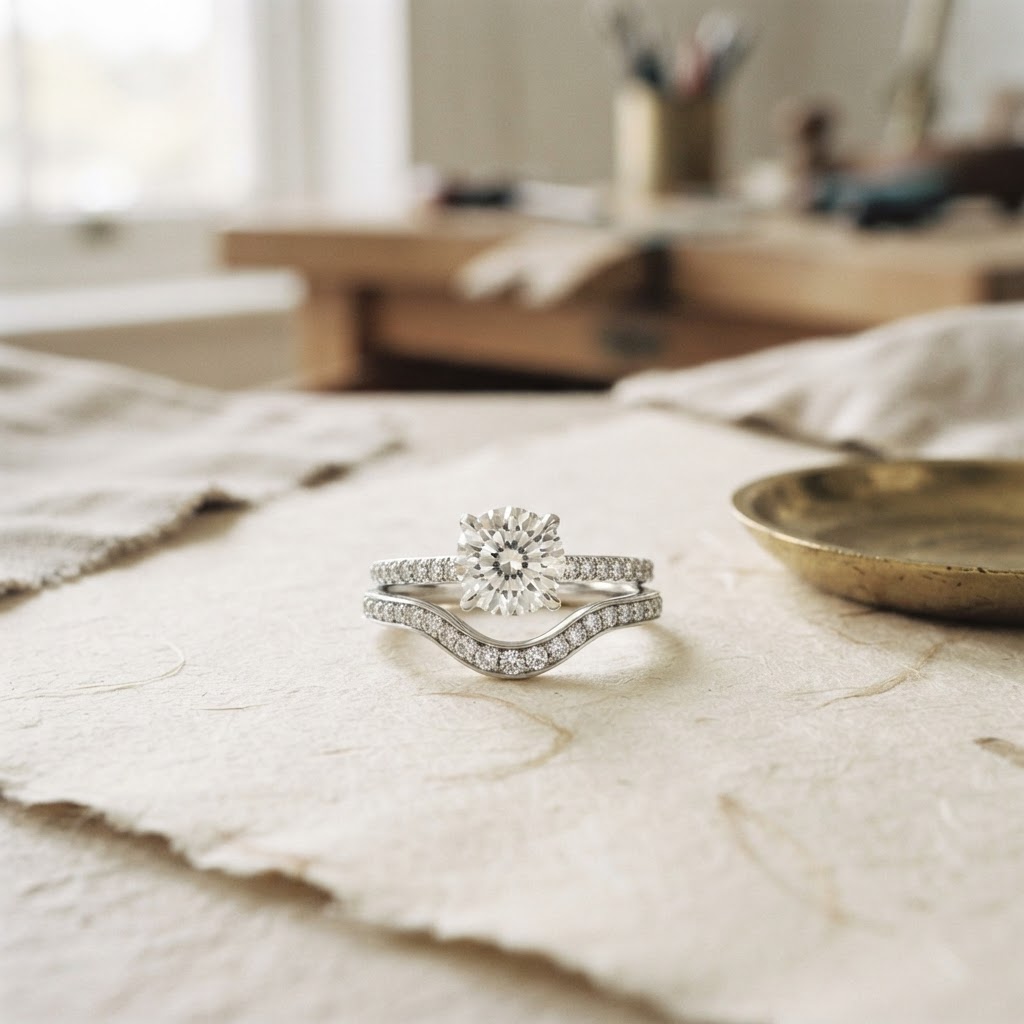
Custom wedding bands in Hamilton shaped to fit your engagement ring
A wedding band doesn’t have to leave a gap beside an engagement ring. Custom wedding bands in Hamilton can be shaped to follow the engagement ring’s...
A wedding band doesn’t have to leave a gap beside an engagement ring. Custom wedding bands in Hamilton can be shaped to follow the engagement ring’s outline, helping the rings sit closer together. The design starts with the engagement ring’s shape, setting and profile.
If you want both rings to sit comfortably side by side, fit matters as much as appearance. This guide explains how a shaped band is designed, which details affect the fit, and what to consider when choosing metal and finish. It also covers how to prepare for a design consultation.
Key Takeaways
- Use the engagement ring’s profile and setting as the starting point for a wedding band that sits neatly beside it.
- Decide on the engraving text and placement early, as these details form part of the design brief.
- Check what hallmarking and warranty information covers, and keep the relevant documentation with your purchase records.
- Allow the design, approval and delivery stages to shape your timeline, rather than relying on a standard production estimate.
- Compare how each Hamilton jeweller handles design decisions, ring fit and the steps from consultation to finished band.
Custom bands shaped to fit engagement rings
A shaped wedding ring follows an engagement ring’s outline to reduce the gap between them. When considering custom wedding bands in Hamilton, start by assessing the engagement ring’s setting, profile and fit beside a straight band.
Metals, finishes and designs
Choose a metal and finish that complement the engagement ring’s colour and surface. Options include yellow, white or rose gold, and platinum, with polished, satin or brushed finishes. For example, a brushed band beside a polished engagement ring creates a noticeable contrast in texture.
Design options include a straight band, a curved contour or a notch shaped around the setting. Check the rings from above and from the side: they may align neatly in one view but sit unevenly in another. Bring the engagement ring to the design discussion so its profile can guide the band’s shape.
Costs and price factors
The price of a custom wedding band depends on the metal, the amount of material, the band’s width and thickness, and the complexity of its shape. Added features, such as set stones or a more involved contour, also affect the work required. A plain band and a shaped band with extra detailing are different specifications, so compare like with like.
Ask for a breakdown of the metal, design work and any added features. If you plan to use existing gold, the amount available and whether extra metal is needed will affect the specification. A clear design brief makes the options easier to compare than a general price estimate.
The commissioning process
Start with the engagement ring and explain how closely you want the wedding ring to sit beside it. Next, record the ring size, review the setting and agree on the band’s profile, width, metal and finish. Professional sizing before ordering helps establish a suitable fit.
Review the proposed design before production. Check the contour against the engagement ring, then confirm the material and surface finish. Keep a record of the approved design details, including any agreed changes. This helps prevent a mismatch between the intended shape and the finished pair.
Consultations and design models
A consultation can establish the key measurements and design choices, including whether the band needs a curve or notch. Some jewellers use a 3D design to show proportions on screen; others may use a wax model to demonstrate the physical shape. These are different ways to review a proposal before production.
When comparing jewellers in Hamilton, look for clear information about the consultation and design process. Reviews that describe ring fit, design revisions and the finished alignment are more useful than star ratings alone. Ask to see how the proposed band sits beside the engagement ring in a design view or model, if one is used.
Engraving a personal message
An inscription adds text or a small symbol to the inside or outside of a wedding ring. First decide what the message should communicate and how it relates to the wearer. Options include initials, a date, a short phrase or a simple motif. The space available depends on the ring’s width, profile and size, so a concise message is easier to assess against the band.
Choose wording that fits
Start with the exact wording, including capital letters, punctuation and spelling. “A + B” uses fewer characters than a full pair of names, whilst a date such as “12.06.26” records a specific occasion. These are examples, not a required format. Read the proposed inscription aloud, then check that it remains clear without extra words.
Initials, a shared phrase or a meaningful date can all work. A symbol, such as a small heart, takes up space too. Decide whether both rings should carry matching text or separate inscriptions. Matching initials, for example, create a paired design, while each wearer’s ring could hold a different word.
Plan placement and legibility
Inside engraving keeps the message less visible during everyday wear, while outside engraving makes it part of the ring’s visible design. Consider how the inscription will sit beside the band’s finish and any stones or patterns. A narrow band may leave less room for text than a wider one, so review the ring’s dimensions before settling on the wording.
Review the inscription’s layout before approving it. Check the text’s direction, the spacing between characters and how any symbol appears beside the words. A date separated by dots, for example, can look different from one separated by slashes. Confirm the final version in writing, especially if initials or dates could be read in more than one order.
Confirm the engraving method
Engraving can be done by hand or machine, depending on the design and process. Hand engraving can create a more individually worked appearance, while machine engraving can reproduce a chosen layout consistently. The ring’s metal, surface and available space influence which method suits the inscription. Ask how the method will affect the appearance of fine letters or small symbols.
Discuss engraving before production begins. Confirm whether the text can be changed after approval and how it will be checked against the finished ring. Follow a clear sequence: prepare the wording, review the layout, approve the inscription, then proceed with the ring. This helps avoid preventable errors in names, dates and punctuation.
Hallmarking and warranty
Before approving a bespoke wedding ring, check two separate things: the metal identification and the written warranty terms. They serve different purposes. Ask the jeweller to explain the marks on the finished ring, then read the warranty document for its specific cover, exclusions and claim steps. This gives you a record of the ring’s metal and the support described in the terms.
Understand the hallmark information
Ask which marks will appear on the ring and what each identifies. The jeweller should explain them in plain language, including how they relate to the metal selected for your design. For example, if the order specifies a particular gold alloy, compare that description with the information recorded for the finished ring.
Keep the order details and any hallmark information together. Check that the paperwork describes the metal and design you approved. If the ring is shaped to sit beside an engagement ring, make sure its description matches the bespoke specification. Clear records help identify the piece later, especially if you own several items of jewellery in similar metals.
Read warranty terms as written
A warranty sets out the support provided under its stated terms. Coverage can depend on the issue, the ring’s condition and how the problem arose. Read each condition rather than assuming that every repair or alteration is included. For example, a document may distinguish a manufacturing fault from damage or wear, so note how it defines each case.
Check the claim process as well as the coverage. Record how to submit a claim, what proof of purchase is needed and whether the ring must be returned for assessment. Keep the receipt, design approval and warranty document together. If the ring has engraving or a shaped contour, retain those details too, so you can compare the original specification with the ring.
Keep a clear purchase record
At collection, compare the finished ring with the order record. Check the metal description, size, engraving and agreed design details. Note any documents supplied with the ring and store them alongside the receipt. A digital folder can hold photographs of the paperwork and ring, making everything easier to retrieve if a warranty question arises.
For a custom wedding band, written terms matter as much as the design brief. Keep the approved specification and warranty together, and follow the stated process if a concern develops. This gives you a clear reference without confusing hallmark information with warranty cover.
Production and delivery times
Plan for two separate stages: making the ring and getting it to you. For a shaped wedding band, the approved design, materials and delivery method all affect the schedule.
Production times
Production starts once the design and ring size are agreed. A plain band involves fewer design decisions than a contoured ring made to sit beside an engagement ring. A setting, stone details or engraving can add steps, as each feature must be included in the specification and checked during production.
Use design approval as the point to organise your wedding date and other plans. Before work begins, record the agreed metal, profile, finish, size and any inscription. Changing a straight band to a curved shape after approval, for example, can alter the design and require further work. Keep a copy of the final specification so you can identify any later changes.
Ask for a production estimate based on the approved design, rather than treating it as a universal timeframe. The amount of hand-finishing, contour complexity and any stone setting affect the work involved. If the ring is being made to match a particular engagement ring, its measurements and shape provide important reference points. These details help establish a realistic production plan.
Allow time to review the design before production. Check the ring’s profile, width and finish against the engagement ring, then approve the final version. A clear approval stage helps prevent revisions caused by a misunderstood detail. If the band includes engraving, confirm the wording and placement at the same time.
Delivery times
Delivery begins after production and any final checks are complete. The handover method affects the remaining schedule: collection needs to be arranged, while delivery involves packing, dispatch and transport. Confirm which method applies to your order and use the expected handover date when planning the wedding arrangements.
For delivery to Hamilton, account for the stated dispatch and transport stages, not just the making period. Make sure the recipient’s name, address and delivery instructions are accurate. An incomplete flat number, for example, can interrupt a courier handover even when the ring is ready to leave the workshop.
Coordinate the ring’s arrival with any remaining tasks, such as trying it beside the engagement ring or arranging a final fit check. If you plan to wear both rings together, inspect their alignment when the wedding band arrives. Compare the finished ring with the approved profile and specification, then store the order record with its documents.
Plan around the full sequence: design approval, production, final checks and delivery or collection. Share the date you need the ring before settling the schedule. This gives the production and handover stages a clear deadline, without assuming one maker’s timeframe will suit every custom design.
Which jewellers in Hamilton, Scotland, make custom wedding bands?
When shortlisting options in Hamilton, distinguish a custom-made band from a standard wedding ring chosen from existing designs. A maker offering custom work should explain how the engagement ring’s profile informs the new band’s shape. Look for clear information about design choices, approval and production, rather than relying on the word “bespoke” alone.
Use the engagement ring as your reference when comparing local options. Check whether the jeweller’s process accounts for the ring’s setting, metal, fit and intended finish. A band shaped around a raised setting, for example, needs different design decisions from a straight band beside a low-profile ring.
Compare each jeweller against the same practical criteria:
- Design scope: Does the service cover a curved, notched or otherwise shaped profile?
- Design review: Can you review the proposed shape before approving the final specification?
- Material choices: Are the metal and finish discussed alongside the engagement ring?
- Order details: Are size, profile, engraving and delivery arrangements recorded clearly?
Customer reviews can reveal recurring details about a jeweller’s process. Look for comments about the design brief, communication, revisions and how the finished wedding band sat beside the engagement ring. A review describing a particular custom order offers more practical detail than a general rating. Compare like with like, since feedback on a ready-made ring may not reflect a bespoke commission.
Before choosing a Hamilton jeweller, prepare a concise design brief. Include a photograph of the engagement ring, your preferred metal, the fit you want and any engraving. Then compare how each maker explains the next steps. A useful response should clarify how the design will be reviewed and what needs approval before production.
Consultation formats also differ. One jeweller may discuss measurements and sketches, whilst another may show a digital model or physical sample. Focus on whether the method helps you assess the band’s contour beside your own ring. A 3D view, for example, can help communicate proportions, but the key comparison remains the approved design against the engagement ring.
For custom wedding bands in Hamilton, choose a maker whose process accounts for your specific engagement ring, not just your preferred style. Keep the agreed specification and design images together. These records give you and the jeweller a clear reference for the requested shape, material and finish.
Get professionally sized before ordering a wedding ring. Treat sizing as part of preparing for a custom commission, rather than leaving it until after the design is settled. When discussing a shaped band, ask how the size will be recorded alongside the profile, metal and finish, and ensure the specification reflects the size you intend to order.
Before approving the order, confirm that the sizing information is included with the design details you keep. Raise any questions about sizing with the jeweller before giving approval.
Jewellove: Loose Diamonds
Jewellove’s Bespoke Design Service helps shoppers plan a ring around specific design requirements. If your wedding band needs to sit beside an engagement ring, use the service to bring together details such as profile, metal and finish. The Ring Maker helps you explore design choices, while Loose Diamonds and the Diamond Quiz support shoppers still considering an engagement ring.
Use these tools when you’re ready to move from comparing options to preparing a design brief. Record the engagement ring’s key features and the fit you want from its accompanying band. This gives the design process a clear starting point.
For help with your ring design, contact Jewellove or visit jewellove.co.uk.
Set your next design step
Choose the detail that matters most before you begin: how the band sits beside your engagement ring, the metal or the final profile. That priority gives your design brief a clear starting point. For custom wedding bands in Hamilton, an organised brief helps turn your preferences into a design direction.
Jewellove’s Bespoke Design Service supports tailored ring design. The Ring Maker helps organise your design choices, while Loose Diamonds are relevant if you’re also considering an engagement ring. Choose the option that matches your current decision, then bring your preferred details together for the next stage.
Take the next step when you’re ready to discuss your wedding band.
A clear starting point makes it easier to move forward with confidence.
Frequently Asked Questions
How long does it take to design and make custom wedding bands in Hamilton?
The timeline depends on the design and the steps needed before the ring is ready. A simple profile involves different work from a band shaped around a detailed setting or finished with engraving. For a wedding date in Hamilton, start with the date you need the ring, then plan backwards through design approval, production and delivery. Allow time to review the final specification.
Can Hamilton jewellers make matching or bespoke bands to fit an engagement ring?
Yes, a bespoke band can be designed around an engagement ring’s shape and setting. The design brief should identify where the rings need to meet, whether the band should follow a contour and how the pair should look together. A raised setting, for example, can affect the wedding band’s inner curve. In Hamilton and across Lanarkshire, bring clear photographs or ring measurements to explain the fit you want.
What warranties, resizing and aftercare do custom wedding bands in Hamilton include?
Warranty cover, resizing and aftercare are separate terms, so read each one in writing before ordering. A warranty document defines the covered issues and claim process; resizing terms explain whether adjustments are included and any limits. Aftercare instructions should identify suitable cleaning and storage for the ring’s metal and finish. Keep the receipt and approved design details together, especially if the band has engraving or a shaped profile.
How do customer reviews compare for custom wedding band makers in Hamilton?
Compare reviews for specific accounts of ring fit, design revisions and how the finished band aligns beside the engagement ring, rather than relying on star ratings alone.