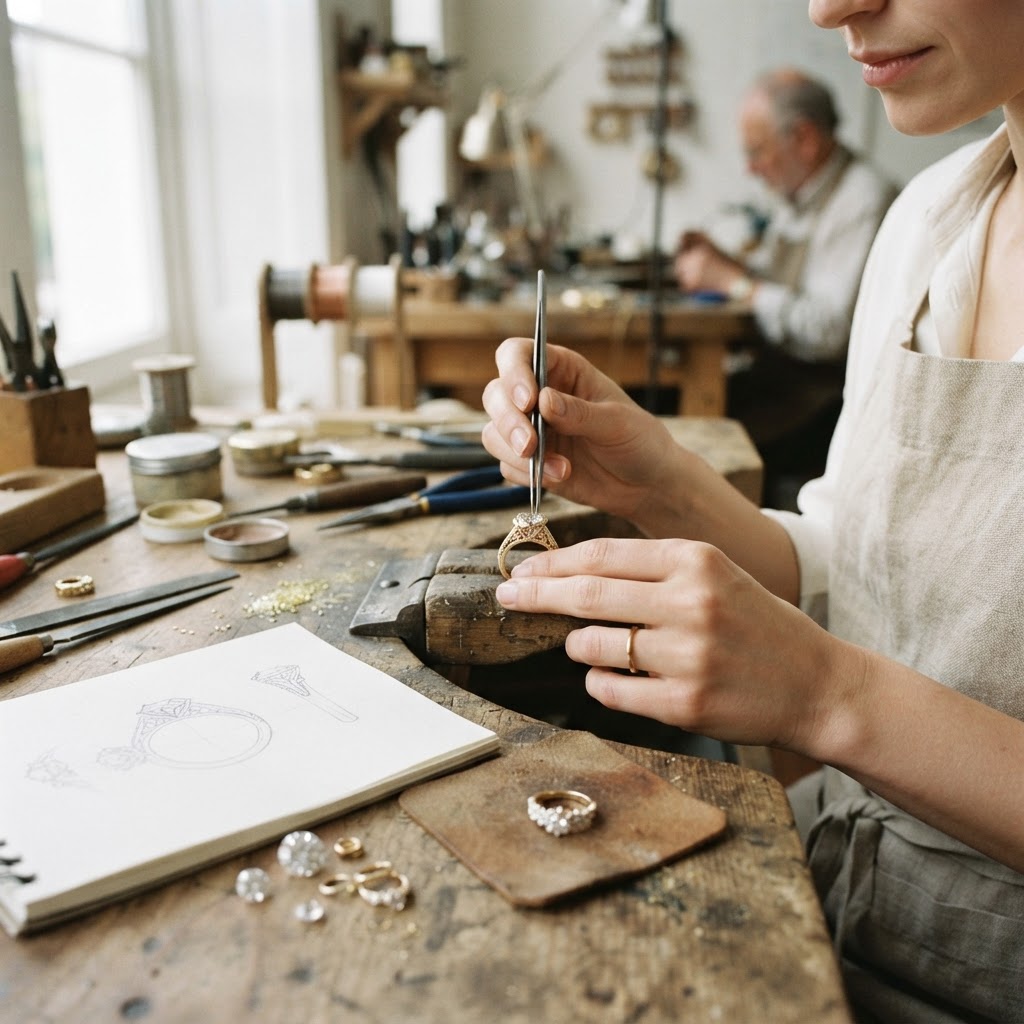
Bespoke Jewellery Design: How the Process Takes Shape
A bespoke piece is designed for an individual, rather than chosen from a finished range. Understanding how bespoke jewellery design works means...
A bespoke piece is designed for an individual, rather than chosen from a finished range. Understanding how bespoke jewellery design works means following the process from an initial consultation and gemstone selection to design review and making. In most cases, the process takes 4-8 weeks from consultation to completion.
It’s reasonable to expect more than a change of stone or metal: the value of a bespoke design is how its details are shaped around the wearer and the brief. The process also gives you opportunities to compare options and review how the design could look before it’s made.
This article explains what bespoke jewellery means, how consultations guide the design, what to consider when choosing diamonds or coloured gemstones, and how sketches and 3D visualisation support design decisions. You’ll also see what happens between approving a design and receiving the finished piece.
Key Takeaways
- Define the design brief by noting the wearer’s preferences, intended use and any features with personal meaning.
- Compare diamond and coloured gemstone options by considering appearance, setting and how the stone will work with the design.
- Consider whether an existing design can be adapted or whether a piece designed from scratch better fits the brief.
- Ask how an heirloom stone could be incorporated into a new piece, as existing diamonds or gemstones can be reused.
- Use sketches and realistic CAD images to review the design before making begins; bespoke jewellery commonly takes 4-8 weeks from consultation to completion.
Choosing diamonds and coloured gemstones
Gemstone choice influences both the appearance and construction of a piece. Compare the stone’s cut, colour, outline and intended setting before deciding how you want the finished jewellery to look.
Sourcing diamonds and coloured gemstones
Sourcing means identifying stones that fit the design brief, then comparing suitable options before selecting one. Private jewellers may use networks of contacts to source stones rather than keeping a large inventory for walk-in customers. This can make the selection process more targeted: the shape, colour and size needed for a particular design guide the search. Discuss those priorities early, including whether you prefer a diamond or a coloured gemstone.
For diamonds, compare the 4 Cs: cut, colour, clarity and carat. Cut is treated as the most important factor because it affects how well a diamond sparkles. Lab-grown and natural diamonds are both real diamonds, so the choice is about which option suits your preferences and design; fine jewellery guides from Robson's Jewelers often explore how distinct diamond origins and crystal structures influence durability and appeal. For example, two stones with similar carat weight may present differently if their cuts or outlines differ.
Coloured gemstones bring their own selection decisions. Start with the colour you want to feature, then consider the stone’s shape and how it will work with the metal and any other stones. A blue gemstone might be the focal point, with smaller diamonds providing contrast. Assess the whole composition rather than choosing a stone in isolation.
Designing around unusual gemstones
An unusual gemstone can call for a setting and surrounding details tailored to its shape, colour or proportions. The stone becomes the starting point for the layout, rather than being fitted into a standard design. This is especially relevant when a distinctive outline or uneven profile defines the piece. A narrow, elongated stone, for example, can influence the setting’s direction and balance.
The setting can be developed around the stone’s outline and how you want it to appear when worn. This affects the centre stone’s position, the space for accent stones and the overall form of the piece. You can also adapt an existing design by changing its gemstones or metal. The best approach depends on how much the chosen stone changes the design’s shape and construction.
Making can combine traditional handmaking, CAD and casting, or use one method. The setting must hold the selected gemstone in the intended position, so its dimensions inform the design. Reviewing a sketch or CAD image can help clarify how the stone and setting relate before production. A bespoke jewellery design can be shaped around the gemstone choice, rather than restricting the selection to stones that fit a pre-designed piece.
Initial design consultation
The initial consultation turns a broad idea into a practical design brief. It establishes who the piece is for, its purpose, your preferred materials and which decisions need further development.
Discussing design inspiration
Design inspiration means the references and preferences that help shape the first design direction. Bring photographs, sketches or examples of jewellery you already wear. A vintage ring, a particular colour or a simple outline can each guide the discussion. Explain what you like about each reference, such as its setting or proportions. This helps distinguish the details you want from features that are incidental.
The jeweller can then translate your brief into practical terms. For example, “delicate” might mean a slim band, a low setting or smaller accent stones. Each choice affects the appearance and construction. Explain how you’ll wear the piece, too. A ring for daily wear may call for different design priorities from an occasional pendant. Clear examples give the next stage a defined starting point.
Planning around budget
Budget planning means matching the design choices to the amount you intend to spend. The centre stone, metal, setting and level of detail all influence the finished specification. Share your working budget during the consultation, then discuss which features matter most. If a larger diamond is your priority, the jeweller can explain how stone characteristics or surrounding details might be adjusted.
Keep the discussion specific. Separate essential features from preferences, such as a particular metal colour or extra stones. Ask how each proposed change affects the design, rather than treating the budget as a figure unrelated to the materials. The goal is a clear brief that records your priorities, showing what the design needs to retain and where alternatives are possible.
Booking a consultation
A consultation can take place in person or online, depending on the arrangement. The format affects how you share references and review design details. For an in-person meeting, bring photographs or existing pieces that help explain your brief. For an online conversation, prepare clear images and notes so the jeweller can see the details you mean.
Before the meeting, organise your ideas into a short list: intended wearer, preferred style, materials, budget and any relevant deadline. You don’t need to know exactly what the finished piece should look like. A useful consultation identifies open decisions and turns them into questions for the design process. For a ring, for example, note whether you want the setting to sit close to the hand or make the centre stone prominent.
Expect to refine the design during the discussion rather than finalise every detail at once. The jeweller can guide you through options, record agreed preferences and identify what needs more development. This record keeps later sketches focused and gives you a reference when comparing settings, stone arrangements or changes to your original idea.
What Does “Bespoke Jewellery” Actually Mean?
Bespoke jewellery is designed for an individual, while custom work can also adapt an existing design. The process moves from consultation and stone selection to design approval, making and setting; in most cases, it takes 4-8 weeks from consultation to completion.
Using heirloom stones and supplied materials
Heirloom stones or customer-supplied materials can be incorporated into a newly designed piece. Their dimensions and condition influence the setting, so sharing their history and any known details helps shape the design. For example, a diamond from a wedding ring could be incorporated into a different ring or pendant, while memorial stones crafted by Diamond Cremations offer another deeply personal option for bespoke settings.
Discuss any supplied material early. The jeweller can consider how the stone’s shape fits the proposed design and whether the setting needs to be built around it. A supplied stone may limit the available layouts, so agree which materials you want to use before design development proceeds.
Reusing stones from old jewellery
Reusing stones means removing diamonds or coloured gemstones from an old piece and incorporating them into a new design. This can preserve a meaningful element while changing the form of the jewellery. For instance, stones from inherited earrings could be used in a new ring or another fine jewellery piece.
The old setting may not suit the new design, so the stones’ size and shape guide the choice of setting. Consider whether one stone should remain the focal point or whether several should be arranged together. The new design can retain a recognisable feature without reproducing the original piece exactly.
Stone selection and sample models
Stone selection means matching a diamond or gemstone to the design’s intended appearance and setting. Compare the stones’ shapes, colours and proportions with the planned piece. A round diamond and an elongated gemstone, for example, create different outlines and may need different settings.
Sketches or sample models can make these differences easier to assess before production. Use them to review the stone’s position, the band or frame around it and the overall balance. A model is a design aid, not the finished piece, but it can reveal where the proposed arrangement needs adjustment.
Making, setting and hallmarking jewellery
Making turns the approved design into a physical piece through handmaking, CAD and casting, or a combination of methods. The design’s structure helps determine the technique. The stone is then set into the prepared mount, which holds it in position and contributes to the piece’s appearance.
Risks include damage to a supplied stone during removal or setting, or a design that doesn’t suit how the piece will be worn. Before approving production, discuss the stone’s condition, the proposed setting and any design changes. This creates a clear record of the agreed specification for the maker.
A finished bespoke piece is hallmarked where required. Hallmarking is separate from a warranty: coverage and return arrangements depend on the terms of purchase. Read those terms alongside the approved design, including what they say about faults, alterations and a change of mind.
Bespoke engagement rings
A bespoke engagement ring is designed around a personal brief and the person who will wear it. Its features can reflect individual style, practical preferences and details with personal meaning.
Start by defining what the ring needs to achieve visually and practically. Choose the centre stone, then consider its shape, position and relationship to the band. A centrally set round diamond creates a different outline from an oval stone or an off-centre coloured gemstone. The setting also affects the ring’s profile and how prominently the stone appears.
Some custom engagement rings adapt an existing design by changing the metal or gemstones. A bespoke ring, by contrast, is developed from scratch for the individual. Both approaches can personalise a ring, but they have different starting points. Ask whether the design uses a pre-designed format, a specific ring-design vendor or original drafts, so you understand how the chosen approach shapes the finished piece.
Precision matters where the setting meets the stone. A setting designed around the stone’s dimensions can control its position and the ring’s overall balance. A prefabricated setting may not fit ideally, affecting how securely or how high the stone sits. The design should account for the centre stone and accompanying details together, rather than treating each element separately.
Personalisation can go beyond the centre stone. Consider the band’s width and profile, the arrangement of accent stones and details that connect the ring to the wearer. For example, a three-stone layout can represent a relationship’s past, present and future, while a simpler setting keeps attention on one diamond. The brief helps determine which details belong in the design.
The same design principles apply to other jewellery. A wedding ring can be designed to sit alongside an engagement ring, with the shape and finish of both considered together. A bespoke pendant might feature a meaningful gemstone or distinctive outline. In each case, identify the wearer, intended use and features you want to remain visible in the finished piece.
Design approval is an important decision point. Review the stone position, setting, band proportions and agreed details before production begins. Bespoke engagement rings are estimated to take 6-8 weeks from initial consultation to delivery. Allow the design to be refined before approval, because production follows the agreed specification.
Design development and 3D visualisation
Design development turns the agreed brief into a detailed plan for the finished piece. Sketches and realistic CAD images let you review the design before it is made.
Developing and refining a design
Developing a design means translating the brief into a clear arrangement of materials, shapes and details. A sketch can show a ring’s outline, while later drawings refine the band, setting and stone positions. Each change affects how the elements work together. Review the design closely and identify any adjustments before approval.
For example, moving a centre stone can change the balance between the setting and band. Refinements might also alter the spacing between accent stones or the proportions of a pendant. Keep a record of agreed changes so the next design version reflects your decisions. The goal is a finished specification that matches the brief, not just an attractive image.
Designing for wearability
Wearability means considering how a piece fits, sits and moves during its intended use. For a ring, review the band’s profile, the setting’s height and whether it sits comfortably beside another ring. For earrings, consider their shape and how they hang. These practical details matter because they affect how the jewellery works beyond a drawing.
Use the design review to consider everyday habits and the piece’s purpose. A ring worn alongside a wedding band may need a contour that lets both rings sit together. A pendant for regular wear may need a layout that stays balanced on its chain. Discuss these requirements before finalising the design.
3D visualisation
3D visualisation uses computer-aided design to create realistic images of a proposed piece from different angles. Clients can review sketches and realistic CAD images before the jewellery is made. This matters because a front view alone may not show the setting’s depth, the band’s shape or how a stone sits within its mount.
Use different views to check the design. Look at the side profile, how the setting joins the band and the proportions of each stone. If a detail looks too prominent or the setting seems too high, raise it during review. CAD images clarify the design, but they show a visual plan rather than the physical finish of the metal or stones.
Once approved, the design guides the making process. Reviewing its structure and wearability beforehand helps keep the finished piece aligned with the agreed brief.
Jewellove: Loose Diamonds
Jewellove brings the next steps together for readers exploring a personalised ring. Compare loose diamonds, use Ring Maker to customise a ring, or explore the Bespoke Design Service for a design shaped around your brief. The Diamond Quiz can help organise diamond preferences if you’re still comparing options.
Choose the route that fits your starting point. If you have a clear ring concept, Jewellove’s Ring Maker or Bespoke Design Service can help you develop it. If choosing a stone is your main decision, start by comparing loose diamonds.
Visit jewellove.co.uk to explore the design and diamond options.
Turn your design ideas into a clear next step
Decide what you want to resolve first. You might be comparing stones, shaping a ring around a particular detail or developing an early idea. Understanding how bespoke jewellery design works can help you bring focused questions and preferences to a design discussion.
Jewellove offers Loose Diamonds for comparing stones, Ring Maker for customising a ring, and a Bespoke Design Service for developing an individual design. Choose the starting point that matches your brief. You don’t need every detail settled before you begin; a clear priority can help structure the discussion.
Before you begin, note the features you want to retain and the decisions still open. This gives the conversation a practical focus, whether you have reference images or only a general direction. A considered brief can help turn initial ideas into a design you can review and refine.
Start with one clear idea, then build from there.
Frequently Asked Questions
Can I use old jewellery that I no longer wear to create new jewellery?
Yes, old jewellery can provide diamonds or coloured gemstones for a new design. Stones from inherited earrings, for example, could be arranged in a pendant, while a ring’s centre diamond could become the focus of another piece. Identify the stones you want to keep and any details with personal meaning. Reusing stones gives the design a clear starting point and can preserve a connection to the original jewellery.
How much does it cost?
There is no single fixed cost for bespoke jewellery. The total depends on the materials, gemstone selection, setting, and amount of design and making work involved. A ring with several stones and detailed metalwork, for example, has a different specification from a simple design centred on one stone. Set your priorities first, then consider how each design choice affects the finished piece and fits your budget.
What should I expect during my design consultation?
Expect to discuss the intended wearer, purpose, style preferences and practical requirements. Bring reference images or an existing piece if they help explain your ideas. Understanding how bespoke jewellery design works can help you prepare a useful brief: note which features are essential and which could change. For a design discussion in Lanarkshire, organise your questions in advance so the conversation focuses on your priorities.
How do you work with a jeweller to create a custom design?
Share your brief, review the proposed options, record requested changes and approve the final specification. This sequence keeps decisions clear. If you’re asking how bespoke jewellery design works in practice, compare each draft with the previous version and note what changed. Keep a copy of agreed details, such as stone placement, metal colour and band profile. Approval is the point when the agreed design can move into production.
How much does bespoke jewellery cost in the UK?
In the UK, bespoke jewellery costs depend on the materials and construction rather than one standard rate. A ring’s centre stone, metal, setting and level of detail all shape its specification. Compare the components, not just the overall figure: changing a gemstone or setting can alter the work involved. This gives you a practical basis for deciding which features to prioritise when shaping the design.
What affects the price of bespoke jewellery?
The main factors are gemstone choice and characteristics, metal, design complexity, and the work needed to make and set the piece. A design with multiple stones, for instance, needs a different arrangement from a single-stone pendant. These elements also affect one another. A particular stone shape may call for a setting designed to hold it in the intended position, influencing both the design and the work involved.
How do you choose gemstones and precious metals for custom jewellery?
Start with the appearance and purpose of the piece. Compare gemstone colour, shape and proportions, then consider how the metal will frame them. A contrasting metal can make a coloured stone stand out, while a similar tone creates a more unified effect. For diamond selection, Jewellove’s Loose Diamonds and Diamond Quiz can help you organise your options before deciding which details belong in the design.
Can you use your own gold or gemstones in a bespoke design?
Your own diamonds or coloured gemstones can start a new design, including stones from jewellery you no longer wear. Gold needs separate consideration because its composition and condition affect how it can be worked. Make an inventory of the materials you want considered, separating stones from metal. Note any feature of the original piece you want the new design to retain or reinterpret.