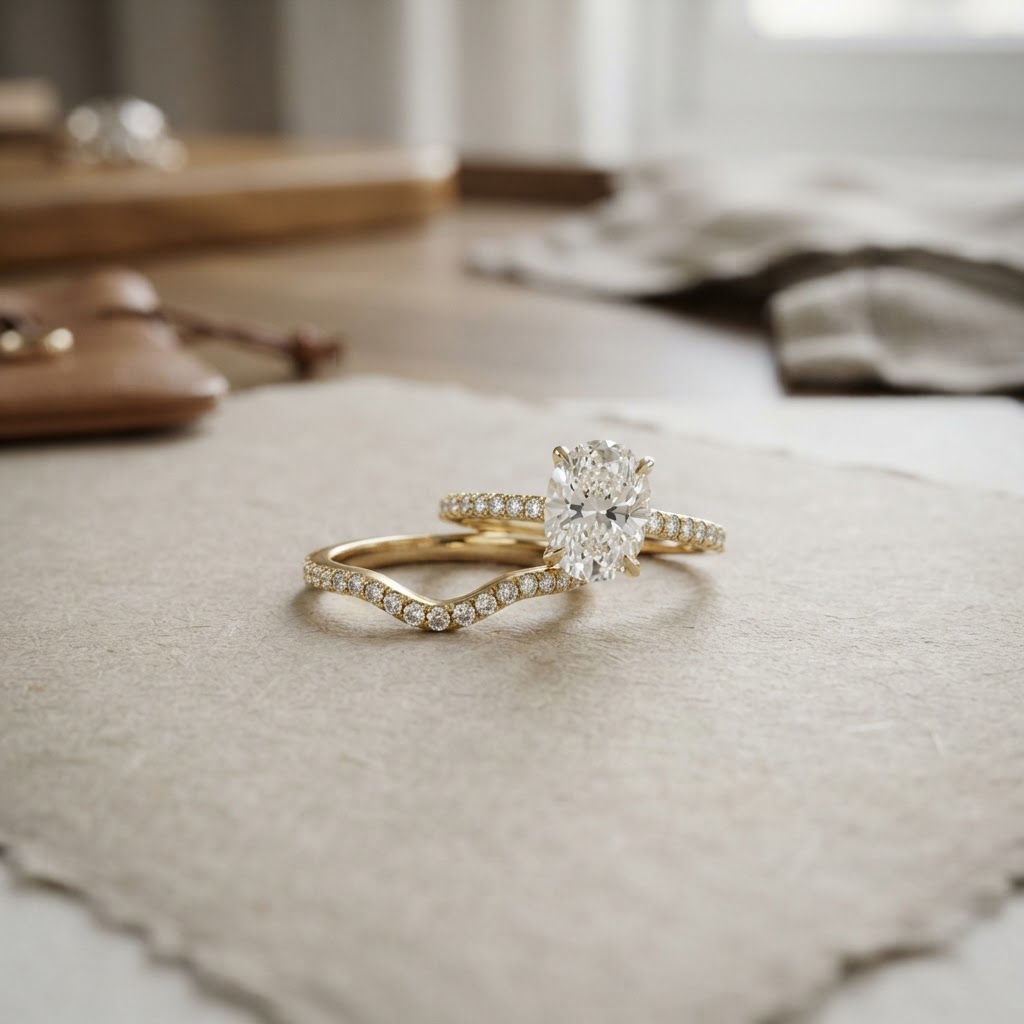
Custom Shaped Wedding Band UK: A Guide to Fit, Design and Choice
What if the best-fitting wedding band isn’t straight? If a straight band leaves a visible gap beside your engagement ring, a custom shaped wedding...
What if the best-fitting wedding band isn’t straight? If a straight band leaves a visible gap beside your engagement ring, a custom shaped wedding band UK design may follow the setting’s profile and sit closer. The right shape depends on how the two rings meet, not style alone.
It can be difficult to judge the fit from a photograph. The engagement ring’s setting, height and outline all affect which band shapes can sit alongside it. A shaped design also needs to feel comfortable for everyday wear and suit the profile you prefer.
This guide explains how shaped bands fit around engagement rings and how to compare options by fit, profile and wear. You’ll also find practical points to prepare before a design appointment, including what to bring and which questions to ask. Jewellove’s ring design consultation and bespoke design service can help turn your fit requirements into a clear design brief.
Key Takeaways
- A custom shaped wedding band UK design should account for the engagement ring’s profile and the clearance needed between the two rings.
- Compare shaped and straight bands by fit, appearance and how each works with your engagement ring’s setting.
- Before an appointment, note your priorities and bring the engagement ring or clear photographs of its top and side profiles.
- Use reference images to explain the shapes and proportions you prefer, then discuss comfort and everyday wear.
- A prepared brief helps organise a Jewellove design consultation around your fit requirements and design choices.
What is a bespoke shaped wedding ring and when is it useful?
A shaped wedding band is a ring whose outline is contoured to sit alongside an engagement ring’s profile; a straight band follows a regular line instead. The contour may curve, dip or angle around part of the engagement ring. The aim is often to bring the rings closer together, but a shaped band doesn’t have to remove every visible gap. The intended fit depends on the setting, the space available and the look you prefer.
Think of the two rings as neighbouring shapes, not pieces that must lock together. From above, a contoured band might follow the outline of a setting. From the side, a low-set feature can sit close to the finger and limit how high the wedding band can pass. A raised setting may leave more room beneath it, while a projecting detail may still obstruct the band. Fit depends on both the outline and the clearance between the rings.
Wedding bands have varied forms and meanings across cultures. For broader context on the history and traditions of wedding rings, consider how a traditional band can be adapted to suit the engagement ring beside it. Jewellove’s bespoke design service gives you a way to discuss a shaped-band brief around these practical requirements.
Why might a straight wedding band leave a gap?
A straight band approaches the engagement ring along a direct line. If the setting extends towards it, the band may meet the setting before the two rings sit flush. Imagine the rings from the side: the engagement ring’s centre setting rises above the finger, while the wedding band runs level beside it. If the setting’s lower edge occupies that path, the band may stop short and leave a small space. A contour can change where the rings meet.
That gap isn’t automatically a fault. It can be a deliberate choice or the result of balancing a comfortable fit with the engagement ring’s structure. Ask yourself whether the rings sit securely and comfortably, whether the space is acceptable, and whether you want the bands to appear close together or distinct.
Which engagement rings may benefit from a shaped band?
A shaped band may be worth considering when a low-set ring leaves little room for a straight band to pass beside or beneath its setting. Side stones or raised shoulders can also take up space along the engagement ring’s edges. A projecting centre setting may affect the route a band can follow, even if the ring is raised from the finger.
These features don’t automatically require contouring. Two rings with a similar setting style can have different profiles and clearances, so assess the individual ring rather than relying on its category. For a custom shaped wedding band UK brief, note where the rings touch, where they need clearance, and whether a small gap is acceptable. These details give the design discussion a practical starting point.
How does an engagement ring’s profile shape the wedding band design?
The wedding band’s contour is shaped by the engagement ring’s side profile, setting height, shoulders and any features that occupy space beside it. Together, these details show where a band can sit, where it needs clearance and how its outline can relate to the ring. A top view shows the visible shape; a side view reveals height and potential contact points.
Separate the visual brief from the fit brief. You might want the rings to look aligned, sit close together or remain clearly distinct. The physical requirements are different: the band must follow a path that avoids unwanted pressure against the setting or stones. A close-looking fit is a design preference, not proof that the rings need to touch.
How do setting height and ring profile affect the contour?
A low profile can restrict the route a straight band takes beside the engagement ring. A higher setting may offer different routes, but it doesn’t guarantee a flush fit: the setting’s base, shoulders or other details may still occupy the space. Record the ring from above and from the side, keeping the camera level and the full setting visible. These views help make the design discussion specific.
Side-view guide, not to scale:
Setting: The raised or low-set structure above the finger.
Clearance: The space a wedding band needs to pass beside or beneath that structure.
Contact point: The place where a straight band may meet a shoulder or setting before the rings sit as intended.
Finger line: The base level on which both rings rest.
Use the diagram as a checklist when reviewing your photographs. Identify the setting’s lowest edge, the shoulders on either side and any part that projects towards the neighbouring band. Don’t rely on a front-facing image alone, as it may hide the height and spacing that affect the contour.
How should the band shape and finish be selected?
Start with the relationship you want between the rings. A gentle curve may create a subtle transition. A more pronounced contour can follow a distinct outline, while an open gap preserves separation rather than filling the space. Compare each approach with the ring’s actual profile and the clearance it needs, not just its appearance in a reference image.
Then assess proportion. A wider band may change the visual balance beside a delicate engagement ring, while thickness affects how substantial the band looks in profile. A polished or textured finish can echo or contrast with the engagement ring’s surface. Decide which details should match and which can differ.
Bring these preferences together in a custom shaped wedding band UK brief: note the desired gap, contour, proportions and finish. Jewellove’s bespoke jewellery design gives you a way to discuss how those choices relate to your engagement ring and organise them into a considered design brief.
Shaped vs straight wedding bands: how do you compare the options?
Compare the rings as a pair, not as separate designs. A straight band gives a clear, independent line. A shaped band follows part of the engagement ring’s outline when the available space or preferred look calls for it. Neither is automatically the better choice. Use fit, appearance, flexibility and your engagement ring’s profile as decision points.
| Factor | Straight band | Shaped band |
|---|---|---|
| Fit | Works if it can sit comfortably beside the engagement ring, with or without a gap. | Its contour can follow the engagement ring where a straight line doesn’t give the preferred fit. |
| Appearance | Creates a simple, separate silhouette that can contrast with the engagement ring. | Can look more closely aligned with the engagement ring’s outline. |
| Flexibility | A regular outline can be easier to wear as a separate band or alongside different rings. | A defined contour is designed around a particular profile, so it may be less adaptable to a different ring. |
| Engagement-ring profile | May suit a profile that leaves enough room for a straight band to sit as desired. | May suit a setting or shoulder shape that calls for a different route around the ring. |
Use the comparison to identify your priorities, not to force a single answer. If the rings sit comfortably together and you prefer a simple outline, a straight band can meet the brief. If the setting affects where a straight band rests, or you want the two outlines to relate more closely, consider a contour. A visible gap can be acceptable if it suits your preference and the rings feel right together.
When is a straight wedding band still a suitable choice?
A straight band remains suitable when its profile sits comfortably beside the engagement ring and doesn’t interfere with the setting. It can also work if you prefer the rings to read as two separate shapes. You might wear the bands together with a deliberate gap or wear them separately at different times. These are valid design choices, not compromises.
What trade-offs come with a shaped wedding band?
A shaped band is planned around the engagement ring’s particular profile. That can support a closer-looking fit, but creates a more specific relationship between the two rings than a straight band does. Consider how the contour looks from above and from the side, whether you prefer a joined appearance or a distinct silhouette, and how the combination feels during everyday wear.
Before deciding, compare the options against three priorities: fit, including any pressure or unwanted contact; appearance, including the gap and overall proportions; and wear, including whether you expect to wear the rings together or separately. A custom shaped wedding band UK choice should reflect the rings as a pair and the wearer’s priorities, not a rule that every engagement ring needs a matching contour.
How do you prepare for a custom shaped wedding band appointment?
A clear brief keeps the design discussion focused on how the rings fit and the result you want. Use these four steps to organise your notes before a custom shaped wedding band UK appointment.
- Record your priorities. Decide whether you want the bands to sit close, keep a visible gap or create a separate silhouette. Note where you want the rings to touch and any contact you’d prefer to avoid.
- Document the engagement ring. Bring the ring if you can. Otherwise, prepare clear photographs from above and from the side, plus a view of the ring as it appears on your hand. Include the setting, shoulders and any details near the neighbouring band.
- Compare references. Save images that show contours, proportions or finishes you like. Note what appeals in each one, such as a gentle curve or a more distinct outline. References are most useful when they clarify a preference rather than simply show a style to copy.
- Discuss fit. Share how you expect to wear the rings and what matters most in daily use. Explain where you want clearance, whether a small gap is acceptable and which design details are flexible.
What information and images help explain the required fit?
Describe the engagement ring’s profile, setting height, shoulders and any features close to where the wedding band would rest. Take photographs from above, from the side and from your own perspective looking down at your hand. Keep the full ring in frame and use clear lighting so its outline is easy to see. Add a note about how you want the two rings to look together.
Which design questions should you prioritise?
Start with the main choice: close contact, a particular combined silhouette or comfortable separation. Then note your preferred band width and thickness, metal colour and finish. Consider whether the rings will usually be worn together and what feels comfortable for everyday wear. Separate essentials from preferences you’re open to changing.
The Ring Maker customisation tool can help you explore design preferences. Use it to organise ideas, rather than as a representation of a specific shaped-band fit. Bring your notes and references to a Jewellove ring design consultation to discuss fit requirements and design choices as part of a considered brief.
How can a Jewellove design consultation turn fit needs into a wedding band brief?
A design consultation gives you a practical setting to discuss how a wedding band should sit beside your engagement ring and how the two should look together. Bring your ring or clear photographs, then use your notes to explain the profile, proportions and design preferences that matter most. A prepared brief keeps decisions organised without committing you to details you haven’t settled.
For a custom shaped wedding band UK design, separate essential fit requirements from choices you’re open to exploring. This keeps the conversation focused on what the band needs to do as well as the appearance you want.
What should the shaped-band design brief capture?
Start by describing the intended relationship between the rings. Should the band sit close, leave a deliberate gap or create a more independent silhouette? Note where you want contact and where you need clearance. Then record the details you’d like to discuss:
- Contour: whether you prefer a gentle curve, a more defined shape or a straighter outline.
- Proportions: the band width and thickness that seem balanced beside the engagement ring.
- Materials and finish: your preferred metal and surface appearance.
- Flexibility: which details are fixed and which you’re willing to adjust.
Use photographs and reference images to make preferences easier to explain. For example, exploring popular ring settings from fine jewellery designers such as Balacia can help you identify shapes and mountings that catch your eye. If you like the outline in one image but prefer the proportions in another, record that distinction. This prevents a reference from being treated as a single design you must copy and gives the discussion more useful detail.
What happens after the design priorities are organised?
Use the brief as an agenda for the consultation. Begin with the engagement ring’s profile and the fit you want. Then discuss the contour, proportions, metal and finish in order of importance. If there’s a trade-off between a close-looking fit and a separate silhouette, state which outcome matters more. Clear priorities help focus the design discussion while leaving room to consider alternatives.
Jewellove offers ring design consultations and a bespoke design service to discuss wedding-band ideas. The consultation can help organise your fit requirements and preferences into a considered brief. Bring your questions, ring details and reference images so the discussion starts with the information that matters to you.
Customers in Lanarkshire and across the UK can use the appointment booking page to take the next step.
Take your wedding-band brief into the next step
A shaped band is a personal design decision, but the brief can be practical. Decide what matters most: how the rings sit together, the outline you prefer, or how distinct the band should look. You don’t need to settle every detail before discussing the design. Clear priorities give the conversation a useful starting point.
Use the Ring Maker to explore ring preferences, then bring those ideas into a bespoke design discussion. Jewellove’s ring design consultations provide a place to consider how your preferences and fit requirements can inform the wedding-band brief. The goal is a considered set of choices that reflects what you want from your custom shaped wedding band UK design.
Start with your priorities, then bring your brief to a Jewellove design appointment.
Frequently Asked Questions
Can a shaped wedding band fit any engagement ring?
Not necessarily. A contour can be planned around an engagement ring’s outline, but the setting’s structure and the space available still affect how the rings can sit together. For example, a band may not be able to pass beneath a feature that reaches close to the finger. A custom shaped wedding band UK design discussion should consider both your preferred look and any physical limits of the existing ring.
Will a shaped wedding band completely remove the gap beside my engagement ring?
Not always, and eliminating the gap isn’t the only valid goal. The contour may reduce the visible space or change where the bands meet, but the engagement ring’s setting can require some separation. Decide whether your priority is closer visual alignment or comfortable clearance. A small gap can be an intentional part of the final look rather than a sign that the design has failed.
Can I wear a shaped wedding band without an engagement ring?
Yes, you can wear it on its own if you like its appearance as a separate ring. A contour designed to sit around another ring may look asymmetrical or have an open area when worn alone. Consider how it looks from the top and side, and whether you expect to wear it independently often. Include that use in your design priorities before settling on a pronounced shape.
Is a shaped wedding band more comfortable than a straight band?
Not automatically. Comfort depends on the band’s fit on your finger, its proportions and how it sits beside the engagement ring. A contour that avoids unwanted pressure may feel preferable, while a band that catches or shifts may be distracting. Compare the combination on your hand, not only in a drawing or photograph. Consider whether the rings feel comfortable together during ordinary movements, such as bending your fingers or making a fist.
What should I bring to a wedding-band design appointment?
Bring the engagement ring if you can, along with notes on the look and fit you want. If you can’t bring it, use clear, unfiltered photographs that show the ring from several angles, including its setting and shoulders. Save reference images and mark what you like in each one. A short list of priorities, such as preferred metal, finish and whether you want a visible gap, can help keep the discussion focused.
Can a shaped wedding band be designed for a low-set engagement ring?
A low-set ring can be considered for a shaped band, but the exact profile matters. The setting may leave limited space beside the ring, so the band’s route and the desired clearance need careful discussion. Look at the lower edge of the setting and any details near the finger. For customers in Lanarkshire, recording these observations before a ring design consultation can make it easier to explain the fit challenge clearly.
Should a wedding band match the metal of an engagement ring?
No. Matching metals can create a coordinated appearance, while choosing a different metal colour can give the two rings deliberate contrast. Think about the overall combination, including the engagement ring’s finish and the band’s width, rather than treating metal as an isolated decision. If you’re unsure, compare options side by side and note which combination looks balanced to you in everyday light. For broader inspiration on mixing metal tones and complementary pieces, browsing independent designer jewellery at La Maison can help you visualise how contrasting finishes pair together.