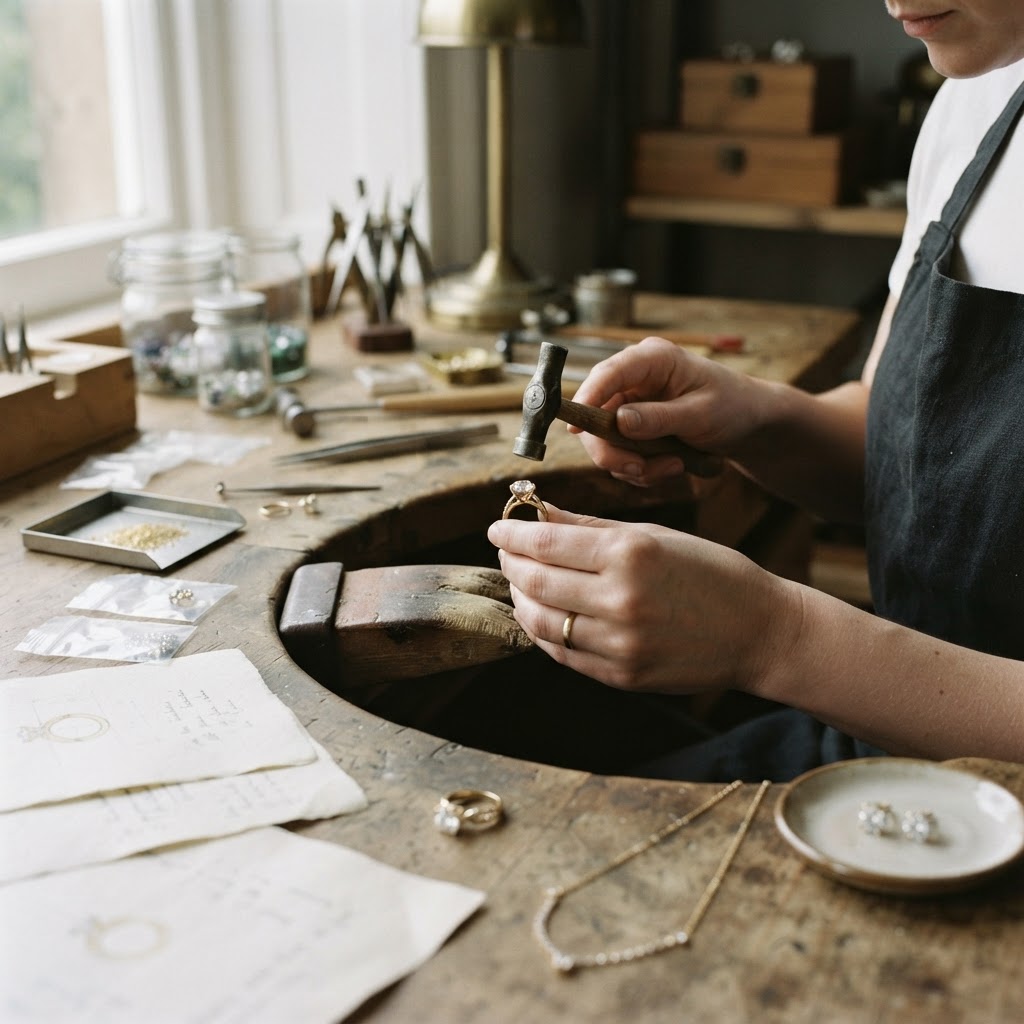
Bespoke Jewellery in Lanarkshire: A Practical Design Guide
What if commissioning a one-off piece felt less like a leap and more like a series of clear decisions? Choosing bespoke jewellery in Lanarkshire can...
What if commissioning a one-off piece felt less like a leap and more like a series of clear decisions? Choosing bespoke jewellery in Lanarkshire can raise practical questions: how does an initial idea become a finished design, and how can you keep the style, materials and budget in view?
Compare a bespoke commission with ready-made jewellery before deciding. Bespoke design gives you more choices to organise, whilst a ready-made piece offers a defined design to assess. The right option depends on your priorities and how much input you want, not on one route being better in every case.
This guide explains the main stages of a bespoke commission and how to prepare a useful design brief. You’ll learn what to note about style, materials, stones and budget, and how Jewellove’s Ring Maker and design comparison tools can help organise your choices. Jewellove offers a bespoke design service and loose diamonds to customers in Lanarkshire, including Blantyre and the surrounding area. Use the guide to clarify what matters before booking a design appointment.
Key Takeaways
- A bespoke commission turns a design brief into a piece through a series of manageable choices.
- Separate decisions about style and form from choices about materials and gemstones to keep your brief organised.
- Compare bespoke jewellery Lanarkshire options with ready-made designs by considering how much personalisation and decision-making you want.
- Prepare for an appointment with reference images, your preferred jewellery type, priority features and questions.
- Use Jewellove’s Ring Maker and design comparison tools to organise ring preferences before taking your next step.
Bespoke jewellery in Lanarkshire: what a commission is designed to solve
A bespoke commission starts with a design brief, then develops around your preferences and the choices agreed during the design process. If you’re exploring bespoke jewellery Lanarkshire, this gives you a structured way to develop a particular idea rather than choosing only from finished designs. Your brief might cover the type of jewellery, its overall shape, preferred details and, where relevant, gemstone or metal preferences.
A commission can help when several decisions need to work together. A ring’s setting and stone, for example, both contribute to its overall appearance. A necklace or pair of earrings may need to bring together a particular form and combination of details. Jewellove’s bespoke jewellery design service provides a way to discuss your brief and develop a design. Customers in Lanarkshire can explore this service without needing to assume that the process involves a local shop or studio.
What makes jewellery bespoke rather than simply personalised?
Personalising a standard design usually means selecting from set variations, such as a particular size or finish. A bespoke commission starts with your brief, using your preferences to shape the design under discussion. The scope is agreed through the design process, so bespoke does not mean every detail or material can be changed without limits. For wider context, Wikipedia’s overview covers the history and process of jewellery design.
Think of your brief as a filter, not a demand to specify everything at once. Separate the details that matter most from those you’re happy to keep open. For a ring, you might prioritise its overall form while leaving some design details flexible. For a pendant, you could begin with its shape or how you plan to wear it. This makes your preferences easier to discuss and compare.
When does a bespoke commission suit your requirements?
A commission may suit you when an existing design doesn’t capture a specific combination of features. You might have a clear idea for an engagement or wedding ring, want a necklace or pendant in a particular form, or be considering earrings that coordinate with other jewellery. The key question is whether you have preferences you want to guide the piece, rather than simply choosing a finished option.
Ready-made jewellery may be a more direct fit if you’d rather browse existing designs and select one that meets your needs. Use this distinction to help decide:
- Consider bespoke if a specific design idea or combination is central to your choice.
- Consider ready-made if selecting from finished rings, necklaces, earrings or pendants is your priority.
- Keep some choices open if you know what matters most but want to compare possibilities before settling on details.
Personalisation creates decisions, but it doesn’t need to create confusion. Start with the purpose of the piece, record your fixed requirements and mark preferences you’re still weighing up. This gives the design discussion a useful starting point and helps keep the commission focused.
How the bespoke jewellery design process turns a brief into a piece
A clear process turns a broad idea into a set of design decisions. For bespoke jewellery Lanarkshire, start by defining what the piece needs to do, organising your preferences and comparing possible directions. Once you have a clearer idea, discuss the next steps through Jewellove’s bespoke design service.
Keep two groups of choices separate. Style and form cover the overall outline, proportions and design details. Materials and gemstones cover the metal and any stones you’re considering. Separating them helps you assess the visual direction first, then consider material choices as part of the same design discussion.
Build a brief around use, form and preferences
Start with the intended use and type of jewellery. Note whether you’re considering a ring, necklace, pendant, earrings or another piece. Then record your design priorities, such as a particular shape or a detail that needs to feature. Mark each point as essential, preferred or still open. This helps focus the design on what matters without requiring you to settle every detail straight away.
Reference images can help you communicate a form, proportion or detail that’s difficult to describe. Add a short note beside each image explaining what appeals to you. Treat references as examples of a direction, not instructions for an exact copy. Your written preferences clarify which features matter and where you’re open to alternatives. Together, they provide a more precise starting point for the design discussion.
Compare design choices before settling on a direction
Comparing options shows how a change in form or detail can affect the overall appearance. For a ring, you might compare different outlines or settings. Jewellove’s Ring Maker can help you organise and customise ring design preferences. Consider metal and diamond choices separately, then review how each fits the direction you’ve described. A clear comparison makes the trade-offs easier to see.
Use this sequence to keep the process manageable:
- Define the brief. Record the jewellery type, intended use and key priorities.
- Organise choices. Separate style and form from materials and gemstone preferences.
- Review the design. Compare the proposed direction with your notes and reference images.
- Agree next steps. Confirm the way forward once the design direction is clear.
A design brief shapes the piece; it doesn’t establish its valuation. The Gemological Institute of America explains what a jewellery appraisal involves, which is a separate matter from the design decisions in your commission. Once your priorities and open questions are organised, an appointment can focus on the choices that need discussion.
Bespoke or ready-made jewellery: how to compare the options in Lanarkshire
Choosing between a commission and a finished design is a question of fit, not which route is better. If you’re considering bespoke jewellery Lanarkshire, compare how much input you want, how specific your preferences are and whether you’d rather start with an idea or an existing piece. Either route can lead to jewellery that suits your priorities.
| Comparison point | Ready-made jewellery | Bespoke design |
|---|---|---|
| Starting point | Choose from completed or existing designs. | Begin with a design brief and preferences. |
| Personalisation | Select a piece based on the features already present. | Use a more tailored brief to shape the design direction. |
| Decision-making | Compare the available designs and decide which fits best. | Consider preferences and trade-offs as the design develops. |
Choose ready-made jewellery when selection is the priority
Ready-made jewellery suits customers who want to browse finished designs and choose one that meets their needs. You can compare the appearance of rings, necklaces, earrings or pendants directly, rather than first defining a design brief. This can make the decision more straightforward if your preferences are flexible or a suitable design already exists.
Keep the comparison focused. Note what matters to you, such as the overall form or a particular detail, then assess each design against those priorities. You don’t need to specify every feature before making a choice. If a piece meets your requirements, selecting it may be more suitable than commissioning a new design.
Choose bespoke design when the brief needs more input
A bespoke commission may be a better fit if several preferences need to come together in one design. For example, you may have a particular ring form in mind alongside gemstone preferences, or want a necklace to reflect a specific combination of details. A brief brings those requirements into one discussion. Because more input also means more decisions, identify your priorities before weighing up the options.
For rings, compare design features separately from gemstone choices. Jewellove’s loose diamond information can support your research into diamond selection. Treat the stone and the design as connected but distinct decisions: a preference about one doesn’t automatically settle the other.
Cost alone doesn’t determine which route is right. Bespoke isn’t inherently superior or always more expensive; the suitable option depends on the design, choices and requirements involved. To decide, ask yourself:
- Do I already see a finished design that fits? Ready-made may be the simpler choice.
- Does a specific combination of preferences matter? A bespoke brief gives those details a place in the design discussion.
- Am I comfortable making design decisions? A commission allows more input, whilst a finished design offers a defined starting point.
Use your answers to choose the route that matches how you want to make the decision.
Prepare for a bespoke jewellery appointment in Lanarkshire
A little preparation can make a design appointment more focused. If you’re exploring bespoke jewellery Lanarkshire, bring a clear snapshot of what you’re considering, what matters most and where you’re open to options. You don’t need to arrive with a finished design. A useful brief gives the discussion a starting point and helps organise the decisions ahead.
Organise references and design priorities
Save a small set of images showing details that appeal to you, such as a shape, setting or overall proportion. Add a note explaining what you like in each one. One image might show the outline you prefer, whilst another captures a detail you’d like to consider. Treat references as communication aids, not instructions to reproduce a piece exactly.
Before the appointment, sort your preferences into three groups:
- Must-haves: features the design needs to include.
- Preferences: details you’d like, but could reconsider.
- Open choices: areas where you want to compare possibilities.
This ranking separates fixed requirements from flexible details. It also gives you a practical way to assess design options: does each one meet your must-haves, and which preferences does it support?
Set a useful scope for the appointment
Record the type of jewellery and how you intend to wear it. A ring for regular wear may raise different practical questions from earrings or a pendant reserved for particular occasions. Note anything that affects your priorities, such as preferred proportions or details you’d like the design to include. Bring a working budget too. It helps you organise trade-offs without needing to decide every material or feature in advance.
Prepare questions that will clarify the design and the process. You could ask how a particular feature may affect the overall form, which material choices are relevant to your brief, and what happens after you’ve reviewed a design direction. Keep your questions together in a note so you can refer to them during the discussion.
Use this checklist to bring the key information into one place:
- Your preferred jewellery type and intended use.
- Reference images with notes on the details that appeal to you.
- A ranked list of must-haves, preferences and open choices.
- A working budget to help frame priorities.
- Questions about design, materials and next steps.
For customers planning a bespoke commission from Lanarkshire, the appointment is a chance to clarify the brief and identify a suitable next step. Some details may be settled early; others can remain open for comparison. You don’t need to make every decision in advance. Aim to leave with a clearer design direction and an organised view of what still needs consideration.
Plan your bespoke jewellery next step with Jewellove
A focused commission starts with a usable brief. Bring together your design priorities, reference images and questions, then use them to guide the choices that remain. If you’re considering bespoke jewellery Lanarkshire, this preparation can make the appointment more productive without requiring you to settle every decision in advance.
Use design tools to organise your options
For ring designs, Jewellove’s Ring Maker helps you customise ring preferences and compare design choices. Use it to clarify which forms and features appeal to you. Treat the results as a way to organise your thinking, not as a replacement for your priorities or a final design decision.
Jewellove’s quizzes and design comparison tools can also support your selection. Use them to bring options into view and consider what differs between them. A tool can help structure a choice, but the brief still comes from what matters to you: the intended jewellery type, preferred appearance and essential features. Keep a note of any options you’d like to discuss further.
If a diamond is part of your ring brief, loose diamonds are another selection to consider. Record any preferences or questions about the stone alongside your design notes. Keep this decision distinct from the ring’s overall form, so you can compare each aspect without treating one choice as a substitute for the other.
Move from a prepared brief to an appointment
Before booking, gather the information that will help frame the discussion. A concise note is enough. Include:
- Priorities: identify must-haves and details you’re willing to reconsider.
- References: save images and note what you like about each one.
- Questions: list anything you want to understand about design choices, materials or the steps that follow.
- Comparisons: keep track of designs or ring preferences you want to discuss.
Use the appointment to bring these points together, clarify the brief and identify a suitable next step for your bespoke design. You don’t need a complete specification before you begin. A clear record of what you know, what matters and what remains open gives the discussion a practical starting point.
Take your design brief to the next step
Your first appointment doesn’t require a finished specification. Start with a working idea and a clear sense of what you want to explore. Use your preferences as a starting point, then refine them through a focused discussion about the design choices that matter to you.
Jewellove’s bespoke design service, Ring Maker, loose diamonds and design comparison tools give you practical ways to shape and organise your thinking before that conversation. Bring your notes, references and questions to outline a commission that reflects your priorities. If you’re considering bespoke jewellery Lanarkshire, turn those ideas into a brief you can discuss with Jewellove.
Start with what you know. The design can take shape from there.
Frequently Asked Questions
Is bespoke jewellery worth it?
Bespoke jewellery can be worthwhile if a particular design, combination of features or personal requirement matters more than choosing from existing pieces. It isn’t automatically better than ready-made jewellery; the value depends on how well the route suits your priorities and appetite for design decisions. If you’re considering bespoke jewellery Lanarkshire, compare the benefits of a tailored brief with the simplicity of selecting a finished design.
How much does bespoke jewellery cost?
The cost depends on the design, materials, gemstones and work involved, so there isn’t one reliable figure for every commission. A useful first step is to set a working budget and identify which elements matter most. This helps frame design choices and possible trade-offs during a discussion. Jewellove’s bespoke design service gives you a way to discuss your brief and the choices relevant to it.
How long does bespoke jewellery take to make?
As a general UK guide, bespoke jewellery often takes around 6 to 12 weeks to create once the design is finalised. The process may include making the piece, hallmarking and finishing, and the design must be agreed before production begins. If the jewellery is for a set occasion, allow time for design decisions as well as making the piece.
Can I design bespoke jewellery online?
Yes, online tools can help you explore and organise design preferences. Jewellove’s Ring Maker lets customers customise ring designs, whilst comparison tools and quizzes can support selection. These tools help you prepare ideas, but they don’t replace your own priorities. Use what you’ve explored online as a starting point for discussing a bespoke design with Jewellove.
What should I bring to a bespoke jewellery appointment?
Bring reference images, notes on the intended use and a short list of questions. For a ring, include your size if you know it; Jewellove also offers a Ring Sizer to help with this decision. If you’re considering a diamond, note what you’d like to understand about stone selection. These details help focus the discussion on your design needs.
Is bespoke jewellery different from made-to-order jewellery?
Usually, yes. Bespoke jewellery is developed around a customer’s design brief, whilst made-to-order often describes an existing design produced after a customer places an order. The terms can overlap, so focus on the actual design process: are you shaping the design around your requirements, or choosing from a set design with defined options? That distinction helps clarify how much input you’ll have.