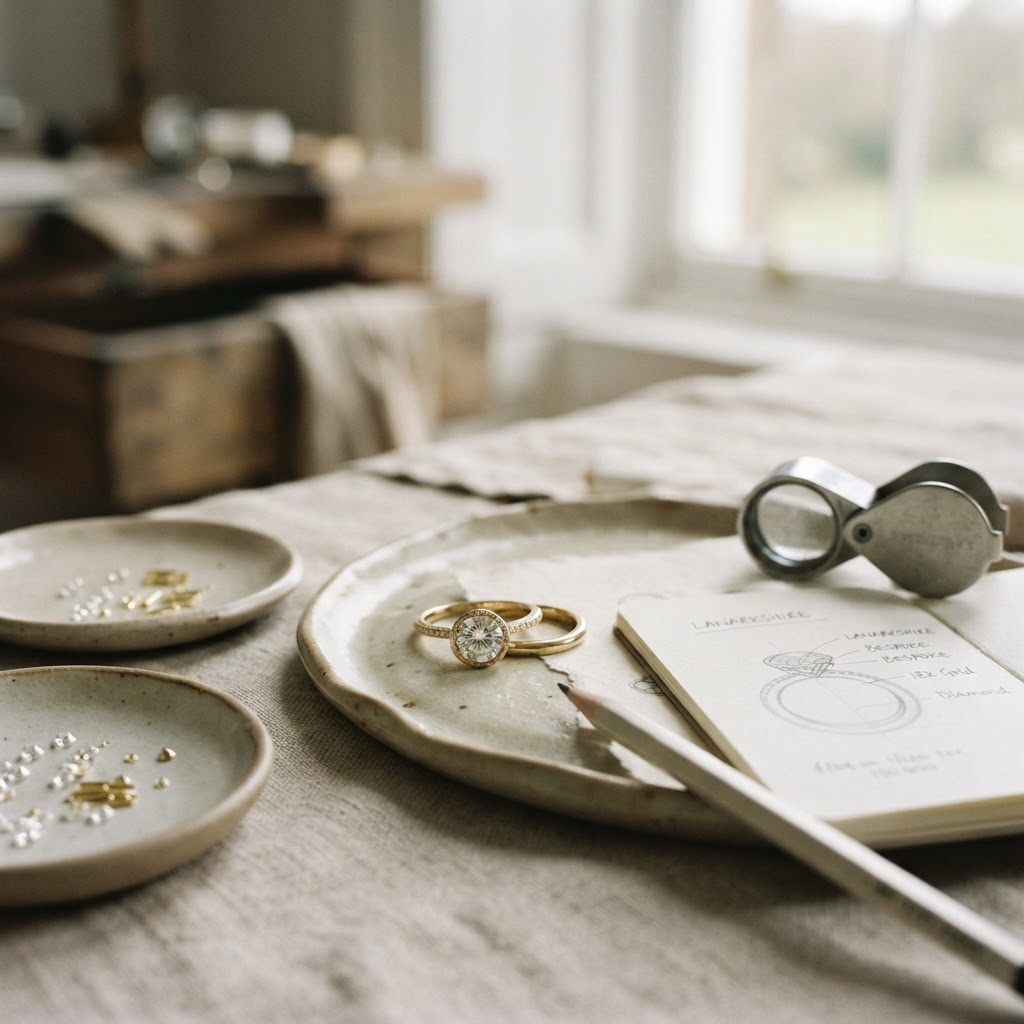
Jewellery Designer in Lanarkshire: A Clear Guide to Bespoke Design
What if the hardest part of bespoke jewellery design isn’t choosing a style, but deciding which details matter most? A search for “jewellery designer...
What if the hardest part of bespoke jewellery design isn’t choosing a style, but deciding which details matter most? A search for “jewellery designer Lanarkshire” often begins with an idea, a reference image or a list of preferences that still need organising. You don’t need a finished design before you start. It helps to know what you want to explore and which requirements are essential.
Comparing diamonds, metals and settings can feel complex because each choice contributes to the finished piece. A clear brief gives the discussion structure. Note the type of jewellery you have in mind, the features you like, how you expect to wear it and the questions you want answered. Jewellove’s Ring Maker offers a practical way to explore ring customisation and compare design choices.
This guide explains how to prepare a design brief, assess the main options and make an appointment more focused. You’ll see how an idea can progress through discussion, design decisions and refinement, with a clearer picture of what to compare and decide.
Key Takeaways
- Set out the type of jewellery, your material and stone preferences, and how you expect to wear the piece.
- Compare proportions, settings and materials against your priorities rather than assuming there is one right design.
- A jewellery designer Lanarkshire customers work with can help turn preferences into a clear design specification.
- Use the Ring Maker to explore ring customisation, then note which choices and questions need further discussion.
- Gather reference images and assess each option against your original brief to make an appointment more focused.
What a jewellery designer in Lanarkshire can help you plan
A jewellery designer helps turn your preferences and practical requirements into a coherent piece specification. This means organising decisions about the type of jewellery, materials, stone, proportions and setting, then identifying anything that still needs discussion. If you’re looking for a jewellery designer Lanarkshire, start with the brief rather than waiting until you have a finished drawing.
You can choose an existing jewellery design or develop a bespoke piece. An existing design gives you a concrete option to assess, while a bespoke brief leaves more room to shape the details around the wearer and intended use. Neither route is automatically better. Consider which requirements are fixed and how much you want to customise.
What belongs in an initial jewellery design brief?
Write down the key information before comparing options. Separate must-haves from preferences so you can explore open questions without losing sight of what matters most.
- Wearer and occasion: Note who the piece is for, whether it marks a particular event and whether it is intended for regular wear.
- Jewellery type: Specify whether you’re considering a ring, necklace, earrings or another piece.
- Preferences: List any preferred metal colours, stone types, shapes or design details.
- Practical requirements: Describe how often the piece will be worn and any comfort or everyday-use considerations.
Use reference images to communicate what appeals to you, not simply as designs to copy. Add a note to each image explaining what you like: perhaps the setting, proportions, a particular detail or the balance between metal and stone. This helps separate the feature you want from other aspects that may not suit your brief.
Bespoke design or an existing jewellery design?
An existing design gives you a defined option to assess. Bespoke design starts with your requirements and develops a specification around them. Customisation can affect more than appearance: changing a setting or proportions may alter how a piece feels and works in everyday use. Jewellove’s bespoke design service can help you organise those choices. For a general overview of how concepts can develop into technical drawings and fabrication, see this account of the jewellery design process.
Across Lanarkshire, the same preparation is useful whether you’re considering an existing design or developing a bespoke one. Start with purpose, preferences and practical requirements. Then use those criteria to keep the discussion focused and make the next decisions easier to organise.
Build a jewellery design brief around diamonds, metal and use
Once you’ve recorded the piece you want to explore, add the material and wear details that will shape its specification. Consider these choices together rather than treating a diamond or metal as a decision in isolation. A jewellery designer Lanarkshire customers work with can use your brief to compare how the parts relate to the complete piece.
- Jewellery type: Record whether you’re considering a ring, necklace, earrings or another piece.
- Stone preference: Note whether you have a particular stone in mind or are open to comparing options.
- Metal preference: Record your preferred metal, such as gold or platinum, and any colour preference.
- Intended use: Describe how often and in what settings you expect to wear the piece.
- Design questions: List choices that remain open, such as proportions, setting or how prominent you want the stone to appear.
These details influence one another. A setting affects how a stone sits within a design, while the piece’s proportions and intended use help frame which configurations are worth discussing. There isn’t one correct combination. Record what matters to you, then compare options against those priorities.
Which diamond details should you compare?
The 4Cs provide four criteria for comparing diamonds: cut, which describes how a diamond’s proportions and finish affect its appearance; colour, its degree of colourlessness; clarity, the presence of internal or surface characteristics; and carat, its weight. Use the same criteria for each option so differences are easier to track and discuss. Jewellove offers loose diamonds to consider alongside your wider design requirements.
How should metal and everyday use shape the brief?
Record your preferred metal and describe the conditions in which you expect to wear the piece. Gold and platinum are two material options to consider as part of the overall specification. Metal choice contributes to the design’s appearance and to how other elements, including the setting and proportions, come together. Keep preferences open to review until you’ve compared complete design options.
Bring your checklist and questions into a design discussion. When you’re ready to organise your project with Jewellove, book a jewellery design appointment.
How the jewellery design process works for Lanarkshire customers
A clear sequence helps turn an initial idea into a set of design decisions. For customers working with a jewellery designer Lanarkshire, the process can be organised into four stages:
- Gather requirements: Record the piece’s purpose, your main preferences and any practical needs.
- Explore options: Review possible materials, stones, shapes and design features against the brief.
- Compare a configuration: Look at how the selected elements work together as one design, rather than judging each choice separately.
- Agree next steps: Identify what is decided, what needs refinement and which questions remain open.
An appointment gives this sequence structure. Use it to explain your priorities, review options and clarify what to do next. Keep a written record of decisions so agreed preferences don’t become mixed up with unresolved questions.
How to use a ring design tool before an appointment
Jewellove’s Ring Maker provides a structured way to explore ring customisation. Try different combinations and note the configurations that best reflect your preferences. You don’t need to settle every detail in advance. A short record of what you like, what you would change and what you’re unsure about gives the discussion a useful starting point. Explore the online ring design tool as part of your preparation.
What to prepare for a jewellery design appointment
Bring your design brief, reference images and a short list of questions. Mark each requirement as either non-negotiable or open to discussion. You might have a fixed preference about the type of piece but remain flexible about a particular design detail. Making that distinction helps keep the conversation focused.
During the appointment, record decisions and any questions that still need resolution. A simple note with three headings, “decided”, “to compare” and “to clarify”, can keep the project organised. It also gives you a snapshot to refer to when reviewing the next design configuration.
Once you’ve organised your priorities and questions, you can book an appointment to discuss your project and plan the next steps.
Compare jewellery design options without losing sight of the brief
Two designs can look similar but meet different requirements. Compare them against the same brief each time. Keep your criteria consistent, then record what each option meets, what it changes and what still needs an answer. This gives customers working with a jewellery designer Lanarkshire a practical way to review choices without letting each new detail reset the decision.
How to compare two jewellery design configurations
Use one row per configuration and the same categories for each. Separate visual preference from practical requirements. For example, note that you prefer the appearance of one setting, then assess fit and intended use as separate points. Record why a feature appeals to you, such as its proportions or the way it presents the stone. That reason will make the choice easier to revisit later.
| Comparison point | Option A | Option B |
|---|---|---|
| Design option | Describe the overall configuration | Describe the alternative |
| Materials | Record the metal and other materials | Record the metal and other materials |
| Diamond details | Note the attributes being considered | Note the same attributes for comparison |
| Practical use | Assess against the intended wear and fit | Assess against the same requirements |
| Unresolved questions | List details to clarify | List details to clarify |
Keep the original brief beside the table. If a new preference comes up during the comparison, record it as an additional consideration rather than quietly replacing an earlier requirement. This keeps trade-offs visible and helps distinguish a genuine change of priority from a passing visual preference.
How to keep diamond and metal choices organised
Track diamond details separately from the setting. Record the attributes for each stone option, then assess how it fits the design configuration. This avoids confusing a change in the diamond with a change in the overall setting. For material choices, compare the metal against your stated preferences and the appearance you want from the finished design.
Custom design involves several decisions, but they don’t all need to be resolved at once. Work through them in a consistent order: materials, diamond details, setting, proportions and practical use. If a decision depends on a specialist claim, note the claim and review the relevant documentation as part of the discussion. Keep agreed points and open questions separate so the next step remains clear.
Book a jewellery design appointment with Jewellove
A prepared brief makes an appointment more useful for discussing your design and establishing practical next steps. If you’re looking for a jewellery designer Lanarkshire, organise your notes before booking: define the piece, gather references, compare any options you’ve explored and list the questions you still need to resolve.
What to have ready before booking
Keep preparation straightforward. Capture the essentials, then mark which choices are settled and which are open to discussion.
- Jewellery type and occasion: Note what you want to design and its intended purpose.
- Materials and stones: Record your metal preference and any diamond or other stone details you’re considering.
- Reference images: Gather examples and note the feature you like in each, such as its proportions, setting or overall appearance.
- Open questions: List the decisions you haven’t made, including points you want to compare or clarify.
Jewellove’s Ring Maker supports exploration of ring customisation, and the bespoke design service helps organise a project around your requirements. Use the configurations and preferences you’ve recorded as discussion material, not as a final specification. This leaves room to consider how individual choices work together.
What happens after you organise your design brief?
An appointment is an opportunity to discuss your requirements and identify what to consider next. Explain your priorities, review the questions in your brief and distinguish agreed design details from choices that still need thought. The aim is to leave with a clearer record of the project, not to decide everything at once.
Afterwards, keep your original brief, reference images and notes together. Add decisions and list outstanding questions separately. If a design detail changes, record why. This makes it easier to return to your priorities as the design develops.
You don’t need every detail resolved before you begin. Start with the piece, its purpose, your preferences and the questions you want to discuss. Jewellove’s design tools and bespoke service help Lanarkshire customers explore and organise those choices.
Turn your design idea into a clear next step
A focused brief gives your design project a practical starting point. Record the piece’s purpose, your material and diamond preferences, and the details that matter for everyday use. Then compare each option against those priorities, keeping decided features separate from open questions. This helps make a conversation with a jewellery designer Lanarkshire more organised, even if you’re still refining the idea.
Jewellove’s bespoke design service and loose diamonds support a considered design process. For rings, the Ring Maker provides a way to explore customisation choices and note configurations to discuss. Bring your references and questions together with your brief so the next steps are easier to track.
You don’t need every detail settled before you begin. Start with what you know, identify what you’d like to compare, and take the next step with a clearer plan.
Frequently Asked Questions
How do I find a jewellery designer in Lanarkshire?
Start by defining the type of jewellery, its intended use and the design features that matter to you. A search for “jewellery designer Lanarkshire” can then be guided by how clearly the design process fits your needs. To discuss a project with Jewellove, prepare a short brief, reference images and questions. Note which requirements are essential and which are flexible. This gives you a consistent basis for comparing options and keeps the conversation focused.
Can I design my own jewellery with an online tool?
Yes. An online ring design tool can help you explore configurations and record preferences before discussing a project. Jewellove’s Ring Maker supports ring customisation. Use it to note combinations you like, then consider each choice alongside the intended use, preferred metal and any diamond requirements. The tool helps organise your ideas, while a design discussion can clarify which decisions are settled and what you’d like to explore next.
What should I bring to a jewellery design appointment?
Bring a brief covering the jewellery type, occasion, material preferences and practical requirements. Reference images are useful if you note which detail each one shows, such as a setting, proportion or colour. If you’re considering a diamond, write down the attributes you want to compare. Add your questions and mark decisions as essential or flexible. These notes give the discussion a clear structure and help you keep track of what remains undecided.
How do I compare bespoke jewellery designs?
Compare every option against the same requirements. Record the design, materials, diamond details, intended use and unanswered questions for each configuration. Keep visual preference separate from practical needs, such as fit or how the piece will be worn. Then note why a feature suits the original brief. This makes trade-offs easier to see and prevents the comparison criteria from shifting as you consider new options.
Is bespoke jewellery design only for engagement rings?
No. Bespoke design can be considered for different types of jewellery, depending on the project brief. Begin by identifying the piece you want, its purpose and the features that matter to you. Jewellove offers a bespoke design service, so the discussion can focus on your requirements rather than assuming the project is an engagement ring. Keep material preferences, intended use and open design choices together as a starting point.
How do I choose a diamond for a custom jewellery design?
Choose comparison criteria that fit the design and apply them consistently to each diamond you review. The 4Cs, cut, colour, clarity and carat, provide a framework for describing diamond attributes. Consider those details alongside the setting and overall brief rather than treating the stone as a separate choice. Record what matters most and which points need discussion. This helps you compare options without losing sight of the complete design.
Can Lanarkshire customers book a jewellery design appointment online?
Yes. Jewellove has an online booking page for customers ready to discuss a jewellery design. Before booking, organise your preferred jewellery type, reference images, material choices and questions. You can also note options you’ve compared and decisions that remain open. This preparation gives the discussion a useful starting point and helps you keep agreed design details and next actions organised as the project progresses. Book an appointment.