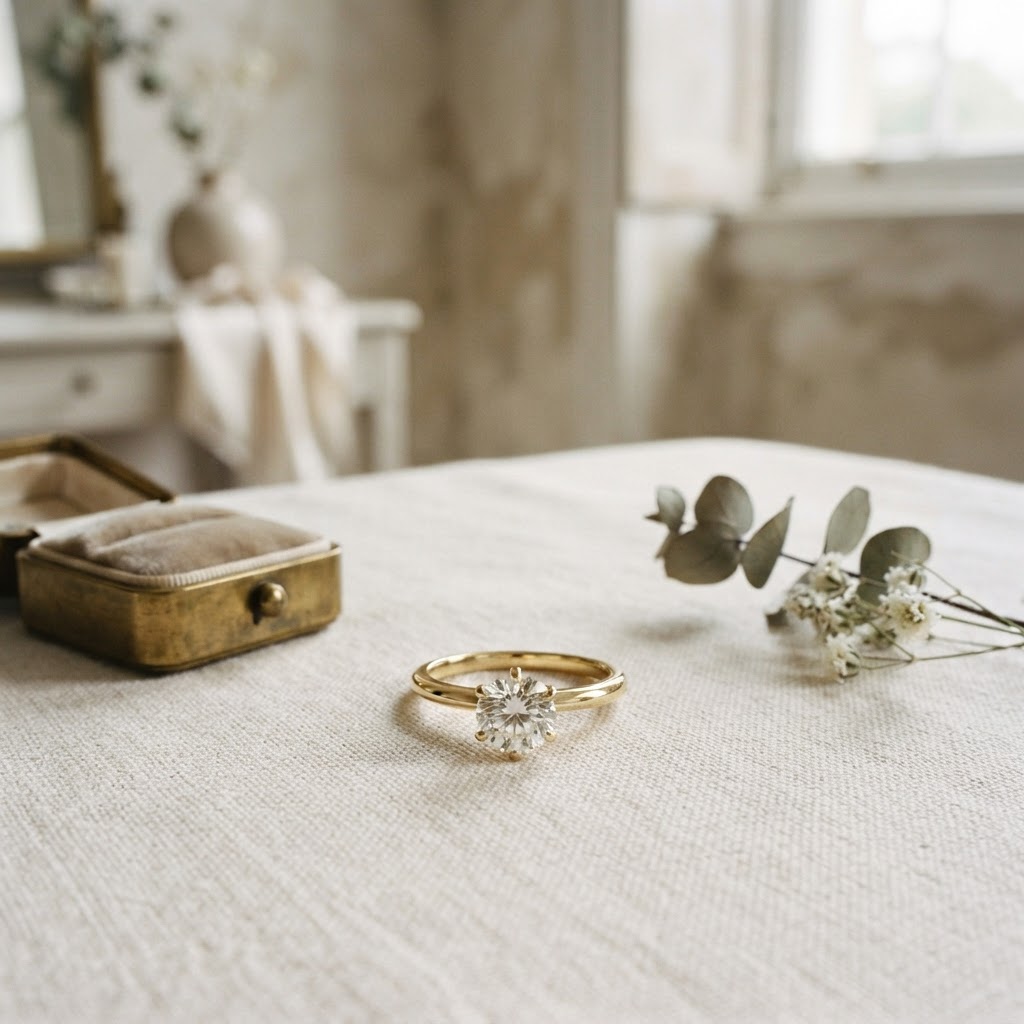
Solitaire Engagement Rings: Lanarkshire Buying Guide
What if the diamond that looks strongest on its own isn’t the one that works best in your ring? Solitaire Rings bring the stone and setting into...
What if the diamond that looks strongest on its own isn’t the one that works best in your ring? Solitaire Rings bring the stone and setting into clear focus, so proportions, practical wear and personal preference all matter. It’s easy to compare diamonds by carat weight alone, but cut, colour, clarity and the setting also shape the finished design.
If you’re choosing a solitaire in Lanarkshire, a consistent set of criteria makes it easier to compare options. This guide explains how diamond characteristics and setting choices affect appearance, then helps you assess rings with daily wear in mind. You’ll also find a practical way to move from browsing loose diamonds to a considered ring specification.
Jewellove’s loose diamonds and Ring Maker bring stone selection and setting design together, helping you organise and compare choices. For a more tailored approach, a bespoke design appointment can help bring your priorities together in one ring concept.
Key Takeaways
- Use the centre stone’s shape and proportions to assess how a solitaire design will look as a whole.
- Compare cut, colour, clarity and carat as separate diamond characteristics, not as interchangeable measures.
- Weigh prong and bezel settings against your preferences for appearance, cleaning access and everyday practicality.
- Build a consistent shortlist of Solitaire Rings by recording each diamond’s details and setting choices in one comparison view.
- Move from loose-diamond browsing towards a complete design by organising your priorities, ring size and setting decisions.
What defines a solitaire ring, and what should you compare first?
A solitaire ring is centred on one principal gemstone, usually a diamond, held in a setting attached to the band. With no surrounding centre stones competing for attention, the main diamond’s outline, proportions and setting are especially visible. That focus makes a solitaire easy to define, but it doesn’t mean every design looks or feels the same.
Start by separating two decisions: the diamond’s shape and the way it’s held. Round and oval describe the diamond’s outline; prong and bezel describe setting styles. A round diamond can sit in different settings, just as an oval diamond can. The right combination depends on the appearance and practical features you prioritise.
How is a solitaire different from other ring styles?
A solitaire concentrates the design around one principal stone. A halo places smaller stones around the centre diamond. A three-stone design adds prominent stones alongside it, whilst pavé uses small stones set along part of the band. These styles create different distributions of detail and visual emphasis. None is a measure of quality over another; they’re distinct design choices.
Extra stones can make a design appear more detailed and change how the centre stone relates to the band. A solitaire keeps that relationship direct, giving the setting and band proportions a clear role in the finished look. For historical context, read this overview of the history of the engagement ring.
Which decisions shape a solitaire ring?
Assess the ring as a set of connected choices, rather than selecting a diamond in isolation. Consider:
- Centre diamond: its shape, proportions and characteristics.
- Setting profile: how the setting holds the stone and looks from the side.
- Band proportions: how its width and form balance the centre diamond.
- Metal: the colour and material you want for the ring.
Each choice affects the overall balance. For example, changing from a round to an oval diamond changes the centre stone’s outline, but it doesn’t determine whether the setting must use prongs or a bezel. Compare these elements together and note your priorities, such as a particular shape, a lower profile or a specific band appearance. For those drawn to intricate metalwork and vintage-inspired settings, resources from Heirloom Jewelers illustrate how period craftsmanship can add character to a ring's design.
There’s no single specification to suit every wearer. Use these initial comparisons to establish a direction, then assess the diamond and the setting’s practical details before settling on a design. Solitaire Rings are defined by their single-stone focus, not by one fixed shape, setting or band style. For contemporary inspiration tailored to regular wear, jewellers such as Selebretta® demonstrate how lab-grown diamonds and moissanite can be styled for everyday occasions.
How to assess the centre diamond in a solitaire ring
In Solitaire Rings, the centre diamond carries most of the visual focus. Compare its grading details alongside its shape and intended setting, rather than treating one number as a complete description. The 4Cs are cut, which concerns how a diamond’s facets interact with light; colour, which grades the presence of colour; clarity, which assesses internal and surface features; and carat, which measures weight.
These are distinct considerations. No single grade guarantees how a diamond will look to every viewer. Shape describes the outline, while cut quality relates to light performance. Carat weight alone doesn’t specify a diamond’s face-up dimensions: two diamonds of equal weight can have different outlines and proportions.
How do the 4Cs affect a solitaire diamond?
Use each characteristic to answer a different comparison question:
- Cut: How is the diamond’s light performance assessed? Cut grades apply to round brilliant diamonds; don’t treat shape and cut as the same term.
- Colour: What colour grade is recorded, and how does it fit your preferences?
- Clarity: What clarity grade is shown, and what does the grading information say about features within or on the stone?
- Carat: What is the diamond’s weight? Check dimensions as well if you want to compare its visible spread.
For a fair comparison, look at diamonds of the same shape and review the available grading information together. If you change several characteristics at once, it becomes harder to tell which difference matters most to you. Keep the ring setting in view too: the diamond’s proportions and the way it is held contribute to the finished design.
Which diamond shape suits a solitaire design?
Shape is a preference about outline, not a quality ranking. A round diamond has a balanced circular outline; an oval creates an elongated outline; a princess cut has a square outline; and an emerald cut has a rectangular outline with step-like facets. These differences affect the centre stone’s proportions and how it relates visually to the band and setting.
Compare shapes in the context of the ring you’re considering. Note whether you prefer a compact or elongated outline, then review the diamond’s measurements and setting together. Jewellove’s diamond information and loose diamonds can help you organise that comparison. To bring diamond details and design priorities together, book a ring design appointment.
Solitaire settings compared: profile, proportions and everyday wear
The setting affects how a solitaire diamond is held, framed and positioned above the band. Prong and bezel settings create different visual profiles. Neither is automatically the safer choice in every situation: suitability depends on the finished design and how the ring is worn.
What is the difference between prong and bezel settings?
Prongs hold the diamond at selected points around its edge, leaving more of the stone’s sides visible. A bezel uses a rim of metal around the diamond’s edge, creating a more continuous frame. This difference affects how much of the stone is visible and which areas are accessible for cleaning.
| Comparison point | Prong setting | Bezel setting |
|---|---|---|
| Profile | Prongs hold the diamond above the band; the height varies by design. | A metal rim frames the diamond; its profile depends on the setting’s construction. |
| Visual effect | More of the diamond’s edge remains visible, with metal details at the holding points. | The rim creates a defined outline around the diamond and covers more of its edge. |
| Cleaning access | Open areas around the diamond can provide access beneath the setting. | The rim can make some areas around the diamond less accessible. |
| Practical considerations | Consider the setting height and how the prongs fit with regular activities. | Consider how the rim’s shape and width affect the ring’s feel and appearance. |
How should a solitaire balance appearance and daily wear?
Look at the full ring, not only the setting type. A higher-set diamond creates a more prominent profile, whilst a lower-set design sits closer to the finger. Band width also changes the visual balance: the same centre stone can look different against a narrow band than it does against a wider one.
Think through the wearer’s routine. Consider whether the ring will be worn during hands-on activities, whether a raised setting could catch on clothing, and what feels comfortable alongside other jewellery. These are design considerations, not guarantees about damage or maintenance. Care needs depend on the finished ring and how it is worn, so factor both into your comparison of Solitaire Rings.
For a specific combination of diamond, setting height and band proportions, book a ring design appointment to shape the choices into a considered design.
A practical checklist for comparing solitaire rings
A shortlist is easier to assess when every design is recorded in the same way. Separate fixed requirements, such as a preferred metal or essential comfort need, from adjustable preferences, such as diamond shape or setting profile. This helps you identify which choices are essential and where there’s room to refine the design.
What should a solitaire comparison checklist include?
Use the same fields for each option. Record the available information, and mark details that still need thought rather than filling gaps with assumptions.
- Diamond shape and available grading information.
- Setting style and profile, including how high the centre stone sits.
- Band proportions and the way they balance the centre diamond.
- Ring size and comfort priorities.
- Typical daily activities that may affect setting and wear preferences.
- What you like about the design, and what you might change.
A consistent comparison makes differences clearer. For example, if two shortlisted designs have the same preferred shape but different setting profiles, focus on how each setting looks and fits your routine. Keep the diamond details alongside the design choices; they’re part of the same decision.
How can shoppers organise their shortlist before deciding?
Follow a repeatable sequence:
- Define priorities. Note fixed requirements and preferences you’re open to adjusting.
- Compare diamonds. Record the shape and available grading details for each option.
- Assess settings. Compare the profile and band proportions against your priorities.
- Check fit. Use Jewellove’s Ring Sizer to support an accurate ring-size choice and a better-fitting design.
- Record decisions. Save each option in one comparison view, including what works well and what you’d refine.
Use the Ring Maker to organise ring customisation choices alongside your shortlist. Review the options together before settling on a final specification. A clear record keeps the focus on the features that matter most to the wearer, rather than comparing each ring from memory.
Create a solitaire ring with Jewellove: from diamond choice to design
A considered ring specification connects the diamond with the setting, band, fit and intended wear. Start with your priorities. Compare loose diamonds using their available details, then assess how each option works with your preferred setting and proportions. Check the ring size, review the complete design and note any final adjustments.
Jewellove brings these decisions together through loose diamonds, the Ring Maker and a bespoke design service. The Ring Maker helps you explore and compare ring choices. Bespoke design can align a selected diamond with specific setting preferences, such as the profile, band proportions or overall appearance you want from Solitaire Rings.
When does bespoke solitaire design make sense?
Bespoke design is useful when you want to bring specific choices together in one ring concept, rather than assess the diamond and setting separately. For example, you might have a preferred diamond shape and want to compare how different setting profiles or band proportions affect the finished design. Use the bespoke ring design service and Ring Maker to explore and organise your choices.
What should readers prepare for a design appointment?
A short, organised brief gives the discussion a clear starting point. Bring or note:
- Your shortlist of diamond options and available grading information.
- Your preferred diamond shape and setting profile.
- Your ring size, using Jewellove’s Ring Sizer if needed.
- Practical priorities, including comfort and typical daily activities.
- Essential requirements, separated from flexible preferences.
Keep the brief open to adjustment. A preference may change as you compare the diamond and setting together, whilst a firm requirement can guide the design choices. In your final review, check that the selected stone, setting, band proportions and fit work as one specification.
Turn your shortlist into a considered solitaire design
A well-matched solitaire brings the centre diamond, setting and band proportions together. Compare the 4Cs as separate characteristics, then consider how the diamond’s shape and setting affect the ring’s overall appearance. Factor in fit and daily wear too, so the final choice reflects both design preferences and practical needs.
Keep your comparison consistent. Record the details that matter, separate firm requirements from flexible preferences, and review each design as a whole. Jewellove’s loose diamonds, Ring Maker and bespoke design service connect diamond selection with ring customisation, helping you develop a clear specification.
Bring your shortlist, preferred shape, ring size and practical priorities to a bespoke design appointment. You don’t need every detail settled. A clear starting point can help turn your choices into a ring design that feels considered and personal.
With your priorities organised, you’re ready to take the next step with confidence.
Frequently Asked Questions
What is a solitaire ring?
A solitaire ring is centred on one principal gemstone, usually a diamond. The stone is the main visual focus, while the setting and band support its outline and proportions. Solitaire Rings can use different diamond shapes, such as round or oval, and different settings, including prong or bezel styles. The term describes the single-stone design, not one fixed diamond shape or setting.
Are solitaire rings suitable for everyday wear?
Solitaire rings can be worn every day, but suitability depends on the finished design and the wearer’s routine. Consider the setting height, comfort, and whether the ring may catch during typical activities. A raised profile and a lower-set design can feel and function differently in daily use. Think about how the ring will be worn and cared for, rather than assuming one setting type suits everyone.
Which diamond shape is best for a solitaire ring?
There’s no single best shape for every solitaire ring. Round, oval, princess and emerald shapes create different outlines and proportions, so the choice depends on the look you prefer and how you want the stone to relate to the band. Compare the diamond’s measurements as well as its shape. The setting can also affect the finished appearance, so assess both choices together.
What should I check when comparing solitaire ring settings?
Compare how each setting holds and frames the diamond, its profile from the side, and how much of the stone’s edge is visible. Check the setting height and band proportions, then consider cleaning access and comfort. Prong and bezel settings have different designs and practical considerations, but neither is automatically right for every wearer. Include your typical activities when assessing how the finished ring may suit daily wear.
Can I design a solitaire ring around a loose diamond?
Yes. Jewellove offers loose diamonds alongside a Ring Maker for exploring ring customisation and a bespoke design service. Start with a preferred diamond, then consider settings and band proportions that fit your design priorities. For shoppers in Lanarkshire, these connected choices offer a structured route from comparing stones to shaping a complete ring specification. Keep preferred features and flexible options clear as the design takes shape.
How do I find the correct ring size for a solitaire?
Use Jewellove’s Ring Sizer to help establish the ring size before finalising the design. An accurate size supports a better-fitting ring, so include it alongside your diamond and setting preferences when reviewing the specification. If the size is uncertain, resolve it before completing the design. Fit is part of the overall choice, alongside comfort and how the ring will be worn.
Is a solitaire ring a good choice for an engagement ring?
A solitaire can be a suitable engagement ring if a single centre stone and a focused design match the wearer’s preferences. The diamond shape, setting profile and band proportions allow the design to be tailored, while daily wear needs can guide practical choices. There’s no universal specification. Compare these elements together, then decide whether the resulting ring reflects the wearer’s style and priorities.