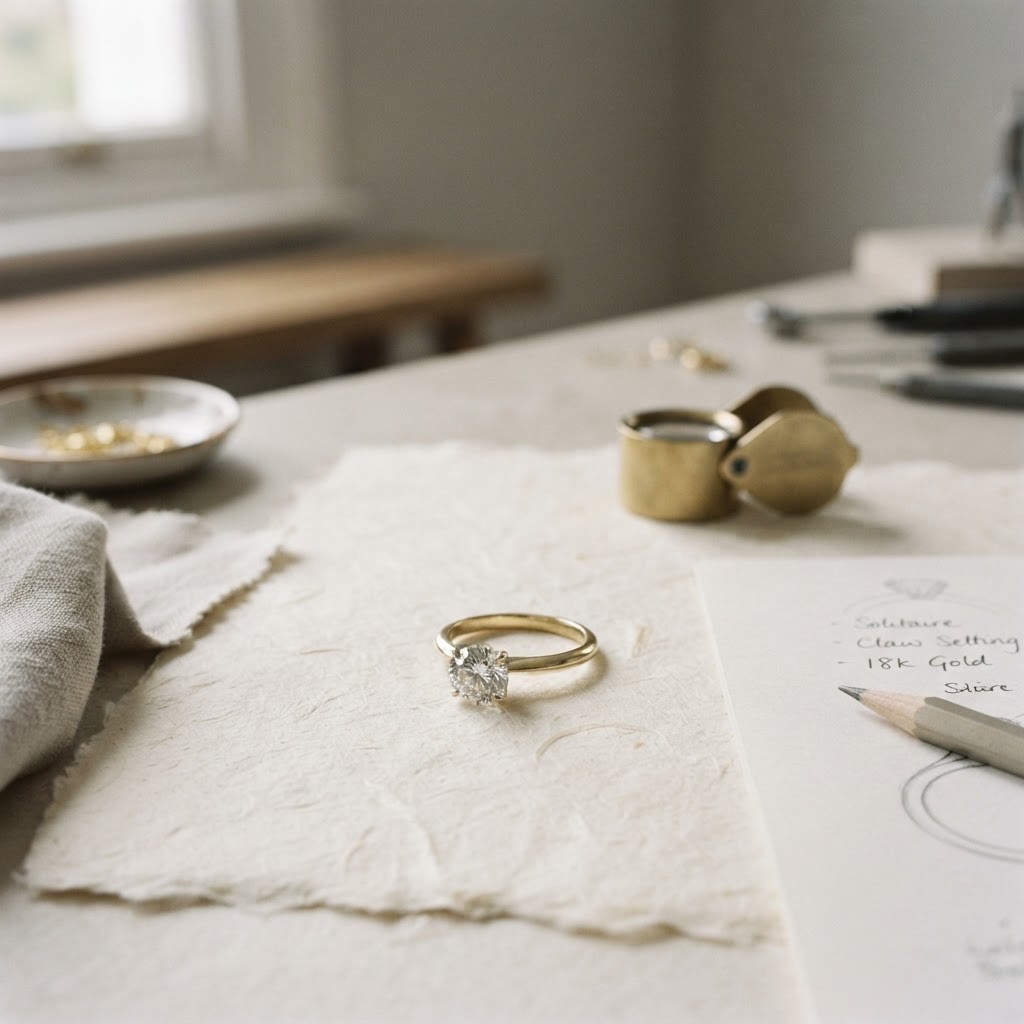
Custom Solitaire Engagement Rings: A Practical Design Guide
The setting isn’t always the best place to start. With custom solitaire engagement rings, the diamond’s shape and proportions affect which settings...
The setting isn’t always the best place to start. With custom solitaire engagement rings, the diamond’s shape and proportions affect which settings may suit it, while the metal and band design influence the finished look. Considering each detail in isolation can make comparisons harder.
It’s reasonable to want a ring that reflects the wearer’s preferences without turning the design process into guesswork. Organise the decisions: identify preferred diamond characteristics, compare them with setting and metal options, then note what needs confirming before you proceed.
This guide compares the choices that shape a custom solitaire, including diamond type, shape, cut, colour and clarity, alongside setting style and band details. It also gives you a practical route from initial preferences to a design discussion. Jewellove’s loose diamonds, Ring Maker, bespoke design service and ring design consultation may support different stages. Confirm which specifications and design options are currently available before making a final selection.
Key Takeaways
- Plan custom solitaire engagement rings by assessing the diamond, setting and wearer’s preferences together.
- Compare diamond shapes by their visible outline and how they may work with potential settings, rather than treating one shape as universally best.
- Use the 4Cs to organise diamond comparisons, and prepare specific grading questions before choosing a stone.
- Weigh the extra choice of a custom design against the additional decisions involved. Bespoke isn’t automatically the right route for every buyer.
- Record preferred shapes, metal appearance, daily activities and non-negotiable details to make a design discussion more focused.
What makes a custom solitaire engagement ring different?
A solitaire ring centres on one principal gemstone, usually a diamond, without a surrounding cluster of additional stones. Its simplicity puts the centre stone and setting details in clear view. For background on how this design became associated with engagement rings, see this overview of the history of engagement rings.
A custom solitaire design brings the centre diamond, setting, metal, proportions and practical preferences into one coordinated design discussion. That differs from choosing a ready-made ring, where the main design is already set, or changing one specification on an existing design. Custom design lets your preferences guide the discussion, but the available choices depend on what the jeweller currently offers.
Which parts of a solitaire ring can be customised?
Start with the diamond. Its shape and dimensions affect the ring’s outline and how much space it occupies on the finger. A round stone creates a different profile from an oval or pear-shaped one. Its proportions also need to work with the setting, so consider these choices together. Comparing options from loose diamond specialists like Superlight Diamonds can help you understand how different cuts, dimensions, and clarity grades influence your overall design.
Setting style, band shape or width, and metal colour may also form part of a solitaire design brief. Treat these as areas to discuss, not options guaranteed across every design. Jewellove offers loose diamonds, a Ring Maker and a bespoke design service. Confirm directly which diamond specifications, settings and metals can currently be customised for a solitaire. The bespoke design service is a useful starting point for discussing how your preferences can be assessed.
Keep confirmed details separate from open questions. Record your preferred diamond shape and metal appearance, then ask which settings and proportions are available for that combination.
Who may prefer a custom solitaire design?
Custom design may suit shoppers who know what they like but want help turning those preferences into clear specifications. For example, someone may prefer an elongated diamond and a simple band, but still need to compare proportions and ask which settings can accommodate the stone.
It can also help buyers weigh a distinctive detail against a simpler, traditional solitaire. For those comparing different aesthetics before settling on a single centre stone, you can explore Halo Engagement Rings to see how surrounding accent diamonds compare with a classic band. Neither route is automatically better. A ready-made ring may suit someone whose preferences match an available design; custom design may be useful when several details need to be considered together. It isn’t necessary for every engagement ring buyer. Start by deciding which preferences matter most.
How the diamond, setting and metal shape a custom solitaire
With custom solitaire engagement rings, the centre diamond and setting need to work as a pair. The stone’s outline affects how it sits in the design, while the setting affects how much of it is visible and how exposed it may be during everyday wear. Metal colour completes the overall appearance.
How should the centre diamond guide the design?
Begin with the preferred shape. A round brilliant has a balanced outline, whilst an oval or pear creates a more elongated profile. Neither is automatically better. Consider which shape suits the wearer’s preferences and the setting being discussed, or browse collections at robsonsjeweler.com to compare how loose mined and lab-grown stones translate into finished engagement ring styles.
Then compare the 4Cs separately: cut, colour, clarity and carat. Cut describes how the diamond’s proportions and finish affect its light performance; colour and clarity describe other grading characteristics. Carat measures weight, not the size a diamond is guaranteed to appear face-up. Shape and proportions also affect its visible dimensions. For detailed grading questions, consult a dedicated diamond guide and review loose diamond options as part of your comparison.
How do setting and metal change the result?
A prong setting holds the stone at points around its edge, leaving more of the diamond visible. A bezel setting surrounds the edge with metal, creating a more enclosed outline. These structures affect both presentation and how exposed the diamond may be. Ask how each option relates to the wearer’s daily activities, and confirm which setting types Jewellove currently offers for solitaire designs.
Metal colour also changes the ring’s visual balance. Yellow gold creates a warmer contrast, while white-toned metals give a cooler, more uniform appearance. Confirm platinum and other metal choices directly rather than assuming they are available for every design.
| Choice | What to compare |
|---|---|
| Shape | Visible outline and compatibility with the setting. |
| Setting | How much of the diamond is visible and how its edges are held. |
| Metal | Colour, overall appearance and confirmed availability. |
Assess the combination, not just each feature on its own. Your preferred diamond shape may narrow the suitable setting choices, while the metal can change the contrast around the stone. Bring your shortlist and practical questions to a Jewellove ring design consultation to discuss which combinations can be considered.
Custom solitaire versus ready-made: which route fits your priorities?
Choosing between a ready-made ring and a custom design is a question of fit and decision-making, not a ranking of quality. A ready-made solitaire may meet your preferences if its existing design and diamond details suit the wearer. A custom route may be worth exploring when you want to coordinate preferences that aren’t covered by the available designs.
| Consideration | Ready-made solitaire | Custom solitaire |
|---|---|---|
| Choice | Choose from existing designs and available options. | Discuss how preferences may be brought together, subject to available choices. |
| Decision effort | Compare the details of a defined ring and diamond. | Organise preferences and discuss design decisions. |
| Fit with preferences | May suit when an available design already matches priorities. | May suit when specific diamond and design preferences need to be considered together. |
| What to check | Available diamond and ring information. | Customisable details and the design process. |
When might a ready-made solitaire be the simpler choice?
A ready-made ring may suit buyers who find a design that matches their preferences and would rather compare defined options than develop a design brief. Review the available information about the ring and diamond, focusing on the details that matter most to your decision. A traditional solitaire can still be a personal choice; choosing an existing design doesn’t mean compromising by default.
Having fewer design decisions to make can feel more straightforward. It doesn’t establish that the ring will be faster to obtain or better value. Confirm any practical details that affect your choice directly. If you are also interested in broader high-end jewellery concepts and artistic craftsmanship, check out ZAAFAR Atelier for inspiration from an independent luxury brand.
When is a custom solitaire worth exploring?
Consider a custom discussion if you have clear preferences that need to be coordinated, such as a particular diamond shape alongside a specific band appearance. The aim is to establish whether those preferences can work together in a solitaire design. Customisation doesn’t automatically produce a better result or make decisions simpler. It may involve more choices, and the available options depend on the jeweller’s current offering.
Before proceeding, ask which diamond specifications, settings and metals can be considered, and how the design process works. Jewellove offers a bespoke design service; review the custom design service information and confirm the details relevant to a solitaire. Choose the route that fits your priorities and the information available, rather than assuming one approach is right for everyone.
A practical checklist for planning your custom solitaire
Start with the wearer’s preferences, not a long list of diamonds. Record preferences before comparing diamonds. This gives you a consistent basis for assessing each option and helps keep the shortlist manageable.
What should you decide before comparing designs?
Separate non-negotiable details from flexible preferences. The wearer may strongly favour a particular metal colour but be open to different diamond shapes, or the reverse. Note daily activities too, such as regular work with the hands or a preference for low-profile jewellery. These details can guide questions about design suitability, but no setting is right for everyone.
How can you prepare for a design discussion?
Use this sequence to turn preferences into a practical brief:
- Record the wearer’s preferences. Note preferred shapes, metal appearance and any reference designs that communicate the desired look.
- Separate essential from flexible. Mark non-negotiable details, then list areas where alternatives could work.
- Add practical considerations. Describe daily activities and preferences about how the ring sits or feels. Treat these as discussion points, not assumptions about which design will suit.
- Build a focused diamond shortlist. Compare a small group using the same criteria, such as shape and the diamond specifications that matter to you. Avoid repeatedly switching between unrelated options.
- Write down questions. Ask which combinations of diamond, setting and metal are available, what information can be provided for each diamond, and which details need confirmation.
If ring size is still unknown, Jewellove lists a Ring Sizer. Check its current instructions and use it as a starting point; confirm any sizing questions directly before finalising a design.
Bring your brief and shortlist to a design discussion. Jewellove offers a Ring Maker, but check its current functions before relying on it to organise specific choices. The Ring Maker design tool is a useful place to start that check. A ring design consultation can help you raise the remaining questions, including which preferences can be accommodated in a solitaire.
This preparation gives buyers of custom solitaire engagement rings a clear snapshot of priorities, options and open questions. You don’t need to decide every detail in advance. The aim is to make the next discussion more focused.
Plan your custom solitaire engagement ring with Jewellove
Once your preferences and questions are organised, choose the next step based on what you need to compare. Jewellove offers loose diamonds, a Ring Maker, a bespoke design service and ring design consultation. These may support different parts of planning custom solitaire engagement rings, but confirm directly whether each route applies to solitaire designs and which options are currently available.
Which Jewellove route should you explore first?
If the diamond is your starting point, review the information available about loose diamonds and note which specifications you want to compare. Keep your preferred shape and design preferences in view, because the diamond needs to work with the setting being considered.
If you’re starting with the ring’s appearance, review the custom design service information. Jewellove also offers a Ring Maker. Check its current functions before using it to organise or explore design choices. For either route, ask which settings, metals and diamond specifications can currently be considered for a solitaire.
What happens when you book a design appointment?
Jewellove lists ring design consultation as an offering, but details about appointment format, location and process aren’t confirmed here. If you’re in Lanarkshire, check whether a discussion is available locally or arranged another way before booking. Don’t assume an in-person or remote format without confirmation.
Prepare a concise brief to keep the discussion focused. Bring your diamond shortlist, preferred shape and metal appearance, non-negotiable details, and questions about the available solitaire settings. You can also ask how the design process works, what information is available for each diamond, and which preferences can be incorporated. These are points to confirm, not services or outcomes to assume.
The useful next step is a clear conversation about how your priorities fit the options Jewellove can currently offer. Confirm the appointment arrangements and any solitaire-specific details before proceeding.
Review the custom design service and ask about a ring design consultation
Take your solitaire design from shortlist to discussion
A considered design starts with the wearer’s preferences. Record the details that matter, then compare the diamond, setting and metal as one combination. A ready-made ring may already fit those priorities; a custom route may be useful when you want to discuss how specific choices could work together.
Jewellove offers loose diamonds, a Ring Maker and a bespoke design service. Ring design consultation is also listed as an offering. Confirm which options apply to your preferred solitaire design, and bring your shortlist and questions to the discussion. This gives you a practical starting point for assessing custom solitaire engagement rings without needing to settle every detail in advance.
With your priorities organised, you can take the next step with a clearer brief and a more focused set of questions.
Frequently Asked Questions
What is a custom solitaire engagement ring?
A custom solitaire engagement ring is designed around one principal gemstone, with design choices considered together rather than selected solely from a finished ring. These may include the centre diamond, setting, metal, proportions and practical preferences. The options depend on the jeweller’s current service. Jewellove offers a bespoke design service and ring design consultation; confirm which details can be customised for a solitaire before proceeding.
Can you customise a solitaire engagement ring with your own diamond?
It may be possible, but confirm this with the jeweller before planning around a diamond you already own. Ask whether the stone can be assessed for the proposed setting, what information is needed and whether any design limitations apply. Jewellove sells loose diamonds, but its current policy on using customer-supplied diamonds isn’t confirmed here. Lanarkshire shoppers should also check how a design discussion can be arranged.
How do you choose a diamond for a custom solitaire ring?
Start with the wearer’s preferred shape, then compare cut, colour, clarity and carat as separate criteria. Consider the diamond’s proportions and visible outline alongside the setting, as carat describes weight rather than guaranteed face-up size. Review the available diamond information and note any grading questions before deciding. For custom solitaire engagement rings, assess the stone and setting as one design choice, not as unrelated selections.
Is a custom solitaire better than a ready-made engagement ring?
No, custom isn’t automatically better. A ready-made solitaire may be a good fit if its design and diamond details match the wearer’s priorities. Custom design may be worth exploring if you want to coordinate specific preferences that aren’t covered by available designs. Compare the decision effort, choice and fit you need. Ask what custom options and process are available before deciding which route suits you.
How long does it take to make a custom solitaire engagement ring?
There isn’t a confirmed Jewellove timeframe for making a custom solitaire. Timing can depend on the design, diamond availability and the steps involved, so ask for an estimate based on the specific ring before making plans. Confirm when the timeframe begins, what stages it includes and whether sourcing or design approvals affect it. Don’t rely on a general estimate as a confirmed delivery date.
How much does a custom solitaire engagement ring cost in the UK?
There’s no single price for a custom solitaire. The total depends on the selected diamond, its specifications, the metal and the design choices involved. Jewellove’s prices aren’t provided here, so request a current quote for the combination you’re considering rather than relying on general industry figures. Prepare a shortlist and ask which options are available within your budget, including any costs that may change as the design develops.