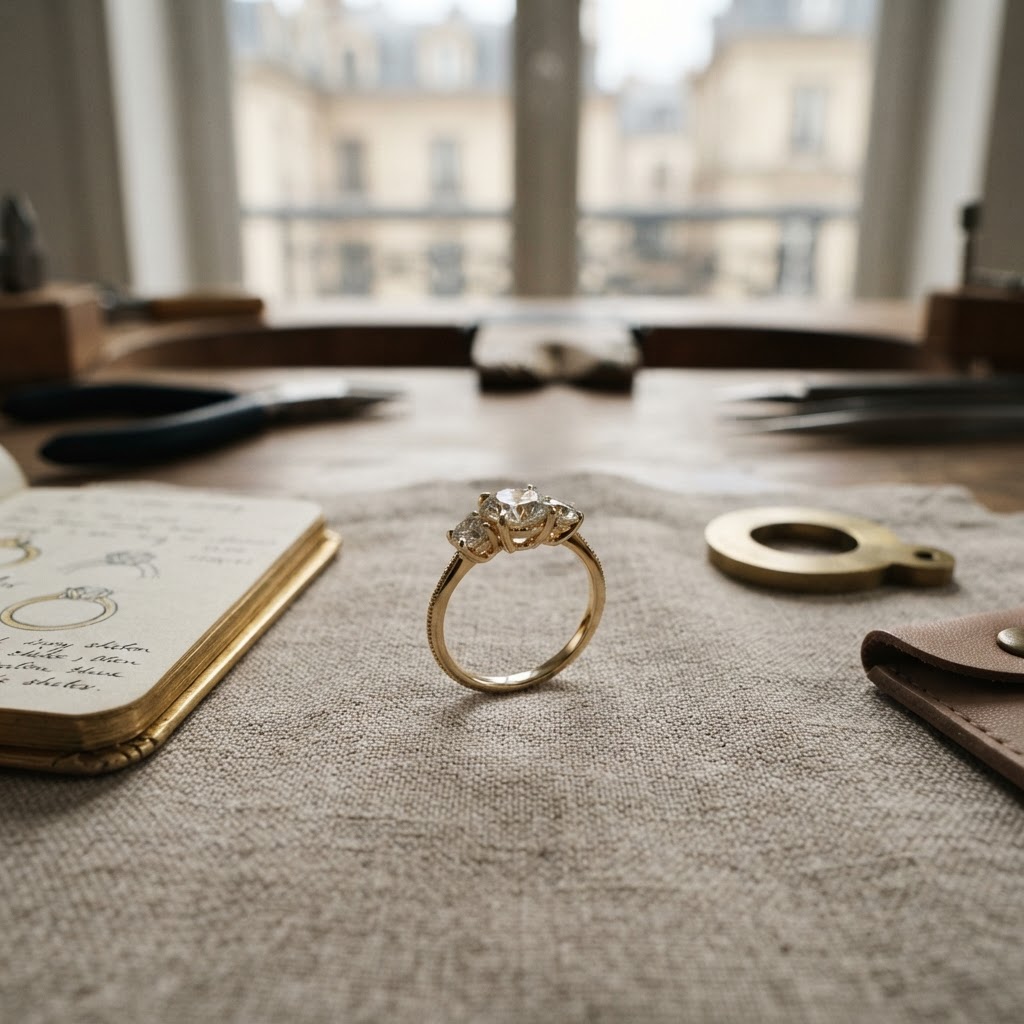
Bespoke Trilogy Rings: How to Specify a Three-Stone Design
What determines whether a three-stone ring feels balanced? With bespoke trilogy rings, the side stones’ shape and scale, the setting and the band all...
What determines whether a three-stone ring feels balanced? With bespoke trilogy rings, the side stones’ shape and scale, the setting and the band all influence the finished design. The combination also needs to suit regular wear, not just look appealing in a sketch.
These choices can be difficult to compare before you see them together. There’s no single proportion or setting that suits every stone and wearer. Clear criteria can help you assess options and explain what matters to you in a bespoke design discussion.
This guide covers how centre and side stones can relate in size and shape, how settings and metals affect the overall design, and what to consider for everyday use. You’ll also find a framework for recording preferences and questions, so you can prepare a concise brief. Jewellove’s Ring Maker can help organise your design preferences, while a bespoke design consultation offers a way to clarify and assess your trilogy-ring brief.
Key Takeaways
- Compare stone proportions and shapes to decide how the three stones should relate in the finished design.
- Assess setting height, exposed edges and structure in relation to comfort and how the ring will be worn.
- Use a simple brief to record the ring’s purpose, preferred look, stone choices, metal preferences and practical requirements.
- For bespoke trilogy rings, reference images can help you communicate specific design details, not just an overall style.
- Prepare questions about stone and setting options, and confirm appointment format and logistics before travelling.
What is a bespoke trilogy ring, and what makes its design distinctive?
A trilogy ring features three principal stones. They may sit in a straight row or another arrangement, with their relative size, shape and spacing shaping the overall look. A Trilogy ring is often associated with the past, present and future, but the stones can have any personal meaning, or simply be chosen for their appearance.
A trilogy ring has three principal stones, unlike a solitaire’s single centre stone or a halo’s central stone surrounded by smaller stones. The relationship between the three main stones is therefore a defining feature, although the setting and band also affect the finished ring.
How does a three-stone ring differ from other ring styles?
A solitaire puts the visual emphasis on one main stone. In a trilogy design, three principal stones share that role, although one may be larger or more prominent. A halo adds a border of smaller stones around a centre stone; on its own, it doesn’t create a three-stone layout.
When comparing styles, first look at the number and arrangement of the principal stones. Then consider how any additional stones contribute to the design. If you are seeking inspiration for designs that celebrate personal milestones, check out MEAAR'S to view premium diamond jewellery created to mark special memories.
What does bespoke mean when commissioning a trilogy ring?
With a bespoke design, the discussion starts with your preferences rather than a choice only between finished rings. You might specify the stones, their proportions, the metal and the setting. The jeweller can then clarify which options can be considered together. Bespoke doesn’t automatically mean every combination is possible, so confirm available choices with Jewellove.
Before a design discussion, list your priorities. For example, decide whether matching stones or a particular metal matters most, and note any practical requirements. The bespoke design service provides a way to discuss your ring brief and establish which preferences can be accommodated.
Jewellove’s Ring Maker tool can also help you organise design preferences. Treat it as a planning aid, rather than confirmation that a particular trilogy layout or combination is available. Keeping your preferences and open questions together gives the design discussion a clear starting point.
How should the centre and side stones work together?
The centre stone is usually the first point of comparison. Side stones can echo its size and outline or create contrast. Their proportions affect whether the centre appears dominant, the three stones feel evenly weighted, or the design has a more varied outline. There’s no single ratio that suits every combination.
Stone measurements and setting geometry both affect perceived balance, so compare the stones as a complete arrangement rather than by carat weight alone. A design guide such as Three-Stone Engagement Ring Design Advice provides further context on proportion and stone pairings.
Should trilogy stones match in shape or use contrasting shapes?
Matching shapes create a coordinated outline. For example, three oval stones form a consistent sequence, with size and spacing helping distinguish the centre. Contrasting shapes make the difference between centre and sides part of the design. Neither approach is automatically more flattering: compare the actual stones together and consider how their outlines meet at the setting.
| Shape relationship | Possible visual effect | Questions to discuss |
|---|---|---|
| Matching shapes | A consistent outline across all three stones | Should the centre be larger, or should the stones appear closer in scale? |
| Contrasting shapes | A deliberate change in outline between centre and sides | Do the shapes sit together cleanly, and are their proportions balanced? |
How can shoppers compare diamond specifications without getting lost in the 4Cs?
Review cut, colour, clarity and carat information for each diamond as a set. Compare the centre stone with both side stones rather than assessing each specification in isolation. A difference in one grade may matter less to the overall design than how the three stones look together, so ask which details are most relevant to your priorities.
Carat describes a diamond’s weight, not its complete face-up size. Two diamonds with the same carat weight can have different measurements and proportions. Check the dimensions as well as the carat figures, and ask how each stone’s outline will sit in the setting. Jewellove’s diamond selection information can help you organise initial comparisons.
For bespoke trilogy rings, take your preferred shapes and stone details to a design discussion. Jewellove’s bespoke design service can help assess how those preferences might work together. Confirm which stones and configurations are available.
Which trilogy-ring settings balance appearance, comfort and security?
A three-stone ring has more edges and joins to consider than a single-stone design. The setting needs to support each stone and bring the three together in a shape that suits the hand and intended use. No single setting type suits every combination. The right choice depends on the stones’ size and shape, their position and the structure of the finished ring.
The Gemological Institute of America’s guide to a three-stone engagement ring offers further context on stone and design considerations. Use it as background, then ask the jeweller how the proposed setting works with your specific stones.
What should be checked for everyday wear?
Assess the ring from the side as well as from above. A higher setting may make the stones more prominent, but it could also be more likely to catch on clothing or other materials. Exposed edges, gaps between stones and details that project beyond the band are also worth discussing. Ask how the proposed structure supports and protects each stone during normal use. Don’t assume that a particular look guarantees security or suitability.
Comfort involves more than the ring’s profile. Check whether the setting or band could press against neighbouring fingers, particularly if the design is wide. If you plan to wear a wedding band alongside it, ask whether the rings will sit flush or leave a gap. That is a design preference, not a requirement. Bring the intended band if you have it, or describe how you want the two rings to sit.
- Ask how the setting supports each stone.
- Check the ring’s height and any exposed or projecting edges.
- Discuss comfort against neighbouring fingers and wedding-band alignment, if relevant.
- Confirm which care practices the jeweller recommends for the finished design.
Setting suitability depends on the finished design. Confirm the trade-offs with the jeweller before deciding, especially if daily wear is a priority.
How do metal and band details affect the finished design?
Metal affects the ring’s colour and overall appearance. Ask which metal options are available for your design, then compare their colour beside the chosen stones. Request care guidance for each option rather than assuming all metals need the same treatment. Confirm availability with Jewellove.
Band width and shape also affect how the three-stone setting looks. A narrower band may make the stones more prominent, while a wider band can create a different visual proportion. Consider the ring from above and from the side, and ask how the band will support the setting without competing with it. For a bespoke design discussion, bring your comfort priorities and any wedding-band requirements alongside your preferences for appearance.
How can you prepare a clear brief for a bespoke trilogy ring?
A useful brief separates what the ring must include from what could change. This keeps the discussion focused on your priorities while leaving room to assess which combinations are workable. Use this sequence to record your preferences before discussing bespoke trilogy rings:
- Set the purpose. Note when and how you expect to wear the ring. Include practical priorities, such as a lower profile or comfort alongside other rings.
- Describe the look. Record whether you prefer a coordinated outline or contrast between the centre and side stones. Add reference images and label the details you like, such as stone shape, spacing, band width or setting height.
- List stone preferences. Note preferred shapes and overall scale. If you have a particular centre-to-side relationship in mind, describe it visually or with measurements, while keeping it open for discussion.
- Record metal preferences. State your preferred colour or metal, and note any alternatives you would consider. Confirm which options are available for the design.
- Add practical requirements. Note comfort considerations, whether the ring needs to sit beside an existing ring, and whether a wedding band should align with it. If ring size is relevant, check it with an appropriate online ring design tool or ring-sizing resource, then confirm the correct measurement with the jeweller.
Keep two lists: non-negotiables and flexible preferences. For example, the three-stone layout might be essential, while the exact side-stone shape could remain open. This makes it easier to compare possible designs without treating every reference image as a fixed specification.
Which questions help assess a bespoke design proposal?
Use the discussion to clarify how your brief translates into a design. Ask which details are fixed, which can be adjusted and which depend on the stones available. If you’re shown drawings, specifications or comparisons, ask what each represents and whether it shows the ring from more than one angle. Confirm which materials, stones and settings can be considered, along with the design process and relevant next steps.
Jewellove offers a bespoke design service and a Ring Maker tool for organising design preferences. The tool can help you record ideas, but confirm directly whether the specific features in your brief can be included. Don’t assume every combination or design resource is available.
Bring your brief, reference images and questions to a ring design discussion. Aim to leave with a clearer understanding of which preferences can be taken forward and what needs further consideration.
How to take a bespoke trilogy ring from idea to next step
Once your preferences are organised, use them to guide a design discussion. A concise brief keeps stone choices, setting questions and practical requirements in view as you explore bespoke trilogy rings.
- Bring your brief: separate essential features from preferences you’re open to changing.
- Record stone preferences: note shapes, proportions and any specifications you want to compare.
- Prepare setting questions: ask about comfort, stone support and how the design will sit beside a wedding band, if relevant.
- Confirm appointment details: if you’re travelling from Lanarkshire, check the appointment format and logistics directly before setting off.
Jewellove’s bespoke design service can help clarify your ring brief. Before proceeding, ask for the proposed design, stone specifications and metal details in writing. Confirm which elements are settled and which may change as options are assessed.
What should you expect to confirm before proceeding?
Ask how the design process works, including which stages apply, whether revisions are available and what timelines to expect. These details can depend on the service and design, so confirm the current terms directly rather than relying on assumptions. Make sure you understand what information or design materials will be provided at each stage before agreeing how to proceed.
For the stones, check that the specifications match the choices discussed. For the ring, confirm the metal and setting details, including any practical requirements in your brief. Clear written notes help you compare the proposal with your priorities and identify any questions that still need answers.
How can Jewellove tools support the design discussion?
The Ring Maker tool can help organise design preferences. Confirm whether its available features support the trilogy details you want to explore; don’t assume it offers a specific three-stone configuration. Jewellove also lets customers browse loose diamonds online, which may help you compare available stone specifications where relevant.
Use the tools to organise your starting points, then confirm stone availability and design options directly with Jewellove. This gives the discussion a clear reference without treating an online selection as a final design decision.
Turn your ring brief into a clear next step
A well-specified trilogy design brings the stones, setting and practical needs into one considered plan. Compare the centre and side stones as a group, then assess how their proportions and shapes work with the setting. Comfort, stone protection and wedding-band alignment can also help narrow the options.
For bespoke trilogy rings, record your priorities and questions before discussing the design. Jewellove’s bespoke design service can help clarify your brief. The Ring Maker supports ring customisation and may help organise preferences, but confirm whether it supports the trilogy features you have in mind. Check available stones, metals and settings directly before settling on a proposal.
With your preferences organised and open questions identified, you’ll have a practical starting point for the design discussion.
Frequently Asked Questions
What is a trilogy ring?
A trilogy ring features three principal stones, often one centre stone with two side stones. Their sizes and arrangement can vary, so check the proposed layout rather than relying on the style name alone. Some people associate the stones with the past, present and future; this symbolism is optional. For a bespoke design, confirm the stone specifications and arrangement with the jeweller before approving the final design.
Are trilogy rings suitable for everyday wear?
They can be designed for regular wear, but suitability depends on the complete ring and the wearer’s routine. Ask how the setting supports and protects the stones, and whether its height or exposed edges could catch on clothing. Band shape and comfort against neighbouring fingers matter too. Maintenance needs vary by design, so ask the jeweller about care for the proposed setting rather than relying on the style name alone.
Can a trilogy ring have different stone shapes?
Yes. A trilogy ring can use matching or contrasting shapes, subject to the jeweller’s available options and the final setting. Matching stones can create a coordinated outline, while contrasting shapes make the differences part of the design. In either case, compare the stones’ dimensions and proportions together. Ask to review a design visual before confirming how the centre and side stones will be arranged.
How do I choose the right stones for a bespoke trilogy ring?
Start with preferred shapes, the overall look and any practical requirements. For trilogy designs incorporating coloured centrepieces or accent stones, browsing loose varieties from suppliers like AfricaGems can help you explore different cuts, colours and proportions. Compare the centre and side stones as a group, including their measurements and grading information. Carat describes weight, so it doesn’t show every aspect of a diamond’s visible size. Ask which combinations are available and how they affect the finished proportions. These checks help turn preferences for bespoke trilogy rings into a more specific design brief.
Is a trilogy ring the same as a three-stone ring?
The terms are commonly used for a ring with three principal stones. However, jewellers may use style names differently, and the layout, proportions and setting can vary. Check the product description or design proposal for the actual number and arrangement of stones. This is especially useful when comparing bespoke options, as a label alone may not explain whether the design has one centre stone and two side stones.
How should I prepare for a bespoke trilogy-ring appointment?
Bring preferred stone shapes, metal choices and reference images. Mark which details are essential and which can change. Note comfort requirements and whether the ring needs to sit alongside another band. Prepare questions about stone comparisons and the design information the jeweller can provide. If travelling within Lanarkshire, confirm the appointment format and practical arrangements directly before setting off, as these details should not be assumed.