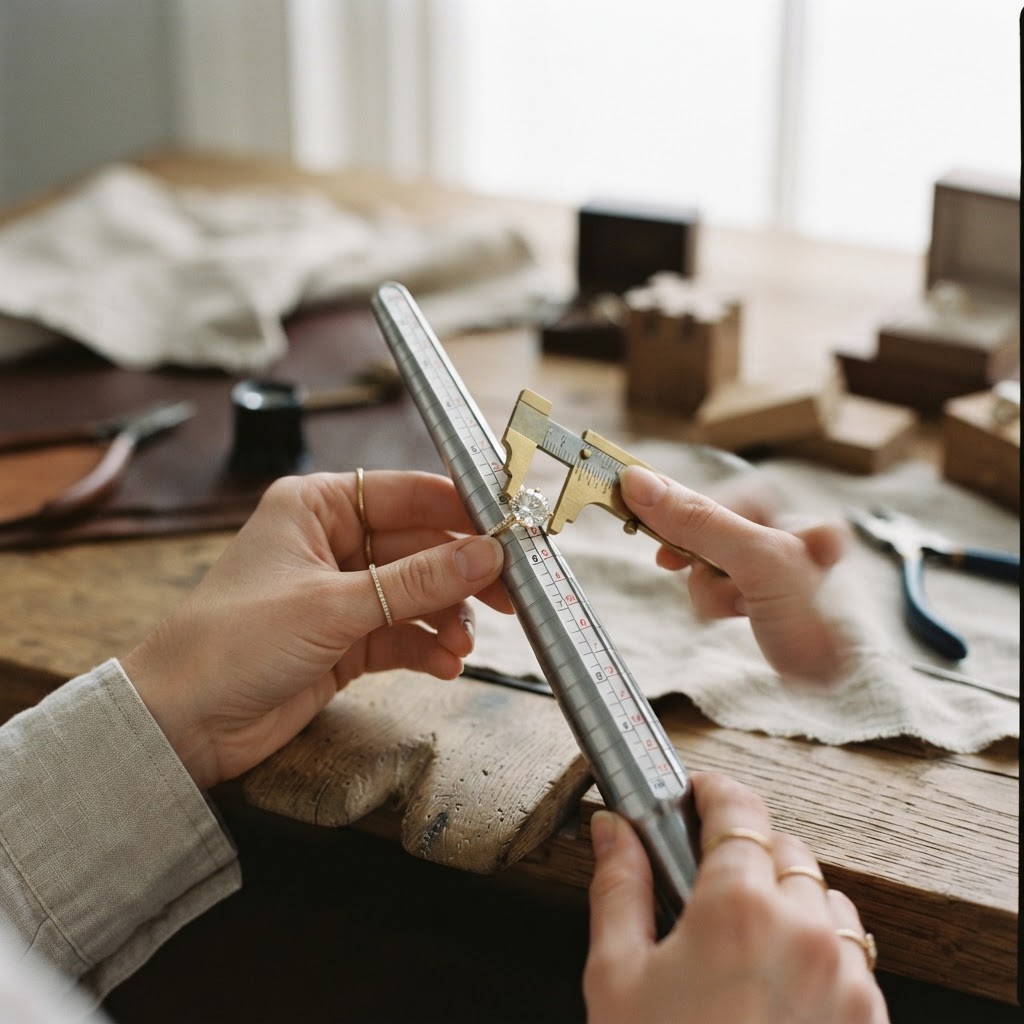
Ring Size Measurement Tool: Precision Verification Protocols
Approximately 20.8% of online jewellery transactions in 2026 result in returns, with incorrect sizing cited as the primary driver of these logistical...
Approximately 20.8% of online jewellery transactions in 2026 result in returns, with incorrect sizing cited as the primary driver of these logistical failures. You recognise that data variance between different instruments creates significant friction in the bespoke design process. Inaccurate measurements lead to high resizing costs and avoidable delays in your procurement workflow. This article provides the technical methodologies and calibration standards necessary to ensure absolute accuracy in your data collection. By implementing a professional ring size measurement tool within a structured verification protocol, you secure a precise data point for manufacturing. You will gain a thorough understanding of EN ISO 8653:2026 standards, the UK A-Z+9 sizing scale, and the environmental factors that influence biometric consistency. This systematic approach transitions ring sizing from a subjective estimate into a verified technical specification. You will learn to account for 24-hour peripheral volume fluctuations and tool co-calibration requirements. These protocols ensure that your custom-built piece meets exact engineering tolerances for our Lanarkshire-based production facility.
Key Takeaways
- Establish ring size as a critical technical specification to mitigate the risks of manufacturing errors and high resizing costs.
- Evaluate the precision of physical sizers against digital alternatives to select the most accurate data collection methodology.
- Apply environmental calibration techniques to account for finger volume changes caused by temperature and time of day.
- Utilise a calibrated ring size measurement tool to provide verified data points for the Jewellove Ring Maker workflow.
- Follow a structured verification protocol to ensure your bespoke jewellery meets exact internal circumference standards.
Technical Necessity of Precise Ring Size Measurement
Ring size measurement defines the internal circumference or diameter of a jewellery band. This value functions as a technical data point in the bespoke design service workflow. You must treat this measurement as a precise specification rather than a subjective estimate. Accurate data ensures that the final product aligns with the intended biometric fit. Input into a professional ring size measurement tool prevents manufacturing discrepancies. This precision is mandatory for materials like platinum. Platinum possesses high density and requires specialised laser welding for adjustments. Errors in initial data acquisition necessitate complex remedial work that can alter the metal's properties. Our Lanarkshire-based production team relies on these exact specifications to maintain manufacturing tolerances of ±0.125 size.
The Logistics of Resizing Errors
Resizing operations introduce structural risks to the jewellery piece. Every adjustment requires cutting, shaping, and reheating the metal. These processes can compromise the integrity of the shank. Repeated resizing increases the likelihood of metal fatigue or stone displacement in pavé settings. Logistical delays also impact your procurement timeline. A resizing requirement adds significant time to the delivery schedule. It's more efficient to secure a verified data point at the start of the Jewellove Ring Maker process. Accurate data acquisition eliminates the need for post-production alterations. This systematic approach reduces the high return rate typically seen in online jewellery transactions.
UK Sizing Standards: A-Z Metric Overview
The UK A-Z+9 scale remains the primary standard for British jewellery manufacturing. This system correlates alphabetical letters to specific internal dimensions. One full alphabetical size division corresponds to exactly 1.25 mm of internal circumference. Manufacturers also use half-size increments to achieve a precision fit. You can compare these values against international ring size standards to understand global metric relationships. Internal geometry further influences the final fit. Standard flat fits provide a consistent contact surface. Comfort-fit designs feature a convex interior. This geometry slides over the knuckle with less resistance. You should adjust your data input by approximately one quarter-size when selecting comfort-fit bands. Use a professional ring size measurement tool to verify these metric increments before finalising your order. Modern CAD/CAM workflows now prioritise these millimetre-centric measurements to ensure compatibility with 3D-wax prints and metal castings.
Comparative Analysis of Sizing Methodologies
Measurement methodologies vary in precision and reliability. Selecting the correct ring size measurement tool is the first step in the data acquisition process. Physical sizers, digital interfaces, and existing ring comparisons each present distinct technical advantages. You must evaluate these tools based on their ability to provide repeatable data points. Printable paper templates often introduce significant variance. Scaling errors during the printing process can distort the template by several millimetres. Paper flexibility also prevents the accurate tracking of knuckle clearance. These errors lead to manufacturing discrepancies that complicate the bespoke design service workflow.
Physical Tool Protocols: Belts and Gauges
Physical tools provide a tangible reference for biometric data. The multi-sizer belt functions as a portable circumference tracker. It utilises a plastic loop and a magnifying aperture to display the alphabetical size. You should ensure the belt is tight enough to resist movement but loose enough to slide over the knuckle. Metal ring gauges offer a more clinical approach. These tools consist of individual steel or brass rings in standard increments. They simulate the weight and width of a final jewellery piece. You must follow GIA guidelines for accurate ring size measurement to account for wider bands. Metal gauges are less prone to deformation than plastic alternatives. Proper maintenance is essential for long-term accuracy. Store your metal gauges in a dry, temperature-controlled environment. Thermal expansion can alter the internal diameter of the rings by small but measurable amounts. Avoid dropping or bending plastic belts to prevent permanent warping of the measurement scale.
Digital Verification: Screen-Based Calibration
Digital tools offer a convenient method for rapid data snapshots. These systems require a rigorous calibration protocol to function as a reliable ring size measurement tool. You must use a physical object of known dimensions to calibrate the display. The ISO/IEC 7810 ID-1 standard for bank cards provides a universal reference point. Place the card against your screen and adjust the digital interface until the scales align. This process maps digital pixels to physical metric units. Mapping existing rings to digital circles requires precise alignment. You must identify and mitigate parallax error. This distortion occurs when the eye is not perfectly perpendicular to the object being measured. Keep your line of sight directly above the ring to ensure an accurate diameter reading. You can then input this verified data into the Jewellove Ring Maker. If you require a professional verification of your data, you can book a design consultation to review your specifications.
Environmental Calibration: Factors Affecting Biometric Data
Biometric data acquisition requires strict environmental controls. Finger circumference is not a static value. It fluctuates in response to thermoregulation and physiological shifts. You must account for these variables to ensure the accuracy of your ring size measurement tool. A single data point collected under sub-optimal conditions leads to manufacturing errors. High-precision bespoke production depends on the stability of this initial input. Failure to calibrate for environmental factors results in data variance that complicates the procurement process.
Temperature and Humidity Variables
Ambient temperature significantly impacts tissue volume. Heat triggers vasodilation. This process increases blood flow to the extremities and expands finger circumference. Conversely, cold temperatures induce vasoconstriction. This leads to tissue contraction. Research indicates that finger circumferences can fluctuate by 0.5 mm to 0.7 mm over a 24-hour cycle. You should perform all measurements in a temperature-controlled environment. The ideal ambient range for data collection is between 18°C and 22°C. Humidity and hydration also influence biometric consistency. High humidity levels can exacerbate swelling. Low hydration levels result in reduced tissue volume. Maintain consistent fluid intake whilst conducting your verification period to prevent data skewing. Avoid measuring immediately after a hot shower or exposure to freezing outdoor conditions.
Timing and Activity Protocols
The time of day dictates the stability of your measurement. Peripheral fluid distribution changes during sleep. This often results in smaller finger circumferences during the early morning hours. Evening measurements typically yield more stable and representative data points. Physical activity levels further alter blood flow. Strenuous exercise or manual labour increases peripheral pressure. This causes temporary swelling that distorts your baseline. Wait at least one hour after physical exertion before using your ring size measurement tool. Dietary factors introduce additional variance. High sodium intake causes water retention and oedema in the extremities. Certain medications also influence tissue volume.
You must establish a multi-point verification schedule to mitigate these temporary fluctuations. Execute a three-day measurement protocol. Record measurements at the same time each evening. Document each result in a log to track variance. If the data points deviate by more than 0.25 mm, extend the protocol by two additional days. Calculate the mean value from these snapshots to establish a reliable baseline. This systematic approach ensures compliance with the ISO 8653 ring size measurement standard. It provides a verified foundation for the Jewellove Ring Maker workflow. This protocol is essential for bespoke design service projects where precision is non-negotiable. Using a mean value protects the structural integrity of the final piece by eliminating the need for post-production adjustments.
Step-by-Step Measurement Verification Protocol
Execution of the measurement protocol requires a calibrated environment and a standardised ring size measurement tool. You must identify the target finger on the specific hand intended for the jewellery. Dominant hands often exhibit larger circumferences due to increased muscle density and blood flow. Ensure the tool is free from debris or structural defects before use. This systematic approach ensures that the data you provide to the Jewellove Ring Maker is technically sound. You should treat this process as a data entry task rather than a subjective trial. Establish a consistent baseline by following these sequential steps.
Primary Data Acquisition
Position the tool at the widest part of the knuckle. This joint represents the primary physical barrier for ring insertion. The tool must slide over the knuckle with moderate resistance whilst remaining secure at the base of the finger. If the tool rotates too freely at the base, the measurement is likely over-sized. Conversely, if it requires excessive force to clear the joint, the size is insufficient. Read the measurement scale at the leading edge of the indicator. You must take the reading at the lowest contact point where the indicator touches the skin. Record this value to the nearest half-size increment on the UK A-Z scale. Precise visual alignment is necessary to avoid reading errors during this phase.
Secondary Verification and Logging
Verification against a secondary methodology eliminates single-point failure in your data collection. Compare your result with an existing ring that provides a proven fit. Use a digital caliper to measure the internal diameter of this reference piece. Digital calipers provide a verified resolution of 0.01 mm. This level of precision is essential for bespoke design service projects. Measure the internal diameter across three different axes to account for any potential out-of-round distortion in the reference ring. Calculate the average of these three readings to find the true diameter. Map the final millimetre value to the corresponding alphabetical size using a standard conversion chart. Organise these snapshots into a digital profile or wishlist for future reference. This log serves as a permanent record of your biometric specifications. It allows for rapid tracking and comparison of data over time, ensuring your procurement process remains error-free.
Integrating Sizing Data into the Custom Design Workflow
Verified biometric data serves as the primary input for the Jewellove Ring Maker. You've completed the verification protocol. Now you must integrate these findings into the digital design interface. This stage transitions your raw data into a manufacturing specification. A ring size measurement tool provides the initial baseline. You must then apply technical offsets based on your chosen configuration. These offsets account for the physical properties of the metal and the geometry of the band. Accuracy at this stage is critical before you proceed to loose diamond procurement.
Data Management in the Ring Maker Interface
The Ring Maker interface allows for the precise entry of alphabetical sizing data. You must select your metal type before finalising the size. Platinum configurations require higher manufacturing tolerances due to the metal's density and weight. You should also adjust your input for band width. Standard sizers measure approximately 2.5 mm to 3 mm in width. If your design exceeds 6 mm, you must increase the size by one quarter to one half increment. This adjustment compensates for skin displacement across a larger surface area. You can save these specifications to a secure user profile. This profile allows you to track multiple snapshots and compare data over time. Our system organises these variables to ensure compatibility with our bespoke design service. You can collaborate with our technical team to interpret data points that fall between standard increments.
Lanarkshire Logistics and Final Appraisal
Our Lanarkshire-based production facility utilises these data points for precision casting. We provide local verification options for clients within the region. This final appraisal ensures that the physical piece aligns with the digital model. You should confirm your sizing data before initiating the final procurement steps. A verified fit is essential for top-heavy solitaire settings to prevent rotation. Accurate sizing also protects the structural integrity of pave-set shoulders. Once you submit your data, our logistics team initiates the production workflow. This systematic process eliminates the risk of resizing requirements for complex platinum pieces. You move from data verification to physical production with tech-enabled confidence. This final step secures the link between your biometric profile and the finished jewellery component. Our ring size measurement tool protocols ensure that every bespoke component meets our exact engineering standards.
Finalising Your Technical Specifications
Implementing a rigorous verification protocol transforms ring sizing from a subjective estimate into a precise manufacturing specification. It's essential to mitigate biometric variance through environmental calibration and tool co-calibration. By utilising a professional ring size measurement tool alongside a three-day logging schedule, you eliminate the risk of logistical delays and resizing costs. This systematic approach ensures that your data aligns with the UK A-Z+9 standards required for bespoke production.
Jewellove has maintained a focus on systematic diamond procurement since 2009. Our Lanarkshire-based technical team applies clinical precision to every bespoke component. This methodology ensures that your final piece meets exact engineering tolerances. This data-driven workflow provides the tech-enabled confidence necessary for high-value procurement. You're now prepared to transition from data acquisition to physical production.
Securing accurate biometric data is the most critical step in the custom design process. We look forward to engineering your bespoke piece to these exact specifications.
Frequently Asked Questions
What is the most accurate ring size measurement tool for home use?
A metal ring gauge set is the most accurate ring size measurement tool for home use. These tools provide a rigid physical reference that simulates the final jewellery piece. Unlike plastic alternatives, metal gauges don't warp or stretch during application. This precision is essential for Lanarkshire-based bespoke production. You should select a set that matches the UK alphabetical scale to ensure compatibility with our Ring Maker system.
How does temperature affect the accuracy of my ring size measurement?
Temperature fluctuations cause significant biometric variance during the data acquisition process. Heat triggers vasodilation; this expands the finger circumference by up to 0.7 mm. Cold conditions induce vasoconstriction and tissue contraction. You must perform measurements in a stable environment between 18°C and 22°C. This calibration ensures that your data remains consistent with the technical specifications required for high-density metals like platinum or gold.
Should I measure my finger or an existing ring for the best data?
You should measure your finger as the primary data point to account for current biometric volume. Measuring an existing ring serves as a secondary verification step to eliminate single-point failure. Finger measurements capture the specific clearance required for the knuckle joint. Ring measurements provide a historical baseline of a proven fit. Combining both datasets ensures the highest level of accuracy for our Lanarkshire manufacturing facility and bespoke design workflow.
What is the difference between a UK ring sizer and a US ring sizer?
The UK system utilises an alphabetical scale where one full size division equals 1.25 mm of internal circumference. The US system employs a numerical scale where one full size equals 2.61 mm of circumference. These regional variances can lead to rounding errors during conversion. You should utilise a ring size measurement tool calibrated specifically to the UK A-Z+9 standard. This alignment prevents discrepancies when inputting data into our systematic procurement platform.
How many times should I measure my finger to ensure a precise result?
You must execute a three-day measurement protocol to establish a reliable mean value. Record your results at the same time each evening when peripheral fluid distribution is most stable. This repetition accounts for daily fluctuations caused by salt intake, hydration, and physical activity. If your recorded data points deviate by more than 0.25 mm, extend the protocol. This systematic approach ensures your final specification meets our rigorous manufacturing tolerances.
Can I use a piece of string to measure my ring size accurately?
You can't use a piece of string to measure your ring size with technical accuracy. String possesses inherent elasticity that leads to over-stretching and inconsistent data points. It also fails to simulate the width or internal geometry of a metal band. This methodology frequently results in manufacturing errors that necessitate costly resizing. Always utilise a calibrated physical gauge to secure a verified biometric snapshot for our bespoke design service.
What happens if my ring size measurement is between two standard UK sizes?
You should select a half-size increment if your measurement falls between two standard UK alphabetical sizes. Our production facility in Lanarkshire operates with high-precision manufacturing tolerances of ±0.125 size. This allows for the creation of pieces that meet exact biometric requirements. If you are uncertain, consider the internal geometry of the ring. Comfort-fit designs often require a slightly smaller increment due to their convex interior profile compared to standard flat bands.
Does the width of the ring band change the size I should measure for?
Band width significantly influences the required size for a comfortable fit. Rings with a shank width exceeding 6 mm cover more surface area and displace more skin. You must typically increase the measured size by approximately one quarter to one half increment for these wider configurations. This adjustment prevents the band from feeling restrictive. Always specify the intended band width when providing data to our technical team for platinum or diamond jewellery production.