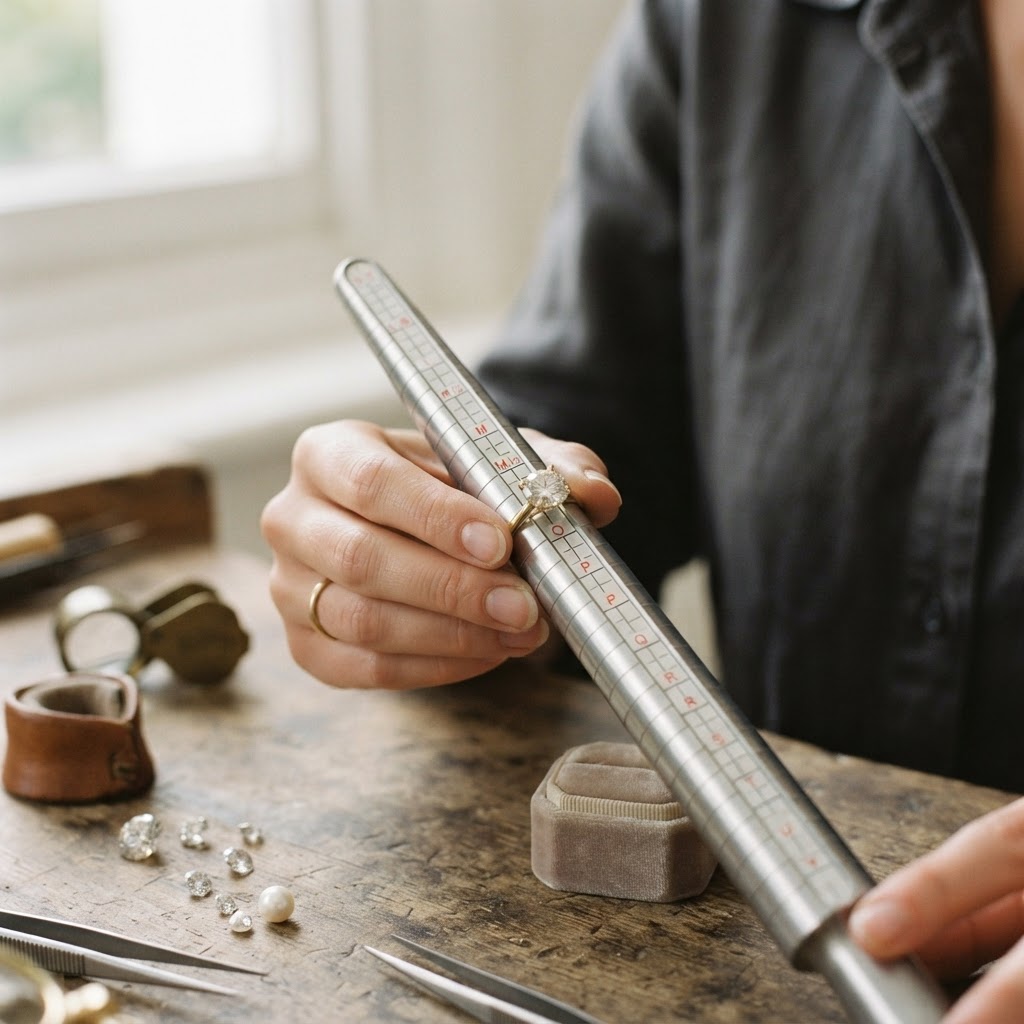
UK Ring Size Chart: A Technical Guide to Measurement and Verification
Accurate ring sizing is a technical requirement that determines the structural success of a bespoke jewellery project. Relying on a standardised ring...
Accurate ring sizing is a technical requirement that determines the structural success of a bespoke jewellery project. Relying on a standardised ring size chart is the primary method to eliminate the margin of error inherent in manual estimation. You likely recognise that home measurements often yield inconsistent results. This inconsistency creates uncertainty when transitioning from a design concept to a physical asset. Confusion between UK and international sizing scales further complicates the procurement process.
This guide provides a verifiable measurement protocol and a comprehensive UK ring size chart to ensure your bespoke order is executed with precision. Use this data to calibrate your requirements and eliminate the risk of sizing discrepancies. You'll find technical data on international conversions, specific diameter measurements, and the systematic steps required to verify your size before finalising a design. This article defines the exact parameters needed for the Ring Maker tool and the specialist services provided by our Lanarkshire facility. Follow these steps to secure a snapshot of accurate data for your next project.
Key Takeaways
- Understand the British alphabetical sizing standard and the 0.25mm internal diameter increments required for precise categorisation.
- Utilise the technical ring size chart to map internal diameter and circumference metrics for accurate data verification.
- Implement standardised measurement protocols by conducting verification during evening hours at room temperature to account for physiological variance.
- Compare the utility of physical sizers against digital calibration methods to select the most reliable measurement tool.
- Integrate verified data points into the Ring Maker interface to ensure structural accuracy for bespoke jewellery projects.
Understanding the UK Alphabetical Ring Sizing Standard
The British alphabetical ring sizing system is the primary metric for jewellery dimensions in the UK and Ireland. This system operates on the Wheatsheaf measurement standard. It provides a logical framework for categorising finger dimensions based on internal circumference and diameter. Standardisation is essential for high-precision procurement, particularly when dealing with platinum and loose diamonds. A technical ring size chart serves as the reference point for these measurements. The Wheatsheaf standard was established to provide a uniform scale for jewellers across the British Isles. It replaced varied regional methods with a single, verifiable system. This standardisation is critical when sourcing high-value materials.
The system utilises fixed mathematical increments to define size transitions. Each half-size increment represents a 0.25mm increase in the internal diameter of the ring. This specific interval allows for a high degree of calibration during the design phase. Consistent data mapping ensures that a size L in one workshop matches a size L in another. Without this standard, bespoke manufacturing would lack the necessary repeatability for quality control. Precise measurement is the only way to ensure the final product meets the technical specifications required for a secure fit.
The Mechanics of the UK Sizing System
The scale categorises finger dimensions using a specific alphabetical sequence. Referencing a standardised ring size chart allows for the conversion of physical measurements into these identifiers. The system is designed for modularity and granular accuracy.
- A to Z Range: The primary scale used for standard retail and bespoke inventory.
- Plus Sizes: Half-size increments, denoted as '+', provide mid-point adjustments between whole letters.
- Extended Sizes: Sizes Z+1 through Z+6 accommodate larger dimensions beyond the standard alphabet.
Statistical data suggests that standard women's rings often cluster between sizes I and P. Men's rings usually range from R to Z. However, individual variance is high, and precise measurement is always the preferred protocol over using averages. Identifying the correct letter is the first step in the data entry process for the Ring Maker tool.
Why Precision Matters for Bespoke Design
Accuracy in sizing is a functional requirement for structural stability. Sizing errors can compromise complex settings like pavé or halo designs. These styles rely on precise metal tension to secure individual diamonds. Significant post-production resizing can distort the ring's arc. This distortion leads to loose stones or metal fatigue over time. Platinum presents specific challenges during the resizing process. It is a dense metal with a high melting point, making it harder to manipulate than gold. Accurate initial measurement reduces the need for intrusive mechanical adjustments. Review our custom design protocols to ensure your data points are verified before the manufacturing phase begins.
Ring Size Chart: Internal Diameter and Circumference Mapping
Accurate measurement requires the mapping of physical dimensions to standardised data points. A technical ring size chart provides the necessary framework for this data conversion. Internal diameter serves as the primary metric for ring stability and structural integrity. Circumference measurements provide a secondary data point for flexible finger assessment. You should use both metrics to verify the accuracy of your results before proceeding with a bespoke design. Systematic verification ensures that the final product adheres to the intended technical specifications.
Physiological variables impact measurement reliability. Finger volume fluctuates based on ambient temperature and hydration levels. High temperatures cause tissue expansion. Cold environments lead to contraction. Conduct measurements at room temperature to ensure data consistency. Avoid measuring immediately after physical exertion or significant sodium intake. The Wheatsheaf standard, established in the mid-19th century around 1850, remains the definitive protocol for UK jewellery sizing. This historical standard ensures that alphabetical identifiers correspond to specific millimetre increments without deviation.
UK to International Size Conversion Table
International procurement requires the translation of regional sizing data into the UK alphabetical system. Cross-referencing international metrics ensures compatibility with the Ring Maker tool. Standardised mapping prevents errors during the transition from global datasets to local manufacturing protocols. Common conversions include the following technical data points:
- UK Size L: Corresponds to US Size 5.75 and ISO 51.5mm circumference.
- UK Size M: Corresponds to US Size 6.25 and ISO 52.7mm circumference.
- UK Size P: Corresponds to US Size 7.5 and ISO 55.8mm circumference.
- UK Size T: Corresponds to US Size 9.5 and ISO 61.4mm circumference.
Verify all international data against internal diameter measurements. Mapping these values correctly prevents errors during the logistics of bespoke manufacturing. Precise data entry is a prerequisite for a successful project outcome. If you require assistance with complex conversions, you can book a technical consultation for verification.
Geometric Accuracy: Diameter vs Circumference
Mathematical precision relies on the relationship between diameter and circumference. This relationship is defined by Pi, which is approximately 3.14159. Calculating the internal diameter from a circumference reading allows for the verification of ring stability. It's the most reliable metric when measuring an existing ring because it eliminates the margin of error associated with the thickness of the ring band. Measure the widest point of the internal circle using a digital calliper for maximum precision. This protocol provides a snapshot of the exact dimensions required for your jewellery project. Consistency in measurement technique is the most effective way to reduce sizing discrepancies.
Comparative Analysis: Physical Sizers vs Digital Measurement Methods
Measurement accuracy depends on the tool's calibration and the user's methodology. Selecting a reliable interface to generate data for the ring size chart is a critical step in the procurement process. Various tools exist, ranging from low-fidelity household items to professional-grade instruments. Each method carries a different margin of error that must be accounted for during data verification. High-value projects involving platinum or loose diamonds require the highest level of data integrity to avoid structural complications.
Physical Measurement Tools
Plastic belt sizers are efficient for generating an initial data snapshot. They function like a miniature belt, providing a circumference reading. However, these tools are susceptible to user error. Over-tightening can lead to an undersized reading, whilst loose application results in an oversized result. Metal ring gauges are the industry standard for precision. These gauges consist of individual metal rings manufactured to exact technical specifications. They are essential for platinum projects because the metal's density and rigidity make post-production adjustments complex and resource-intensive. Lanarkshire clients should utilise a professional mandrel during a Ring Design Consultation to secure a definitive measurement. This protocol eliminates the variables associated with flexible plastic tools.
Digital and Paper-Based Sizing Protocols
Paper-based protocols are accessible but require strict adherence to printing settings. You must ensure your printer is set to 100% scale without 'shrink to fit' modifications. A deviation of only 0.5mm in print scale can result in a full size error on the ring size chart. Digital screen sizers utilise a physical object, like a credit card, to calibrate the display. This method is useful for rapid estimation but lacks the tactile verification of a physical gauge. It cannot account for the width of the knuckle, which is often the widest part of the finger and the primary constraint for ring entry.
The 'string and ruler' method is a high-risk strategy for high-value items like eternity rings or halo settings. String is an elastic material that stretches under tension. This elasticity introduces a variable that can easily exceed the 0.25mm increment used in UK sizing. Parallax error during ruler reading further compromises the data. Use these methods only as a preliminary guide. Always verify the results with a physical sizer or a professional consultation before finalising your bespoke order through the Ring Maker interface. This protocol ensures that the structural integrity of the setting remains intact. Accurate data management is the most effective way to prevent the logistical costs of resizing.
Step-by-Step Protocol: How to Measure Ring Size at Home
Achieving data accuracy at home requires a controlled environment. Physiological fluctuations can alter finger dimensions by up to half a size within a 24-hour cycle. Standardised conditions are mandatory for consistent results. Conduct all measurements during the evening when finger volume is at its maximum. Ensure the room temperature is stable. Cold environments cause tissue contraction, whilst excessive heat leads to expansion. These variables directly impact the values you'll cross-reference on the ring size chart.
Implement the 'three-measurement' verification rule to mitigate anomalies. Perform three separate assessments at different times during the designated evening window. Record each result in millimetres. If the data points diverge, calculate the mean value or repeat the process. Consistency across three snapshots indicates a reliable data set for bespoke production. This methodical approach ensures that the structural parameters for the Ring Maker tool are met with precision.
The Knuckle Clearance Verification
The knuckle is the primary logistical constraint for ring entry. It's often wider than the base of the finger. Your measurement must account for this diameter to ensure the ring can slide into position. A correct fit involves slight resistance at the knuckle but a secure seat at the base. Top-heavy designs, such as large solitaire rings, require a tighter fit to prevent rotation. Your diamond selection influences the centre of gravity of the piece. Larger stones or high-profile settings increase the risk of the ring 'spinning' if the size is even slightly oversized. Refer to the ring size chart to select the smallest possible increment that still clears the knuckle.
Surprise Measurement Methodology
Surprise proposals require a covert data collection strategy. Utilising an existing ring is the most effective method for diameter mapping. Select a ring that the partner wears on the specific engagement finger. Use a digital calliper to measure the internal diameter at three different angles. This provides a geometric average that accounts for any existing deformation of the band. Alternatively, trace the internal circumference onto paper and verify the scale against physical benchmarks. Relying on 'average' UK sizes is a high-risk strategy for bespoke items. Bespoke platinum rings are difficult to resize without compromising the setting's integrity. Data from friends or family members should only serve as a secondary verification point.
Applying Measurement Data to Bespoke Ring Design in Lanarkshire
The final phase of the sizing protocol involves integrating measurement data into the design interface. You must input your verified alphabetical identifier into the Ring Maker tool to begin the configuration of your bespoke piece. This data point is the foundation for the structural blueprint. It ensures that the metal volume and stone placement align with your physical requirements. A technical ring size chart acts as the definitive reference during this data entry stage. Verification is mandatory before the procurement of loose diamonds or the commencement of platinum casting. Accurate data entry at this stage prevents logistical delays during the manufacturing cycle.
Width and Profile Impact on Sizing
The width of the ring band significantly influences the perceived fit. Wider bands, typically those exceeding 5mm, cover more surface area on the finger. This increased coverage displaces more skin tissue, which often necessitates a larger size on the ring size chart. Standard practice suggests increasing the size by one half-increment for every 2mm of additional width. The internal profile also affects comfort and sizing requirements. You should categorise your choice based on the following technical profiles:
- Standard Fit: The interior surface is flat, providing maximum contact with the finger.
- Comfort Fit: The interior surface is domed or curved, reducing the contact area and allowing the ring to slide over the knuckle more easily.
Selecting a Comfort Fit profile may allow for a slightly smaller size than a Standard Fit equivalent due to the reduced internal friction. Review our guidelines on jewellery care to understand how different profiles respond to long-term wear and maintenance. Precision in profile selection is as critical as the alphabetical size itself.
Lanarkshire Design Protocols
Lanarkshire residents have access to localised verification services to ensure data integrity. Booking a professional sizing consultation at our Lanarkshire facility provides a final snapshot of accuracy before production begins. This session utilises calibrated mandrels and professional gauges to confirm the data generated from home protocols. Jewellove manages local Lanarkshire design data using a centralised digital repository to ensure maximum operational efficiency. This system organises your measurements, design preferences, and diamond specifications into a single, verifiable file.
Collaborative design projects benefit from this structured data management. Multi-user wishlists allow for the tracking of sizing data across different contributors. This transparency ensures that all stakeholders are working from the same verified metrics. Finalise your specifications through our custom design service once your size is confirmed. Accurate data application is the most effective method for ensuring the long-term success of your bespoke jewellery investment. Follow these protocols to eliminate uncertainty in the procurement process.
Finalising Your Technical Specifications
Precision in measurement is the final prerequisite for successful bespoke manufacturing. You've reviewed the technical ring size chart and established a verifiable data set through evening measurement protocols. This data ensures that your platinum settings and diamond placements are structurally sound. Jewellove has functioned as a specialist in platinum and diamond jewellery since 2009. We provide direct-to-consumer diamond procurement and local Lanarkshire design expertise to maintain technical accuracy. These protocols protect the integrity of your investment by ensuring a perfect fit.
Integrating these verified metrics into the design phase eliminates the logistical risks of post-production resizing. You can now transition from data collection to active project configuration. Utilise our structured design tools to apply your measurements and secure the foundation of your jewellery project. Our Lanarkshire facility is equipped to handle the final verification of your data snapshots before production begins. Proceed with confidence in your technical specifications.
Accurate data management ensures the long-term success of your bespoke jewellery investment. These methodical protocols eliminate uncertainty and ensure your final piece meets exact geometric requirements.
Accurate data application ensures the successful execution of your design requirements. We are prepared to facilitate your next project with technical precision.
Frequently Asked Questions
What is the most common ring size for women in the UK?
Statistical data indicates that sizes L and M are the most frequent alphabetical identifiers for women in the UK market. However, you shouldn't rely on averages for high-precision bespoke production. Verify your specific dimensions against a technical ring size chart to ensure compatibility with platinum settings. Lanarkshire residents can access professional verification at our local facility to confirm these data points before the manufacturing of engagement rings or wedding rings begins.
How much does it cost to resize a platinum ring in the UK?
Resizing costs for platinum are determined by design complexity and the specific volume of metal required for the adjustment. Platinum is a dense material with a high melting point, which necessitates specialist technical equipment for structural modifications. We don't provide fixed pricing for these services as each project is assessed individually. Utilising our Ring Sizer tool for accurate initial data is the most efficient way to avoid post-production logistical costs.
Can I use a US ring size chart for a UK purchase?
You cannot use a US numerical scale for a UK purchase without performing a technical conversion. A US size 6 doesn't correspond to a UK size 6 as the measurement systems are fundamentally different. Use standardised conversion data to map internal diameter and circumference metrics between these international scales. This data verification is essential before inputting your requirements into our Ring Maker tool for bespoke projects managed at our Lanarkshire facility.
What happens if my ring size is between two letters on the chart?
You should select a half-size increment, denoted by a '+' symbol, if your measurement falls between two whole letters. These mid-point sizes represent a 0.25mm increase in internal diameter to provide granular accuracy. Precision is critical for top-heavy solitaire designs to prevent the ring from rotating during wear. Our Lanarkshire design protocols prioritise these specific data entries to ensure the structural stability of your jewellery remains consistent with your physical requirements.
Does finger size change based on the time of day?
Finger volume fluctuates throughout a 24-hour cycle and typically reaches its maximum in the evening. Physiological factors and ambient temperature cause tissue expansion and contraction. You should conduct all measurements in the evening at room temperature to capture the most accurate data snapshot. This protocol ensures the ring remains comfortable during periods of high circulation. Consistent measurement conditions are mandatory for generating reliable data for your bespoke design file in Lanarkshire.
Is a wider ring band a different size than a narrow one?
Wider ring bands often require a larger alphabetical size due to increased contact with the finger tissue. Bands exceeding 5mm in width displace more skin, which creates a tighter perceived fit. We recommend increasing your measurement by one half-size for every 2mm of additional width to maintain comfort. Local clients in Lanarkshire can test different band profiles during a professional consultation to verify how width impacts their specific data on the ring size chart.
How do I measure my ring size secretly for a surprise engagement?
Use an existing ring worn on the intended finger to map the internal diameter secretly. Measure the widest internal point with a digital calliper to secure a precise millimetre reading for your data file. You can then cross-reference this value against a technical alphabetical identifier to find the correct size. Avoid using string or paper for covert measurements as these methods introduce a high margin of error for bespoke platinum items and diamond settings.
What is the standard UK ring size for men?
Standard UK sizes for men typically cluster between R and U. However, individual variance is significant, and these averages shouldn't replace physical verification for bespoke projects. Men's rings often feature wider bands, which necessitates a technical adjustment to the size during the design phase. Our Lanarkshire bespoke service manages this data to ensure the final ring provides a secure fit over the knuckle whilst remaining stable at the base of the finger.