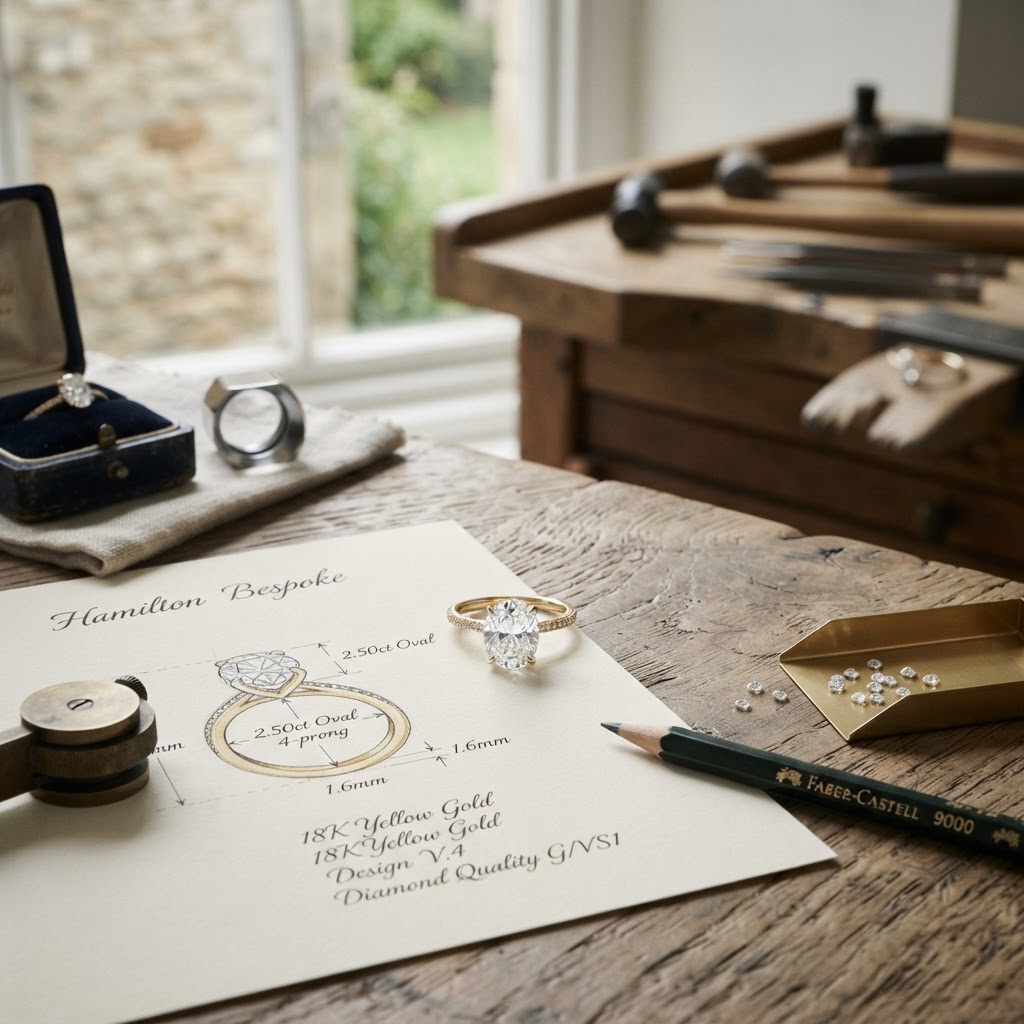
Custom Diamond Ring Procurement Hamilton: Technical Design Guide
High-street retail markups on bespoke jewellery often reflect inefficient logistics rather than actual material value. Traditional jewellery shopping...
High-street retail markups on bespoke jewellery often reflect inefficient logistics rather than actual material value. Traditional jewellery shopping relies on sensory distraction rather than technical specification. You likely find the lack of transparency in diamond pricing and the slow pace of manual design processes frustrating. This guide provides a systematic framework for the technical design and procurement of a custom diamond ring Hamilton. It replaces emotional marketing with data-driven decision-making to ensure total transparency.
By treating jewellery acquisition as a procurement project, you eliminate the inefficiencies of the standard retail model. We provide the tools to track loose diamond data points and compare technical specifications with precision. This article outlines a streamlined digital design workflow. You'll learn how to use a modular Ring Maker tool, interpret metal price snapshots, and organise your requirements into a final technical brief. We focus on the logistics of acquiring high-precision pieces in the Hamilton and Lanarkshire region. Follow this structured approach to ensure your custom project meets exact budgetary and design parameters.
Key Takeaways
- Define the parameters of your custom diamond ring Hamilton project as a series of technical modules including stone, setting, and metal.
- Optimise cost efficiency by procuring loose diamonds and settings separately to bypass traditional high-street retail markups.
- Utilise the Ring Maker interface to facilitate a systematic, digital-first design workflow for precise customisation.
- Evaluate material durability and technical grading data beyond the standard 4Cs to ensure long-term utility and value.
- Establish a production timeline and quality control protocol to verify the finished piece against the original design snapshot.
Defining Custom Diamond Ring Parameters in Hamilton
Bespoke jewellery is a technical specification of individual components. It is not a vague artistic concept. For a custom diamond ring Hamilton, procurement involves three primary modules: the stone, the setting, and the metal. Hamilton buyers are moving away from pre-set retail inventories. They prefer component-based procurement. This shift occurs because pre-set rings often obscure the specific quality of individual parts. A systematic design protocol minimises error. It also maximises value by isolating costs for each module. By defining these parameters early, you establish a clear roadmap for the entire project.
The Component-Based Design Approach
Breaking a ring into modular data points allows for objective comparison. You must identify the primary objective of your project. Some prioritise durability for daily wear. Others focus on the refractive index and light performance of the gemstone. Establishing a technical baseline for the 4Cs (Carat, Cut, Colour, and Clarity) provides a standard for the Lanarkshire market. Use these metrics to categorise potential acquisitions:
- Stone: Specify the exact dimensions and certification requirements.
- Setting: Determine the structural configuration and prong count.
- Metal: Select based on density and hardness specifications.
This approach treats the ring as an assembly of parts. It removes the ambiguity found in traditional retail environments. You can track each component's impact on the total budget. This ensures that the final product meets your precise technical requirements. It's a method that prioritises utility and transparency over sensory marketing.
Local Market Context: Hamilton and Lanarkshire
Lanarkshire professionals are increasingly adopting digital specification tools. They avoid the inefficiencies of high-street browsing. They require transparency in pricing and material data. Local standards for platinum and diamond quality are high in the region. Buyers often seek specialists who provide direct access to loose diamond inventories. This allows them to compare data points before committing to a design. The Bespoke Design Service model facilitates this by providing clear snapshots of available materials. High-precision engineering is now the expected standard for custom jewellery in Hamilton. This focus on logic and data ensures a reliable outcome for every user. It creates a predictable environment for high-value decision making.
Material Acquisition: Loose Diamond and Metal Specification
Procuring materials for a custom diamond ring Hamilton requires a data-driven approach. You must move beyond the basic 4Cs to ensure high-precision results. Material selection is a technical exercise in logistics and durability. Using metal price snapshots allows you to time your acquisition based on current market fluctuations. This process ensures maximum efficiency in your budget allocation by avoiding retail premiums. Certification from the GIA or IGI is mandatory for every procurement project. These documents verify the material data points you use for comparison. They provide a snapshot of the stone's physical properties. Without objective certification, technical specification remains speculative.
Loose Diamond Procurement Protocols
Analysing the reflective index and light performance data is essential for gemstone selection. You should evaluate the table and depth percentages to predict light return. Fluorescence is another critical metric to track. In natural light, high fluorescence can impact diamond clarity by creating a milky appearance. You can filter these technical specs using the Jewellove Diamond Tool. This interface allows you to categorise stones by specific measurements rather than vague quality grades. This systematic filtering reduces the risk of acquiring a stone with poor light performance. Focus on the following parameters during your search:
- Refractive index and dispersion rates.
- Proportion snapshots (table vs. depth).
- Symmetry and polish classifications.
Metal Specification and Durability
Metal selection dictates the long-term maintenance requirements and structural integrity of the piece. Platinum is the standard choice for high-precision bespoke jewellery in the Lanarkshire region. It is naturally white. It does not require the rhodium plating associated with white gold. White gold is a functional alloy, but it necessitates periodic maintenance to retain its colour profile. This increases the total cost of ownership over the lifespan of the ring. In the UK, all custom platinum pieces must meet strict hallmarking requirements to verify purity levels. You must also consider the logistics of metal weight and density. Higher density metals like platinum provide superior structural integrity for securing the gemstone. This ensures the security of the primary gemstone during daily use. You can organise a technical consultation to review specific metal weight data and durability snapshots. This objective analysis ensures your material choices align with your long-term utility objectives.
Cost Efficiency Analysis: Custom Design vs. High-Street Retail
High-street retail markups originate from physical overhead and inventory holding costs. These expenses don't add material value to the piece. Traditional jewellery stores must cover rent, staff, and insurance for static stock. A direct-to-consumer procurement model bypasses these logistics. When you specify a custom diamond ring Hamilton, you separate the cost of the stone from the setting. This financial logic allows you to track market prices for loose diamonds with precision. It ensures your budget is directed toward raw materials rather than retail operational costs. Analytical buyers use this transparency to maximise their purchasing power.
Markup Elimination Strategies
Traditional retail relies on a multi-layered supply chain. Each layer adds a percentage to the final price. Direct logistics simplify this process. Modular design further reduces costs by minimising manufacturing waste. It ensures that components are only assembled once the technical specification is finalised. This method contrasts with mass-produced rings that require high-volume manufacturing and storage. Analysing the value retention of bespoke pieces reveals that they often maintain their material worth more effectively. This is because the acquisition price is closer to the actual market value of the certified components. You avoid paying for the "brand premium" associated with high-street names.
Budget Mapping and Allocation
Effective budgeting requires a technical map of your requirements. You must decide where to allocate funds for maximum impact. Prioritising cut grade over carat weight is a common strategy for efficiency. A superior cut increases the refractive index and makes the stone appear larger and brighter. This provides better visual utility than a larger stone with a poor cut. You can utilise the Jewellove Heritage of value-driven design to structure your financial plan. This framework focuses on high-precision materials and logical procurement. It allows you to categorise your spending into stone, metal, and labour modules.
Long-term maintenance costs also factor into the efficiency analysis. Platinum configurations have a higher initial acquisition cost but lower lifetime maintenance. They don't require the regular rhodium plating needed for white gold. This reduces the total cost of ownership over several decades. By categorising these costs as a technical snapshot, you can make a more informed procurement decision. This systematic approach ensures that every pound spent contributes to the structural and visual integrity of the final product. It replaces emotional spending with a calculated investment in high-precision jewellery.
Systematic Design Workflow: Utilising the Ring Maker Interface
The procurement process for a custom diamond ring Hamilton requires a structured digital environment. Traditional retail methods rely on subjective descriptions and sensory marketing. A systematic workflow replaces these with precise data points. The Ring Maker interface acts as the central facilitator for this transition. It organises the design into four distinct steps. Each step must be validated before proceeding to the next phase. This ensures that the final physical product aligns with the initial technical objectives.
Step 1 focuses on gemstone selection. You use the procurement data gathered from certified inventories to select a stone that meets your refractive index targets. Step 2 involves configuring the setting. This is a technical exercise in geometric compatibility. The setting must provide structural support for the specific table and depth dimensions of your chosen diamond. Step 3 requires finalising the metal specification and verifying the ring size. You select your metal based on the durability snapshots discussed in previous sections. Finally, Step 4 provides a technical snapshot. This is a comprehensive digital blueprint of the intended piece. You review this snapshot to ensure all parameters are correct before the production phase initiates.
The Ring Maker Interface Functionality
The Jewellove Ring Maker provides the functionality needed to manage these variables. It allows you to compare multiple design iterations simultaneously. You can track real-time price fluctuations as you modify components. This transparency ensures that the project remains within the established budget mapping. The interface functions as a database for your custom project. It stores every selection as a modular unit of information. This prevents the data loss often associated with manual design consultations. It is a tool designed for efficiency and logical organisation.
Verification and Precision Tools
Precision tools enhance the accuracy of the workflow. The Ring Sizer protocol provides a physical baseline for measurement. It eliminates the margin for error in fitment. The Diamond Quiz functions as a technical filter. It maps your high-level preferences to specific grading data like light performance and symmetry. This streamlines the initial specification phase by removing irrelevant inventory from your view. For projects involving multiple stakeholders, the wishlist feature manages collaborative input. It ensures that all data points are centralised and organised. This methodical approach ensures the final physical piece matches the digital specification exactly. It provides a reliable system for high-precision jewellery design in the Lanarkshire region.
Bespoke Logistics: Finalising Your Lanarkshire Diamond Ring
The final phase of acquiring a custom diamond ring Hamilton involves the transition from digital specification to physical execution. This phase is a sequence of logistical milestones. It ensures the finished piece matches the technical snapshot exactly. The production timeline begins once the digital blueprint is finalised. This timeline includes material procurement, component assembly, and rigorous quality verification. Each milestone is tracked to maintain project transparency. You receive updates as the project moves through the manufacturing workflow. This systematic approach eliminates the uncertainty found in traditional retail timelines.
Once production is complete, the piece undergoes a series of quality control protocols. These protocols verify the gemstone setting and metal purity against the original design data. Shipping and insurance logistics for your custom diamond ring Hamilton are managed through secure, tracked services. This ensures safe transit from the production facility to your Lanarkshire location. Insurance coverage remains active until the point of physical delivery. This final step completes the procurement project. It provides a reliable outcome based on logic and data rather than sensory marketing.
Production and Quality Assurance
The Jewellove Custom Design process follows a structured sequence of assembly and verification. First, the primary components are integrated according to the geometric specifications established in the Ring Maker. Second, the piece is submitted for independent hallmarking. In the UK, hallmarking is a legal requirement for platinum and gold jewellery. It verifies the metal's purity levels. You must review the final quality report provided with the piece. This report includes a verification of the diamond's certificate number and a snapshot of the finished setting. It confirms that the physical item is identical to the digital specification.
Maintenance and Long-Term Care
Maintaining the technical integrity of the ring requires a consistent maintenance protocol. Platinum and diamond configurations are highly durable. However, they require regular cleaning to maintain their refractive index and light performance. You can access Jewellove Jewellery Care resources for specific cleaning and storage instructions. These resources provide data-driven advice on metal and stone maintenance. Schedule a structural integrity check every twelve months. These checks verify that the prongs and settings remain secure. This proactive measure prevents gemstone loss and ensures the long-term utility of the piece. Regular maintenance preserves the precision of the original design.
Executing Your Technical Design Specification
Systematic procurement ensures that a custom diamond ring Hamilton meets exact technical parameters. This guide has established how to isolate the cost of loose diamonds from settings to maximise budget efficiency. This approach eliminates the lack of transparency found in traditional high-street retail environments. By utilising technical GIA diamond data and metal price snapshots, control is maintained over every logistical variable. Organising a project into modular components like stone, setting, and metal ensures total transparency throughout the workflow.
Jewellove has functioned as a platinum specialist since 2009. The brand prioritises technical precision and direct-to-consumer efficiency in every bespoke project. Digital tools provide the necessary framework to track, compare, and organise design requirements with ease. This methodical process guarantees that the final physical piece aligns perfectly with the initial digital blueprint. Don't rely on inefficient retail models when technical data is available. It's now possible to transition from the research phase to active design with confidence in every data point.
Frequently Asked Questions
How do I start the custom diamond ring process in Hamilton?
Start by using the Ring Maker tool or the Diamond Quiz to define technical parameters. These tools categorise preferences and filter inventory based on specific data points. Lanarkshire clients can then schedule a Ring Design Consultation to refine the technical specification. This digital-first approach ensures that the initial procurement phase is driven by logic rather than retail pressure. It organises your project into manageable data units from the outset.
What is the most durable metal for a bespoke engagement ring?
Platinum is the most durable metal for high-precision jewellery. It possesses a higher density than gold alloys and maintains its structural integrity over long-term use. Unlike white gold, platinum is naturally white and doesn't require rhodium plating. This reduces the lifetime maintenance cost of a custom diamond ring Hamilton. It is the standard choice for secure gemstone settings in the Lanarkshire region due to its superior wear resistance.
Can I buy a loose diamond and have it set in a custom design later?
You can acquire loose diamonds as an independent procurement step. This allows you to secure a stone based on specific light performance data before finalising the setting. Jewellove facilitates this modular approach through its digital platform. You can store the diamond's technical snapshot in your account and use the Ring Maker tool to configure the geometric compatibility of the setting at a later date. This ensures total flexibility during the design phase.
How long does the bespoke ring design and manufacturing process take?
The production timeline varies based on the complexity of the technical specification. Generally, the process from finalising the digital design to physical delivery in Hamilton takes several weeks. This window includes material procurement, UK hallmarking, and rigorous quality control protocols. Tracking features within the Jewellove platform allow you to monitor the status of each logistical milestone. Precise lead times are confirmed during the final design snapshot phase to maintain project transparency.
Is it more cost-effective to design a custom ring than buy one off-the-shelf?
Custom design is often more cost-effective because it eliminates high-street retail markups. By using a direct-to-consumer model, you bypass the overhead costs of traditional physical stores. You pay for the actual material value of the certified diamond and the metal weight. This systematic procurement allows for precise budget allocation. It ensures that funds are directed toward material quality rather than retail operational expenses. You gain more material value for your specific budget.
How do I ensure the ring size is accurate for a surprise proposal?
Use the Ring Sizer tool to establish a precise measurement baseline. If the proposal is a surprise, you can provide the internal diameter of an existing ring used by the recipient. Jewellove provides technical guides on how to obtain these measurements accurately. If the initial fitment requires adjustment, the bespoke design service includes protocols for resizing. This ensures the final piece meets the user's comfort parameters and maintains its structural integrity after the adjustment.
What diamond certifications should I look for when buying in the UK?
Prioritise diamonds certified by the GIA (Gemological Institute of America) or IGI (International Gemological Institute). These organisations provide objective data on the 4Cs and technical snapshots of light performance. In the UK, you must also ensure the metal components meet hallmarking standards to verify purity. These certifications verify that the materials match the technical specifications in your design brief. They provide a transparent record for your custom diamond ring Hamilton acquisition.
How can I track the progress of my custom jewellery order?
Track your order through the Jewellove digital dashboard. This interface organises the production phase into distinct logistical steps, such as material acquisition, assembly, and hallmarking. You receive automated notifications as the piece clears each quality control checkpoint. This system provides total transparency for Lanarkshire clients. It allows you to manage the timeline and anticipate the secure delivery of your high-value acquisition. You can access these snapshots of information at any time during the workflow.