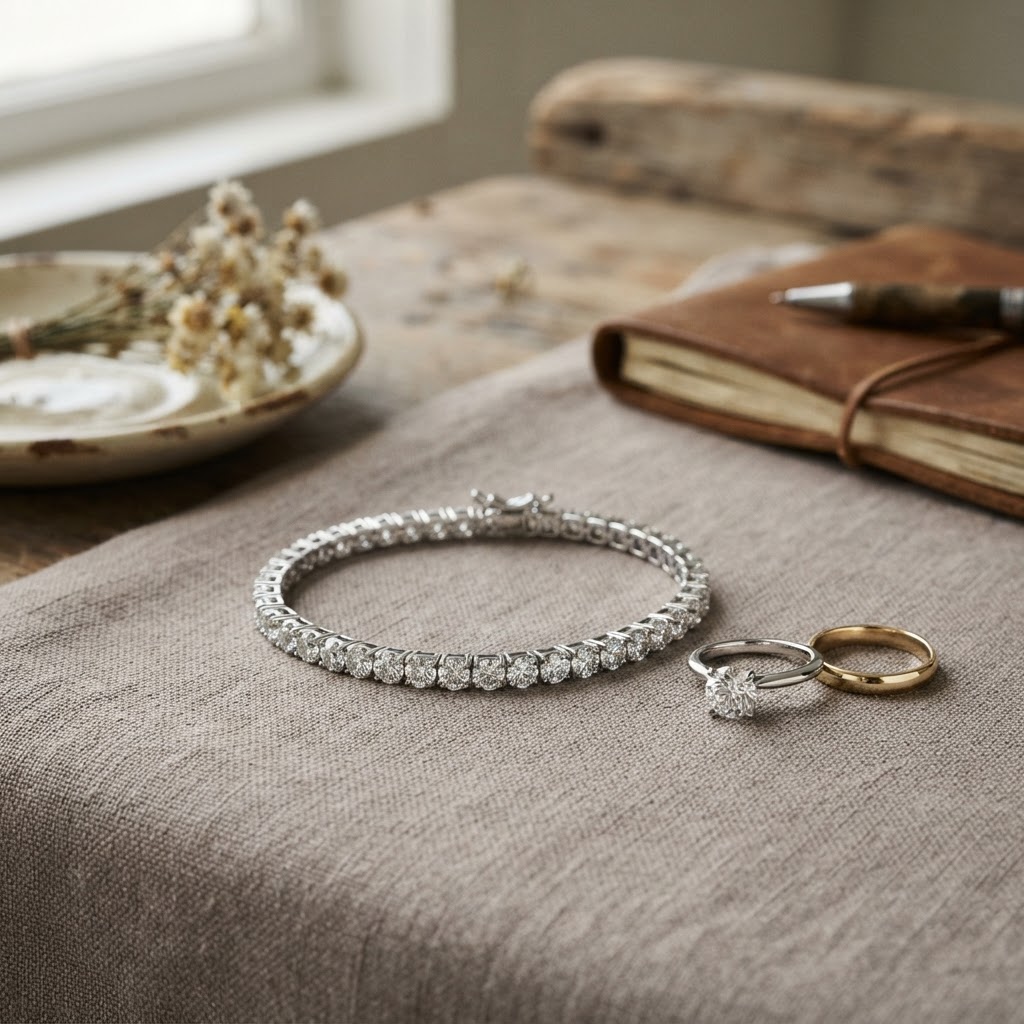
Lanarkshire Tennis Bracelet Guide: Expert Buying Advice
A tennis bracelet is not merely an accessory. It is a high-precision mechanical assembly requiring absolute gemstone uniformity and structural...
A tennis bracelet is not merely an accessory. It is a high-precision mechanical assembly requiring absolute gemstone uniformity and structural redundancy. Most retail acquisitions fail because the buyer prioritised aesthetic appeal over objective technical data. You probably recognise the frustration of discovering inconsistent diamond clarity or a compromised clasp mechanism after the purchase is complete. It's a common failure point in standard retail stock that lacks rigorous quality control. This article establishes a systematic framework for procuring Tennis Bracelets with verified specifications in the Lanarkshire region.
We provide the protocols necessary to evaluate stone consistency and link security. You'll learn how to navigate the 2026 UK hallmarking standards and the latest GIA grading shifts for lab-grown stones. This guide details how to utilise bespoke procurement to secure a piece with matched diamond parameters. We'll preview the steps for organising a technical consultation to ensure your acquisition meets industrial standards for durability and value. By following this structured approach, you eliminate the ambiguity of traditional retail environments and secure a documented, high-performance piece of jewellery.
Key Takeaways
- Evaluate setting protocols such as four-prong or rub-over designs to ensure visual symmetry and stone security.
- Assess diamond consistency across the full length of Tennis Bracelets by verifying uniform 4Cs grading for every individual stone.
- Verify structural integrity through the implementation of double-locking box clasps and figure-eight safety catches to mitigate the risk of mechanical failure.
- Utilise bespoke design protocols to select durable materials like platinum and customise bracelet lengths for precise fitment.
- Organise a technical consultation in Lanarkshire to facilitate the verification of GIA or IGI certifications during the procurement process.
Tennis Bracelet Architecture: Defining the Continuous Line Setting
A tennis bracelet is a linear assembly of matched gemstones. The design requires a continuous, symmetrical line of diamonds set in a flexible metal frame. This architecture relies on precise stone calibration. Every diamond must match in dimensions to maintain the visual flow. Inconsistent stone sizes cause uneven stress on the links. High-specification Tennis Bracelets require stones matched within 0.05mm tolerances. This ensures the bracelet flexes uniformly across the wrist without straining the mechanical joins.
The Origin of the Tennis Bracelet Nomenclature
The origin of the tennis bracelet term dates to 1987. During the US Open, Chris Evert paused a match to recover her diamond bracelet. This event changed the designation from eternity bracelet to the modern term. It also established new structural requirements for active wear. Modern jewellery must withstand kinetic forces. Manufacturers now prioritise high-tensile clasps and reinforced links. These updates mitigate the risk of mechanical failures during physical activity. The shift moved the industry focus from purely aesthetic design to functional security.
Primary Setting Methods and Security Specs
Setting selection determines the durability and light performance of the piece. Each method follows specific technical protocols:
- Prong setting: Uses minimal metal to maximise light entry. It optimises the refractive index of the diamonds. A four-prong configuration provides the standard balance between security and visibility.
- Bezel setting: Encircles the stone with a metal rim. This provides maximum protection for daily use scenarios. It's the most effective method for preventing stone chips or loss.
- Channel setting: Seats diamonds between two parallel metal rails. This creates a snag-free profile. It's ideal for users who wear the bracelet alongside other items.
Structural integrity depends on metal volume. Insufficient metal leads to prong deformation. This increases the risk of stone loss. Our bespoke design service allows for the adjustment of metal weight to suit specific lifestyle requirements. You can select higher metal volumes for increased durability. This systematic approach ensures the bracelet remains secure over long-term use. We recommend platinum or 18ct gold for their superior tensile strength in these delicate linear structures.
Grading Parameters: Ensuring Diamond Consistency
The technical integrity of Tennis Bracelets depends on absolute gemstone uniformity. A standard bracelet contains between 40 and 60 individual diamonds. Each stone must adhere to a strict grading protocol to maintain visual continuity. If a single stone deviates from the established parameters, it creates a visual break in the linear flow. We utilise the Jewellove diamond database to filter and isolate stones that meet specific 4Cs requirements. This systematic procurement process ensures that every diamond in the assembly matches its neighbours in colour, clarity, and cut precision.
The Challenge of Colour and Clarity Matching
Standard retail environments often use "average" grading metrics. This approach is technically insufficient for high-specification jewellery. Our protocol requires all stones to sit within a single grade on the GIA scale. For example, if the specification is G-colour, every stone must be G-colour. A single H-colour stone placed in a G-colour line will appear noticeably warmer. This disrupts the "endless" effect of the bracelet. Clarity thresholds are equally vital. We prioritise "eye-clean" status, typically requiring a minimum of VS2 or SI1 grading. The GIA clarity scale consists of 11 grades from Flawless to Included (I3). By selecting stones from the higher end of this scale, we eliminate visible inclusions that could otherwise compromise the light return of the entire piece.
Total Carat Weight (TCW) vs Individual Stone Size
Total Carat Weight (TCW) is a logistical aggregate. It is calculated based on the bracelet length and the diameter of the individual stones used. A 17cm bracelet requires a specific number of stones to complete the circuit. Larger individual stones result in a higher TCW but also reduce the number of links in the chain. This relationship impacts the mechanical flexibility of the bracelet. Smaller stones allow for more links and a more fluid movement on the wrist. Standard benchmarks for daily wear typically range from 1.00 to 3.00 TCW. Evening wear specifications often exceed 5.00 TCW to increase the visual snapshot of the piece. You can book a technical consultation to review stone consistency and TCW options in person.
Precise stone calibration is a requirement, not an option. We verify the measurements of each stone to within 0.05mm. This level of precision prevents the "stepped" appearance found in lower-quality retail stock. It ensures the metal prongs exert even pressure across the entire diamond set. This systematic matching process is the only way to guarantee both the aesthetic continuity and the long-term structural security of the bracelet.
Verification of Structural Integrity and Security
Structural integrity is the primary metric for long-term ownership of Tennis Bracelets. The linear design creates multiple failure points at every link and join. A failure in a single component results in the total loss of the asset. Therefore, technical verification of the clasp and articulation movement is mandatory. We treat the bracelet as a mechanical assembly rather than a decorative item. This perspective prioritises the security of the diamond stones over their aesthetic arrangement. A robust frame is the only way to mitigate the risk of loss during daily activity.
Clasp Mechanism Specifications
The double-locking box clasp is the established industry standard for high-value linear jewellery. This mechanism relies on internal spring tension to secure the tongue within the box frame. You must verify that the tongue provides a distinct "click" upon engagement. This audible signal confirms the primary lock is active. Integrated safety catches provide a secondary layer of security. We recommend the figure-eight safety catch for its mechanical redundancy. It prevents the bracelet from sliding off the wrist if the primary box clasp experiences a tension failure. Routine verification involves checking the tension of the safety arms every six months. If the arms move too freely, the metal requires recalibration to restore its grip.
Link Articulation and Flexibility Standards
Link movement must be fluid and consistent. You should test the articulation by draping the bracelet over a finger. The links should form a smooth curve without kinking or showing significant gaps. Resistance in the movement indicates a misalignment in the solder points. Poorly finished link structures often cause hair-pulling or skin irritation. This is a sign of industrial oversight in the polishing and deburring stages. Each individual setting must have a verified solder point that is clean and free of porosity. Porous metal is brittle and prone to cracking under repetitive stress. Inspecting these joins under 10x magnification ensures the structural frame is robust enough for daily use.
Maintenance is a critical component of the ownership lifecycle. Continuous wear leads to the accumulation of biological debris and environmental contaminants within the settings. This debris acts as an abrasive, wearing down the metal prongs and hinges over time. Following established jewellery care protocols extends the functional lifespan of the piece. We suggest a professional ultrasonic cleaning and a multi-point inspection annually. This process identifies loose stones or thinning metal before a failure occurs. Adhering to these technical maintenance schedules ensures the bracelet remains a secure and high-performing asset.
Bespoke Procurement: Custom Design Protocols
Standard retail inventory often fails to meet specific technical requirements. Preset Tennis Bracelets typically follow generic length and stone grading averages. This lack of precision results in visual inconsistencies and poor mechanical fitment. Utilising our bespoke design service allows for the precise matching of loose diamonds from a verified inventory. This protocol ensures that every stone meets the 0.05mm tolerance required for a seamless linear flow. Bespoke procurement offers higher value efficiency by eliminating high-street retail markups. You pay for the specific weight of metal and the exact grade of diamonds selected. This data-driven approach removes the ambiguity found in off-the-shelf pricing structures.
The procurement process follows a strict sequence of technical checkpoints:
- Wrist measurement and fitment analysis to determine internal circumference.
- Selection of metal alloy based on density and durability requirements.
- Automated filtering of loose diamonds to ensure 4Cs consistency across the line.
- Technical assembly with verification of solder points and link articulation.
Platinum vs Gold: Material Density and Durability
Metal selection determines the long-term maintenance schedule and structural security of the piece. Platinum is the superior choice for stone security due to its high material density. It doesn't lose volume when scratched; instead, the metal is displaced. This characteristic ensures that prongs remain robust over decades of wear. In 2026, UK hallmarking regulations require a hallmark for any platinum item exceeding 0.5g to verify metal purity. 18ct white gold is a viable alternative but requires more logistical management. White gold is an alloy that needs periodic rhodium plating to maintain its neutral colour profile. This maintenance requirement adds to the total cost of ownership. Platinum represents a higher initial investment but offers greater durability for multi-stone settings where security is the priority.
Length Optimisation for Wearer Comfort
Correct fitment is a technical requirement for mechanical longevity. We apply the "one-finger" fit rule to determine the ideal internal circumference. A bracelet that is too loose increases the risk of snagging on external objects and causing link deformation. A bracelet that is too tight places excessive tension on the link pins and clasp mechanism. Bespoke design allows for the adjustment of stone counts to reach precise millimetre measurements. We don't rely on standard 17cm or 18cm retail templates. By calculating the exact number of diamonds required for a specific wrist diameter, we optimise both wearer comfort and stone protection. This tailored approach reduces the kinetic force applied to the clasp during daily movement.
Lanarkshire Acquisition Logistics: Booking and Verification
Lanarkshire clients require a localised, high-precision environment for diamond procurement. We facilitate this through technical consultations that prioritise data transparency over traditional retail sales tactics. Our heritage and procurement standards reflect a direct-to-consumer model established in 2009. This system eliminates high-street markups and provides a clinical setting for verifying the specifications of Tennis Bracelets. Every acquisition follows a documented workflow. This ensures the final piece matches the digital snapshot provided during the design phase. We focus on the mechanics of the build to guarantee long-term structural performance.
The Private Appointment Protocol
A technical consultation is a data-review session. You will evaluate loose diamonds and metal samples under controlled lighting conditions. We provide real-time metal price snapshots for 2026 to ensure budgetary accuracy. Platinum pricing is tracked against current market volatility to provide fixed-cost quotes. This process removes the ambiguity of fluctuating retail prices found in standard showrooms. You can book an appointment to initiate this procurement protocol. The session focuses on the logistics of the assembly rather than sensory marketing.
During the appointment, we verify diamond certifications from the GIA or IGI. As of June 2026, GIA reports for natural diamonds weighing 0.15 carats or more include a comprehensive 4Cs assessment. For lab-grown diamonds, we verify the premium or standard categorisation introduced in 2026. We use high-magnification tools to match the laser inscription on the diamond girdle to the physical certificate. This verification step is a mandatory part of our quality assurance protocol. It provides absolute certainty regarding the provenance and grade of every stone in the bracelet.
Quality Assurance and Final Verification
Every bespoke bracelet undergoes a pre-delivery inspection. This protocol includes a multi-point check of clasp tension, link articulation, and prong security. We provide a complete documentation package upon acquisition. This includes the original diamond grading reports, a detailed invoice, and hallmarking verification. In accordance with the Hallmarking Act 1973, all platinum pieces over 0.5g carry the 2026 B date letter. This provides legal proof of metal purity and compliance with UK regulations. You receive a verified asset with a complete technical history.
Ongoing support is available for all Lanarkshire-based clients. Our service includes annual structural integrity checks and ultrasonic cleaning. These sessions allow us to monitor the wear levels of the metal components. If a clasp requires recalibration or a prong shows signs of thinning, we address it during these scheduled maintenance windows. This systematic approach preserves the mechanical performance of the jewellery throughout its lifecycle. We maintain a detailed log of all maintenance activities to support the long-term value of the acquisition.
Finalising Your Technical Procurement Protocol
Successful acquisition of Tennis Bracelets depends on the rigorous execution of specific technical protocols. You've reviewed the requirements for stone consistency and structural redundancy. Every individual diamond must adhere to uniform GIA grading to ensure visual continuity across the entire linear assembly. Verified clasp mechanisms and link articulation are mandatory for long-term security. Our direct-to-consumer model eliminates high-street markups to provide maximum pricing efficiency and data transparency.
The bespoke procurement process allows for precise length optimisation and material selection. We prioritise technical data over traditional retail marketing. This systematic approach ensures your piece meets industrial standards for durability and performance. Our Lanarkshire-based specialist design consultations facilitate the physical verification of all GIA-graded diamond certifications in a clinical environment. You can now initiate the final stage of your jewellery acquisition by organising a technical review.
We provide the tools and expertise required for a documented, high-performance jewellery purchase. It's the most efficient way to secure a piece that meets your exact specifications.
Frequently Asked Questions
What is the standard length for a diamond tennis bracelet?
Standard retail lengths typically measure 17cm or 18cm. However, technical fitment requires the "one-finger" rule to determine the ideal internal circumference for the wearer. Bespoke procurement allows for precise millimetre adjustments rather than relying on generic templates. Avoid off-the-shelf sizes to prevent link deformation or excessive tension on the clasp. Our Lanarkshire consultations provide accurate measurements to ensure the linear assembly aligns with your specific wrist anatomy.
How do I ensure the diamonds in my tennis bracelet match perfectly?
Perfect matching requires a systematic filtering protocol using a verified diamond database. Every stone must sit within a single GIA colour and clarity grade to maintain visual continuity. You should avoid "average" grading metrics often found in high-street inventory. We verify each stone to a 0.05mm tolerance for diameter consistency. This technical precision ensures a uniform refractive index and a seamless light return across the entire assembly.
Can a tennis bracelet be resized after procurement?
Resizing is technically possible but involves the removal or addition of individual links and solder points. This process requires the recalibration of the clasp tension to accommodate the new weight distribution. It's more efficient to utilise a bespoke design service to establish the correct length before the initial assembly. Pre-purchase measurement prevents the risk of structural weakening and ensures the mechanical integrity of the joins remains compromised.
Is platinum better than white gold for a tennis bracelet setting?
Platinum is the superior choice for stone security due to its high material density. It doesn't lose volume when scratched, which provides better long-term protection for the prongs. 18ct white gold is a viable alternative but requires periodic rhodium plating to maintain its neutral colour profile. Platinum offers a lower total cost of ownership over decades of wear. We provide real-time metal price snapshots for both alloys during technical consultations.
What is the most secure clasp for a diamond tennis bracelet?
The double-locking box clasp is the established industry standard for Tennis Bracelets. It provides a primary mechanical lock confirmed by a distinct audible click upon engagement. A secondary figure-eight safety catch adds necessary mechanical redundancy. This configuration prevents the piece from sliding off the wrist if the primary tongue mechanism fails. You should inspect the internal spring tension every six months to maintain the security of the lock.
How often should I have my tennis bracelet inspected for security?
A professional multi-point inspection is required every 12 months to monitor the wear levels of the metal components. This protocol includes checking for prong thinning and clasp tension issues. Accumulated environmental debris acts as an abrasive on metal joins if not removed. Regular maintenance prevents stone loss and catastrophic structural failure. Lanarkshire clients can access scheduled maintenance logs to track the complete technical history of their jewellery.
What is the minimum clarity recommended for tennis bracelet diamonds?
We recommend a minimum clarity of VS2 or SI1 to ensure all stones are "eye-clean" to the naked eye. The GIA clarity scale consists of 11 grades, and selecting stones from the higher end of this scale eliminates visible inclusions. This is vital for maintaining consistent light return in multi-stone settings. We verify all certifications during the procurement phase to ensure each diamond meets these specific technical requirements.
How do I book a bespoke jewellery consultation in Lanarkshire?
You can book a technical consultation through our digital booking platform to secure a private design session. These appointments take place in our Lanarkshire facility and focus on diamond procurement and metal specification reviews. We utilise tools like the Diamond Quiz to streamline the data management process before your arrival. This ensures the consultation is efficient and focused on the logistics of your specific jewellery acquisition project.