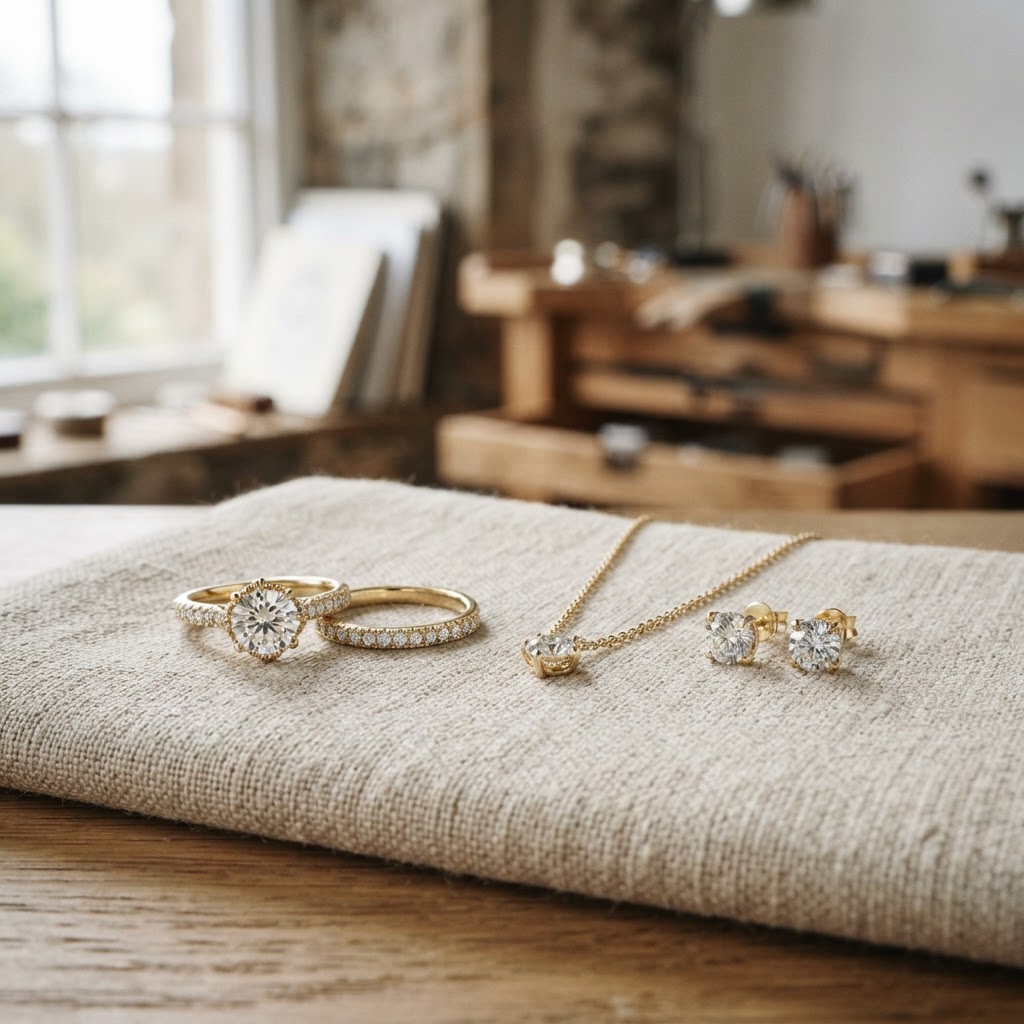
Matching Jewellery Sets: Lanarkshire Bespoke Style Guide
Visual estimation is the primary cause of technical failure when attempting to coordinate high-value jewellery components. You likely recognise the...
Visual estimation is the primary cause of technical failure when attempting to coordinate high-value jewellery components. You likely recognise the frustration of metal hues that shift under different lighting or diamond clarities that appear inconsistent when placed in proximity. Achieving a cohesive look with matching jewellery requires more than a cursory glance. It demands a systematic alignment of material specifications and geometric ratios to ensure every piece functions as part of a singular unit. Relying on visual memory often leads to geometric clashing that compromises the integrity of a bespoke collection.
This guide provides the precise technical parameters required to align metal types, gemstone grades, and shapes into a unified set. You will acquire the data points necessary to eliminate hue variance and ensure structural harmony across your items. We will examine how to utilise the Ring Maker tool for data-driven coordination and establish clear protocols for long-term set maintenance. Lanarkshire clients can now transition from subjective selection to a methodical procurement process that prioritises precision and logic over guesswork. Follow these standards to organise your collection into a professional and perfectly calibrated set.
Key Takeaways
- Define matching jewellery through the precise synchronisation of metal alloys, gemstone clarity grades, and geometric motifs.
- Prioritise platinum as a material standard to ensure consistent light performance and eliminate the hue variance often found in mixed white gold alloys.
- Establish geometric harmony by mapping gemstone shapes and maintaining specific scale ratios between rings, earrings, and pendants.
- Utilise metal price snapshots and the Ring Maker tool to organise a systematic procurement schedule for your bespoke collection.
- Access professional design consultations in Lanarkshire to develop a technical roadmap for your multi-piece jewellery set.
Defining Matching Jewellery: Visual Consistency Protocols
Matching jewellery is defined as a collection of pieces aligned by metal alloy, gemstone grade, and geometric motif. Historically, this concept was formalised as a Parure, which categorised jewellery into specific suites for formal use. Modern visual consistency requires the synchronisation of light performance across all components. This ensures that a pendant reflects light at the same frequency and intensity as a ring or pair of earrings. A systematic approach allows for the procurement of matching items over a multi-year timeline without compromising the aesthetic outcome. Sets typically follow a strict hierarchy of importance. This structure includes a primary ring as the anchor, secondary earrings for facial framing, and a tertiary necklace or bracelet to complete the visual circuit.
The Three Pillars of Alignment
Material consistency serves as the foundational requirement for technical coordination. It involves the use of identical metal alloys across every piece in the collection. For instance, Platinum 950 provides a consistent, high-density white finish that does not fluctuate between batches. Gemstone parity requires matching the 4Cs (cut, colour, clarity, and carat) across all set components. If a primary ring features a G-colour diamond, the secondary earrings should match this grade to prevent one piece from appearing yellowed in comparison. Geometric synchronicity focuses on the alignment of shapes and proportions. This means that a round brilliant solitaire should be paired with settings that share similar claw styles and shank widths. Every component must share a common design language to maintain structural harmony.
Solo Shopper Data Management
Building a high-grade collection of Matching Jewellery doesn't necessitate a single, large-scale transaction. A systematic data management strategy enables users to expand their sets over several years while ensuring total compatibility. Utilise digital wishlists to track potential matches and compare technical specifications side-by-side. It's essential to document the exact parameters of existing pieces before procuring new additions. This includes recording the specific metal alloy, the diamond certification numbers, and the geometric ratios of the settings. Maintaining a digital record of these snapshots helps avoid the common error of colour discrepancies between different manufacturers. You can use the Ring Maker tool to organise these data points and visualise how new components align with your current inventory. This methodical approach ensures that every acquisition maintains the integrity of the total set.
Material Alignment: Metal and Gemstone Parameters
Metal colour matching is a critical technical requirement for Matching Jewellery. Inconsistent alloys result in visible yellow undertones that compromise the set's unity. Different batches of "White Gold" often vary in their composition of nickel or palladium. This leads to discrepancies in the final hue. Platinum is the preferred standard for high-cohesion collections. It offers a natural white lustre and superior durability. It does not require rhodium plating to maintain its appearance. This stability ensures that components purchased at different intervals maintain a uniform visual profile. UK hallmarking regulations mandate that any platinum item weighing 0.5 grams or more must be hallmarked. This provides a legal guarantee of purity for every piece in your sequence.
Platinum vs White Gold Specs
Platinum 950 provides a consistent, neutral backdrop for high-grade diamonds. It's a high-density material that resists wear. White Gold requires periodic rhodium plating. This plating wears away at different rates depending on usage. If one piece in a set is freshly plated and another is not, the set will mismatch. This creates an ongoing maintenance burden. Platinum's higher initial cost is offset by long-term colour stability. The Arts and Crafts movement emphasised the integrity of materials and craftsmanship. This principle remains a technical priority when selecting metals for multi-piece sets. Platinum ensures that the material itself remains the constant variable in your data-driven collection.
Diamond Grading for Cohesion
Gemstone colour grading must remain within a tight tolerance. A variance of more than one grade (e.g., D to E) becomes noticeable in side-by-side comparisons. Clarity grades must also align to ensure similar brilliance levels across earrings and pendants. Consistency in the "Cut" grade is the most significant factor in set alignment. It dictates the light performance and sparkle intensity of the entire collection. Refer to the 4Cs diamond guide for specific technical grading parameters. You can refine your material specifications through a Bespoke Design Service consultation to ensure every diamond meets these strict parity requirements.
Price Snapshots and Procurement
Monitoring metal price snapshots is a functional necessity for efficient set building. Precious metal prices fluctuate based on market data. As of September 2026, the price for gold is £3,256.16 per ounce. Tracking these snapshots allows for optimised procurement timing. This is particularly useful when acquiring secondary and tertiary pieces to complete a set. Systematic tracking ensures budget efficiency and allows for the procurement of higher-grade materials when market conditions are favourable. This methodical approach removes the guesswork from the acquisition process.
Geometric Coordination: Shape and Scale Mapping
Geometric coordination is the systematic alignment of gemstone silhouettes and setting architectures across a collection. This process ensures that the reflective indices and light return remain consistent between individual pieces. Inconsistent shapes cause visual friction and disrupt the flow of light. Matching Jewellery requires a unified geometric motif to maintain technical harmony and structural integrity. Every component must function as a logical extension of the primary piece. Lanarkshire clients can utilise local design mapping sessions to compare these ratios against physical stone samples during the procurement process.
Mapping Gemstone Shapes
Round Brilliant sets offer the highest degree of light performance consistency. These stones possess a standard refractive index, making them the most efficient choice for multi-piece coordination. Fancy shapes, such as Emerald or Pear cuts, require more rigorous data management. You must match the length-to-width ratios precisely. A Pear-shaped pendant with a 1.50 ratio will appear mismatched if paired with earrings featuring a 1.70 ratio. Identify your primary geometric motif before adding secondary pieces. This establishes a baseline for all future additions to the set. Lanarkshire-based design consultations facilitate this process by providing a technical roadmap for set expansion.
Geometric clashing occurs when sharp angles are paired with rounded forms without a deliberate transition. For example, the 90-degree corners of a Princess cut conflict with the circular facets of a Round Brilliant. To avoid this, ensure the primary gemstone shape is replicated across all items. Setting styles, including Halo, Claw, or Pavé, must also be identical. A four-claw setting on a ring shouldn't be paired with a six-claw setting on earrings. These minor discrepancies disrupt the visual flow and compromise the set's cohesion.
Proportional Scaling Protocols
Establishing a hierarchy of scale is essential for visual balance. The ring typically serves as the focal point of the collection. Secondary pieces, such as earrings, should represent a specific percentage of the ring's carat weight. For instance, if the primary ring features a 1.00ct centre stone, the earrings might be scaled to 0.50ct each. This prevents secondary items from overwhelming the primary focal point. It maintains a clear visual hierarchy that directs attention to the centrepiece whilst ensuring the supporting items are proportional.
Necklace pendants must align with the visual profile of the earrings to maintain a cohesive look. Use the Ring Maker tool to visualise these proportions during the design phase. This interface allows you to simulate different carat weights and shapes to ensure scale parity. By mapping these ratios digitally, you eliminate the risk of geometric clashing before procurement begins. This methodical approach ensures that every piece in the set is sized according to a predefined technical roadmap. Lanarkshire-based consultations provide the opportunity to verify these digital models against real-world scale parameters.
Bespoke Matching: Lanarkshire Design Protocols
Bespoke design provides the technical framework required for absolute material and geometric synchronicity. Off-the-shelf Matching Jewellery often compromises on gemstone grading to achieve a specific retail price point. This results in sets where the earrings may possess lower clarity or colour grades than the primary ring. Bespoke protocols eliminate these discrepancies. Lanarkshire clients can access professional design consultations to map out a multi-piece collection from a single data baseline. This ensures that every component is a logical extension of the original design. Customisation allows for unique ring features to be mirrored precisely in secondary items. This level of coordination is unattainable through pre-packaged retail options.
Utilising the Bespoke Design Service
Initiate a custom design consultation to establish the technical parameters for your set. This stage involves defining the metal alloy, diamond specifications, and setting styles. Reviewing 3D renders is a critical part of the process. These digital snapshots allow you to verify the geometric alignment of all pieces before production begins. You can confirm that the claw architecture on a pendant perfectly mirrors the claws on a ring. Lanarkshire production adheres to UK hallmarking regulations. As of July 2026, platinum items weighing 0.5 grams or more require a hallmark from a UK Assay Office. Gold items over 1 gram and silver items over 7.78 grams must also be hallmarked. These stamps provide a legal verification of purity for each item in the set.
Local Logistics and Quality Control
The direct-to-consumer model in Lanarkshire eliminates the markups associated with traditional high street retail. This logistics efficiency allows for the procurement of higher-grade materials within the same budget. Selecting loose diamonds for a set provides superior control over grading parity. You can ensure that every stone shares identical colour and clarity parameters by verifying GIA or IGI certificates. Local verification of these data points ensures that the brilliance levels remain consistent across earrings, pendants, and rings. This methodical approach prevents the visual friction caused by mismatched diamonds. Track the production status of bespoke components through the Jewellove interface to maintain a clear timeline for set completion.
Systematic Procurement: Ordering and Care Data
Procurement must be organised based on current metal price snapshots to ensure maximum budget efficiency. Tracking these snapshots allows for the acquisition of components when market conditions are technically optimal. Order tracking is a functional requirement for the systematic expansion of a jewellery set over time. It ensures that subsequent additions align with the specific technical parameters of the anchor piece. Maintenance protocols are essential to ensure that older pieces in a collection do not lose lustre compared to new additions. Inconsistent brilliance levels compromise the visual unity of Matching Jewellery. A methodical approach to procurement and care ensures the long-term integrity of the set.
Acquisition Timing and Budgeting
Monitor platinum price snapshots to identify optimal purchase windows for your collection. Market data indicates that precious metal values fluctuate daily based on global trade indices. For example, as of 8 September 2026, the price for gold is £3,256.16 per ounce. Establishing a procurement schedule based on these data points maximises budget utility and allows for higher-grade gemstone selection. Organise the acquisition of high-carat items first. This primary piece serves as the grading standard for all future components. It defines the colour and clarity parameters that secondary items must mirror to maintain parity. Use the Diamond Quiz to narrow down technical specifications for future set additions. This tool facilitates the selection of stones that match the specific refractive index and light performance of your existing inventory.
Maintenance and Data Tracking
Implement a jewellery care regime to preserve metal colour and gemstone brilliance across the set. Dirt and oil accumulation reduces the light performance of diamonds. This creates a visual mismatch between frequently worn rings and occasionally worn pendants. Periodic professional cleaning is required to maintain the uniform brilliance of the collection. You should follow these storage and tracking protocols:
- Store matching items in individual compartments to prevent metal-on-metal abrasion.
- Utilise soft-lined containers to protect the structural integrity of claw settings.
- Track service history and cleaning dates for each component in the set.
- Document rhodium plating dates if using white gold to avoid hue discrepancies.
Maintaining a digital log of these maintenance snapshots ensures that the entire collection ages at a uniform rate. This prevents the "new versus old" contrast that often occurs when sets aren't managed as a single unit. This systematic approach preserves both the technical performance and the aesthetic value of your bespoke investment. Regular data logging allows for the efficient management of your jewellery assets over several decades.
Optimising Your Jewellery Collection Strategy
A methodical approach to Matching Jewellery ensures that every component functions as a logical extension of your primary investment. You've acquired the technical parameters for aligning metal alloys and gemstone grading to eliminate visual friction. Utilising clinical metal price tracking allows for procurement at optimal market intervals. Bespoke design specialists in Lanarkshire provide the necessary 3D renders to verify geometric synchronicity before production begins. Every stone is supported by technical diamond grading reports to guarantee parity across the entire set. These data-driven steps remove the subjectivity often associated with jewellery acquisition.
Implementing these protocols transitions your collection from a series of individual items into a unified asset. Order tracking and maintenance data preserve the set's structural integrity and brilliance. You can now manage your inventory with tech-enabled confidence and precision. Transitioning to a systematic procurement model ensures your bespoke pieces maintain their value and aesthetic alignment over time. This approach allows for the efficient management of your assets whilst achieving a perfectly coordinated aesthetic.
Frequently Asked Questions
How do I ensure the metal colour of my new jewellery matches my existing pieces?
Use technical snapshots of the metal alloy specifications to ensure parity. White gold varies by manufacturer due to differing nickel or palladium ratios. Document the exact alloy, such as 18ct White Gold with Palladium, before procurement. Lanarkshire clients can bring existing pieces to a bespoke design consultation for technical verification. This prevents the yellow undertones found when mixing batches from different suppliers. Precise data management is the only method for ensuring colour parity.
Is it better to buy a matching set or individual pieces for a bespoke collection?
Buying individual pieces through a bespoke design service allows for superior grading control. Off-the-shelf sets often fluctuate in diamond clarity to meet retail price points. By procuring individual items systematically, you ensure that every stone matches your established baseline. Lanarkshire residents can use local consultations to map out a multi-year acquisition schedule. This methodical approach ensures long-term consistency whilst managing budget volatility effectively. It prioritises material integrity over convenience.
What diamond clarity should I choose for a matching earring and necklace set?
Select a clarity grade within one step of your primary piece. If your ring is VS1, choose VS1 or VS2 for earrings and necklaces to maintain visual parity. Consistency in cut grade is more critical than clarity for light performance synchronisation. Use the Diamond Quiz to identify stones with matching refractive indices. This ensures your Matching Jewellery set reflects light at the same frequency across all components. Technical grading reports provide the necessary verification.
Can I use the Ring Maker tool to design matching pendants or earrings?
The Ring Maker tool functions as a primary interface for setting and gemstone visualisation. While it focuses on rings, the data points generated can be mirrored for pendants and earrings. Use the tool to establish the geometric motif and claw architecture. Once the ring parameters are set, Lanarkshire design specialists can replicate these specifications for secondary items. This ensures total geometric synchronicity across your entire collection. It is a reliable system for multi-piece coordination.
Why is platinum recommended for matching high-value jewellery sets?
Platinum 950 provides the highest level of colour stability for long-term collections. Unlike white gold, it doesn't require periodic rhodium plating to maintain its neutral white hue. This eliminates the risk of hue discrepancies between pieces at different stages of their maintenance cycle. Platinum's density also ensures that claw settings remain secure. It is the technical standard for users prioritising material integrity and low-maintenance coordination. It remains the most durable choice for bespoke sets.
Do matching jewellery sets need to be the same brand to look consistent?
Consistency depends on material specifications rather than brand labels. Pieces from different brands often fail to match due to variations in alloy composition and diamond grading standards. Achieving a cohesive look with Matching Jewellery requires aligning the technical data points. Documenting the 4Cs and metal purity allows you to coordinate items from various sources. Bespoke procurement remains the most efficient method for ensuring total visual and structural alignment. Avoid relying on visual estimation.
How does the metal price snapshot affect the cost of a matching jewellery set?
Metal price snapshots dictate the optimal timing for component acquisition. Precious metal values, such as the £3,256.16 per ounce gold price recorded in September 2026, fluctuate based on market indices. Monitoring these snapshots allows you to organise the purchase of secondary set items during market dips. This data-driven approach maximises your procurement budget. Lanarkshire clients can utilise these snapshots to plan the expansion of their collections with high-grade materials. It ensures cost-efficiency.
What is the best way to clean a matching jewellery set in Lanarkshire?
Implement a systematic jewellery care regime using ultrasonic cleaning for diamonds and soft-bristle agitation for settings. Lanarkshire-based clients should schedule professional inspections to track the structural integrity of every piece. Avoid using generic chemicals that can degrade metal alloys. Store each item in an individual compartment to prevent abrasion between pieces. Regular maintenance ensures that older components maintain the same lustre as new additions. This preserves the uniform brilliance of the collection.