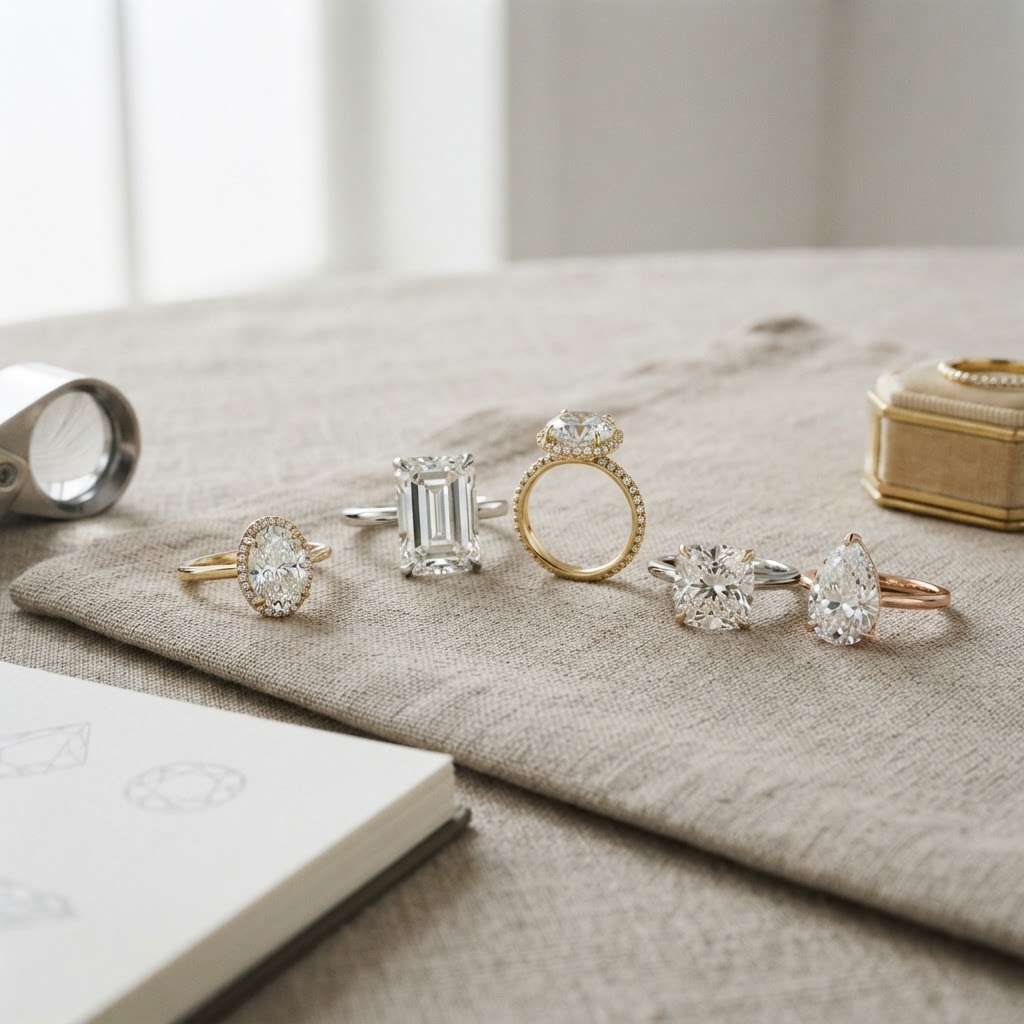
Best Diamond Shape: Technical Selection Guide (2026)
The marquise shape recorded a 94% increase in procurement throughout 2026 as buyers prioritised visual surface area over traditional round metrics....
The marquise shape recorded a 94% increase in procurement throughout 2026 as buyers prioritised visual surface area over traditional round metrics. Selecting the best diamond shape for engagement ring requirements involves more than aesthetic preference. It's a technical calculation of light return, surface spread, and structural integrity. You likely recognise that the distinction between "cut" and "shape" is frequently obscured in retail environments. This confusion often leads to inefficient budget allocation and sub-optimal light performance.
This guide provides a systematic analysis of diamond geometries. It allows you to optimise for light performance, finger morphology, and budget efficiency. You'll learn which shapes require higher clarity grades and which offer the greatest face-up size per carat. This article establishes a technical framework for selecting loose diamonds. It ensures you use online design tools and the Jewellove Ring Maker with precision. We rank shapes by objective performance data to facilitate a logical decision-making process. Use these data points to secure the highest value for your investment.
Key Takeaways
- Differentiate between geometric outline and faceting arrangements to ensure technical precision during the procurement process.
- Identify the best diamond shape for engagement ring goals by comparing the scintillation data of brilliant and step-cut faceting styles.
- Align length-to-width ratios with specific finger morphology to maximise the visual surface area and impact of your loose diamond.
- Determine specific colour and clarity thresholds for different geometries to increase budget efficiency without a visible loss of quality.
- Utilise the Jewellove Ring Maker and Diamond Quiz to validate geometric data and organise your custom design specifications.
Diamond Shape vs. Diamond Cut: Structural Definitions
Technical selection begins with a precise distinction between diamond shape and diamond cut. Diamond shape refers to the external geometric outline of the stone when viewed from a face-up position. Diamond cut describes the faceting arrangement and the efficiency with which the stone handles light. Selecting the best diamond shape for engagement ring designs is an exercise in geometric validation. The shape dictates the visual aesthetic. The cut determines the optical performance. The GIA (Gemological Institute of America) provides formal cut grades for round diamonds. Fancy shapes currently receive grades for polish and symmetry instead of a comprehensive cut grade. As of Q2 2026, the GIA has integrated AGS ray-tracing technology into its protocols. This allows for a Direct Light Performance Assessment that impacts the valuation of specific shapes.
Geometric Categorisation
The industry categorises diamonds into two primary groups: round brilliant and fancy shapes. The round brilliant serves as the benchmark for light return. Any outline that deviates from this standard is a fancy shape. This category includes ovals, cushions, and emerald cuts. Structural integrity varies by geometry. Pointed corners on princess, pear, and marquise shapes represent high-risk zones for cleavage. These outlines require specific setting protocols. V-prongs or bezel settings are necessary to protect these vulnerable vertices. The best diamond shape for engagement ring longevity depends on how the setting shields these pressure points. You can validate these structural requirements via the Jewellove Ring Maker tool. Market data for 2026 shows fancy shapes are often 15 to 35% more cost-effective than round diamonds of equivalent quality.
Light Performance Metrics
Optical efficiency depends on the stone's ability to achieve total internal reflection. Light enters the crown, reflects off the pavilion facets, and returns to the eye. A well-executed Diamond Cut manages three specific light performance categories. First, scintillation represents the play of light and dark areas within the stone during movement. Second, fire refers to the dispersion of light into spectral colours. Third, brilliance is the total amount of white light reflected. Different shapes prioritise these metrics differently. Brilliant-style facets maximise scintillation. Step-cut facets, like those in emerald shapes, prioritise clarity and internal hall-of-mirror effects. The GIA has announced plans to introduce formal cut grades for marquise, oval, and pear shapes in 2027. For current procurement, buyers must rely on symmetry and polish grades. Use the Jewellove loose diamond database to filter stones by these performance parameters.
Scintillation and Light Return: Comparative Performance of Shapes
Light performance is a measurable output of geometric faceting. The efficiency with which a stone refracts light determines its ranking in the scintillation hierarchy. Selecting the best diamond shape for engagement ring applications requires balancing brilliance against surface area. Brilliant faceting styles utilise triangular and kite-shaped facets to maximise light return. Step-cut styles use long, parallel facets to prioritise clarity and transparency. Surface area optimisation is a critical variable in this selection process. Elongated shapes, such as marquise and pear diamonds, offer a larger face-up appearance than round diamonds of the same carat weight. This "spread" allows for a significant visual impact without increasing the raw material cost.
Brilliant Cut Efficiency (Round, Oval, Cushion)
The round brilliant remains the industry standard for light return. It features 57 or 58 facets designed to reflect the maximum amount of light through the crown. Oval shapes offer a similar faceting arrangement but provide a larger visual footprint per carat weight. Cushion cuts feature rounded corners and larger facets. This configuration results in higher "fire" or spectral colour dispersion compared to the standard round brilliant. Data from 2026 indicates that elongated shapes like ovals are increasingly preferred for their ability to optimise finger morphology whilst maintaining high brilliance.
Step Cut Geometry (Emerald, Asscher)
Step cut geometries prioritise transparency over scintillation. The emerald cut features a rectangular outline with truncated corners. Its parallel facets create a distinct visual rhythm. Asscher cuts apply this same protocol to a square geometry. These shapes do not hide inclusions effectively. Buyers must prioritise VS2 clarity grades or higher to ensure a clean appearance. Emerald cuts are approximately 30 to 35% less expensive than round diamonds of equivalent quality. This price differential allows for the procurement of higher clarity stones within the same budget parameters. These shapes are ideal for users who value architectural precision over maximum sparkle.
Mixed and Modified Geometries (Radiant, Princess)
Mixed cuts combine the outline of a step cut with the faceting of a brilliant cut. Radiant diamonds feature a rectangular or square outline with up to 70 facets. This arrangement provides the structural stability of a clipped-corner shape with the light performance of a brilliant. Princess cuts use a square geometry with sharp corners. They represent the most efficient square shape for light return. Users seeking a balance between modern aesthetics and optical efficiency should consider these modified geometries when determining the best diamond shape for engagement ring designs. You may book an appointment to review these light performance differences in person.
Finger Morphology and Geometric Proportioning
Finger morphology serves as the primary physical constraint in geometric selection. Proportions must be calculated to balance the hand's natural dimensions. The length-to-width (L/W) ratio is the technical metric used to quantify this relationship. Selecting the best diamond shape for engagement ring use requires matching this ratio to the user's phalange length. High L/W ratios create a vertical orientation that elongates the appearance of the finger. Lower ratios provide horizontal coverage that suits wider finger profiles. This systematic approach ensures the diamond complements the wearer's anatomy rather than overwhelming it.
Elongating Geometries
Oval, marquise, and pear shapes are the primary tools for vertical elongation. Market data from 2026 indicates the marquise shape saw a 94% increase in sales due to its superior surface area. This shape provides the largest visual footprint per carat of any geometry. Optimal L/W ratios for these shapes include:
- Marquise: 1.75 to 2.25
- Oval: 1.35 to 1.50
- Pear: 1.45 to 1.75
The pear shape has moved from fifth to third most popular in 2026. It combines the brilliance of a round cut with the elongating properties of a marquise. These geometries require careful alignment with the ring band. A narrow band enhances the verticality of the stone. This combination is particularly effective for shorter finger profiles where additional length is the desired outcome.
Substantial Geometries
Emerald and radiant cuts offer significant horizontal presence. These shapes suit wider finger profiles where a substantial geometric outline is required to maintain proportion. Emerald cuts utilise a step-cut faceting style that emphasises the stone's width. Radiant cuts provide a similar footprint but with the scintillation of a brilliant cut. Round and cushion shapes remain a standard choice for those seeking the best diamond shape for engagement ring durability and symmetry. These outlines do not rely on L/W ratios for their visual impact. They provide a symmetrical balance that suits most finger morphologies.
Component ratios include the relationship between the diamond width and the band width. A diamond that is too narrow for a wide band will appear diminished. Conversely, a large stone on an ultra-thin band may lack structural stability. You should use the Ring Maker to visualise these ratios in a digital environment. This tool allows for the systematic adjustment of stone size and band width. It ensures the final assembly achieves geometric equilibrium before procurement. Proportional validation is essential for a balanced final design.
Quality Grade Thresholds for Specific Geometric Outlines
Geometric selection dictates the minimum quality thresholds required for an eye-clean appearance. Each outline interacts with light and material differently. This interaction affects how the stone retains colour and masks inclusions. Selecting the best diamond shape for engagement ring requirements involves identifying these specific grade boundaries. Buyers can optimise their budget by selecting lower grades in shapes that mask imperfections effectively. Conversely, certain geometries require premium grades to maintain visual integrity. Systematic procurement of Loose Diamonds allows for the precise matching of these technical specifications to your design goals.
Colour Retention Parameters
Elongated geometries do not distribute colour uniformly across the stone. Pear and marquise shapes tend to concentrate colour at their narrow tips. This effect is a direct result of the facet arrangement and the varying depth of the stone at these points. You should prioritise higher colour grades (D to F) for these shapes when using platinum settings. Yellow or rose gold settings allow for lower colour grades (G to J) without a perceived loss of quality. The metal's natural hue masks slight warmth in the diamond facets. You can use the Diamond Quiz to filter stones based on these specific metal and shape combinations. This tool organises data points to ensure your selection remains colourless to the naked eye.
Clarity Thresholds
Clarity requirements vary significantly between faceting styles. Step-cut geometries, such as emerald and Asscher shapes, feature large, open tables. These facets function as windows into the stone's interior. Any inclusion within a step-cut stone is often visible without magnification. You must maintain a minimum threshold of VS2 clarity for these outlines to ensure transparency. Brilliant-cut shapes, including the round brilliant and cushion, hide inclusions more effectively. The high scintillation levels create visual noise that masks small imperfections. Many SI1 round diamonds appear eye-clean due to this optical interference. Identifying the best diamond shape for engagement ring longevity requires this understanding of clarity thresholds. It prevents overpaying for clarity grades that provide no visible benefit in specific geometries.
The procurement process relies on specific data snapshots. Each diamond in the Jewellove database includes detailed grading reports. You can track polish, symmetry, and fluorescence metrics across different shapes. This level of detail is essential for verifying quality thresholds. It ensures that the selected stone meets the structural and optical requirements of your custom design. Logistical precision in diamond selection eliminates the risk of procuring a stone with visible defects.
Systematic Customisation via the Jewellove Interface
The Jewellove interface organises the procurement process into a logical sequence. Users begin by filtering the loose diamond database. This prioritises technical specifications over visual aesthetics. Identifying the best diamond shape for engagement ring use is the primary step in this workflow. Once you select the geometry, the system facilitates the integration of the stone into a physical setting. This methodical approach ensures that structural constraints are addressed before the design is finalised. The platform includes a wishlist function to assist multi-user collaboration. This allows different stakeholders to track and compare specific geometric configurations in real-time. You can categorise saved items by shape, carat weight, and light performance. This data-driven management tool simplifies the decision-making process for complex custom designs.
The Custom Design Workflow
The workflow follows a specific hierarchy. You must select the loose diamond geometry first. This dictates the technical requirements for the setting. A solitaire setting provides maximum exposure for brilliant-cut shapes. A halo setting adds a perimeter of light return to smaller stones. Three-stone settings require precise geometric alignment between the centre stone and side stones. Use the Ring Maker to test these combinations and validate the visual proportions. For unique outlines or complex geometries, you can access Bespoke Design Services. This service provides technical consultations to ensure the setting matches the stone's specific dimensions. The interface generates snapshots of the configuration for final approval. This eliminates ambiguity in the customisation process and ensures the final product matches the digital prototype.
Local Procurement in Lanarkshire
Jewellove operates under local Lanarkshire design protocols. This ensures high standards for platinum purity and hallmarking. The procurement process includes logistics for local order tracking and collection. This provides a secure chain of custody for high-value assets. Users can utilise a physical Ring Sizer tool to verify dimensions before production begins. The interface also provides snapshots of current UK metal price trends for 2026. This data allows for precise budget management during the finalisation phase. It ensures that your procurement strategy accounts for market fluctuations. Ongoing Jewellery Care is essential for maintaining the optical performance of your stone. Different geometries require specific cleaning protocols to prevent debris accumulation in the facets. Selecting the best diamond shape for engagement ring longevity also requires regular prong inspection. This is particularly important for fancy shapes with exposed corners. Regular maintenance preserves the structural integrity of the bespoke platinum setting.
Optimising Geometric Selection for Data-Driven Procurement
Selecting the best diamond shape for engagement ring requirements is a technical calculation of light return and visual surface area. This guide has established the parameters for balancing scintillation with finger morphology. You've identified how quality thresholds for colour and clarity vary across different faceting styles. Systematic procurement relies on these data points to ensure budget efficiency. Use the Jewellove Ring Maker to validate your component ratios before finalising the design.
Jewellove supports this methodical approach through a direct-to-consumer pricing structure and specialist platinum design protocols. Our Lanarkshire-based expert support provides the logistics for local order tracking and hallmarking verification. These systems ensure your custom design meets rigorous technical standards. You can now manage your jewellery data with tech-enabled confidence.
Precision in the selection phase eliminates risk in the production phase. Use these structured tools to secure a stone that prioritises logic and optical performance. Order and precision remain the most effective methods for achieving a balanced final design.
Frequently Asked Questions
What is the best diamond shape for a small budget?
Identifying the best diamond shape for engagement ring budget optimisation requires analysing price-per-carat data. Fancy shapes such as emerald or princess cuts offer the highest value efficiency for buyers. An emerald-cut diamond is typically 30 to 35% less expensive than a round brilliant of equivalent quality. This price differential allows for the procurement of a larger stone or a higher clarity grade. You can use the Jewellove Diamond Quiz to filter loose diamonds by these metrics in Lanarkshire.
Which diamond shape looks the largest on the finger?
The marquise shape provides the largest visual surface area per carat of any geometry. Elongated outlines like ovals and pears also offer a greater face-up appearance than round diamonds. This surface spread makes them the best diamond shape for engagement ring designs prioritising visual impact. These shapes optimise the ratio between carat weight and millimetre dimensions. This ensures a larger footprint on the finger without increasing the raw material volume required for the stone.
Do certain diamond shapes break more easily?
Geometries with sharp, pointed corners are more susceptible to structural failure during daily wear. Princess, pear, and marquise shapes feature vulnerable vertices that can chip if they are exposed. These high-risk zones require specific setting protocols. Lanarkshire design protocols at Jewellove mandate V-prongs or bezel settings for these outlines to ensure protection. Protecting these points preserves the stone's integrity. Round and cushion shapes offer higher durability due to their lack of sharp edges.
Which shape is best for a solitaire engagement ring?
The round brilliant is the industry benchmark for solitary settings due to its 57 to 58 facets. It provides maximum scintillation and symmetry in a standard mount. However, oval and cushion shapes are high-performance alternatives for solitaire designs. Ovals provide similar brilliance with added elongation for the wearer. Cushions offer a vintage aesthetic with high fire dispersion. The selection depends on whether you prioritise light return or unique geometric outlines in your final bespoke design.
How does the length-to-width ratio affect a diamond’s appearance?
The length-to-width (L/W) ratio determines the stone's silhouette and orientation on the ring band. A high ratio, such as 2.0 for a marquise, creates a slender, elongating effect. A lower ratio, such as 1.0 for a princess cut, results in a symmetrical square balance. This metric is essential for matching the stone to specific finger morphology. You can track these ratios using the Jewellove Ring Maker to ensure the final assembly achieves geometric equilibrium before procurement.
What is the most popular diamond shape in the UK for 2026?
The round brilliant diamond remains the most popular choice in the UK, accounting for approximately half of all sales. However, elongated shapes are seeing a significant rise in procurement. The marquise shape recorded a 94% increase in sales throughout 2026 according to market data. Pear and oval shapes have also increased in popularity amongst buyers. These trends reflect a market shift towards shapes that offer a larger visual surface area and unique geometric profiles for custom settings.
Can I change the diamond shape in a preset ring design?
Preset designs often have fixed head configurations that accommodate only one specific geometry. However, the Jewellove Bespoke Design Service allows you to modify any design to fit your preferred stone. You can use the Ring Maker interface to swap loose diamond shapes and validate the new component ratios digitally. This ensures the setting is technically compatible with the new outline. Our Lanarkshire experts provide final verification for all bespoke modifications and setting adjustments before production begins.
Why are round diamonds more expensive than fancy shapes?
Round brilliant diamonds command a higher price due to significant raw material waste during the cutting process. Up to 60% of the rough stone is removed to achieve the standard 57-facet arrangement. Fancy shapes, such as radiant or emerald cuts, retain more of the original rough diamond weight. Additionally, higher market demand for round diamonds maintains their premium status. Fancy shapes are often 15 to 35% more cost-effective for buyers prioritising budget efficiency and value procurement.