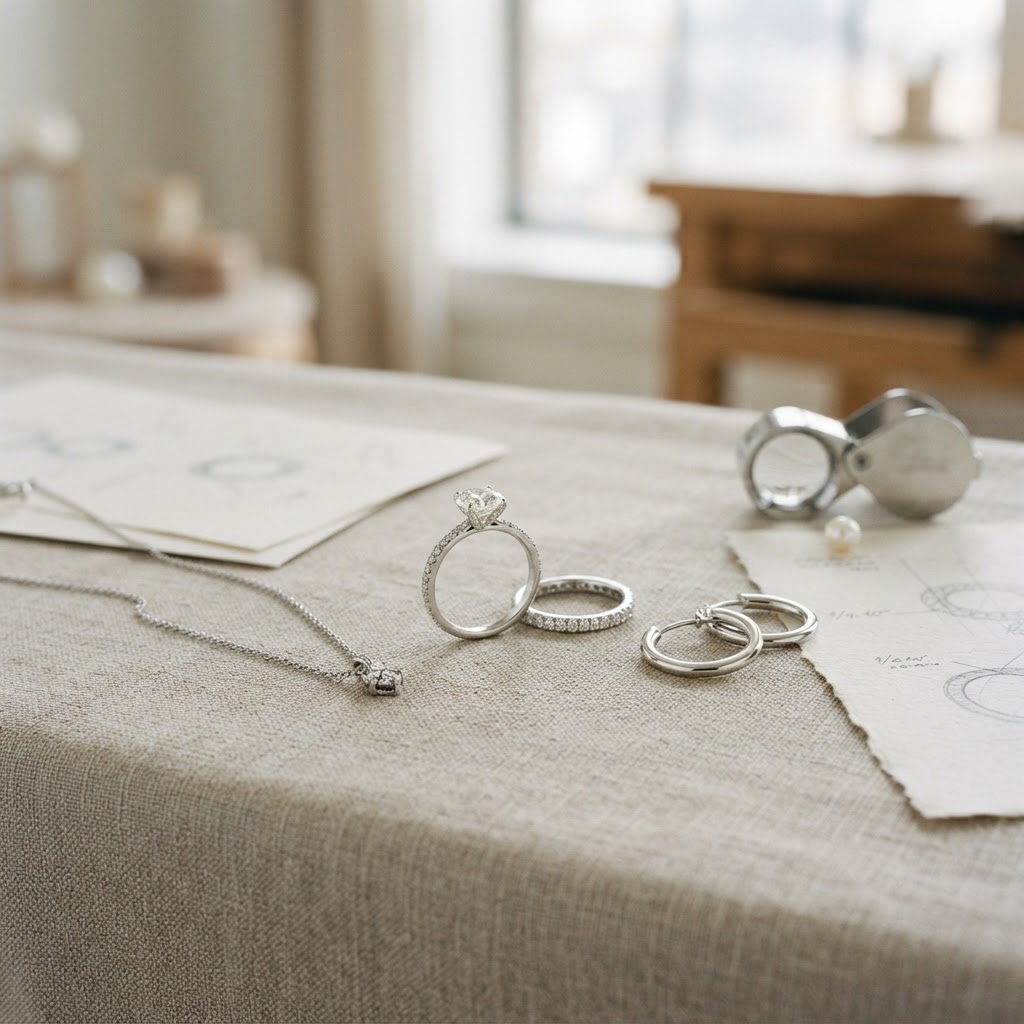
Platinum Price Snapshot 2026: Technical Analysis for Jewellery Procurement
Global gold production reaches 2,700 tons annually, yet platinum remains restricted to a mere 80 tons. This extreme scarcity creates a volatile...
Global gold production reaches 2,700 tons annually, yet platinum remains restricted to a mere 80 tons. This extreme scarcity creates a volatile market where the spot price fluctuates faster than a bespoke design can be finalised. This platinum price snapshot identifies current market data as of September 2026, where platinum trades near $1,779 per troy ounce.
Opaque pricing and shifting material values often complicate the budgeting process for a significant acquisition. Maintaining a fixed project cost is difficult when metal markets move mid-design. Precision in data is the only method to manage these financial variables effectively and ensure procurement remains within defined parameters.
This report provides a clinical evaluation of current market data and its direct impact on bespoke jewellery budgeting. It examines the technical advantages of PT950, compares its utility against 18ct white gold, and establishes a systematic framework for acquisition. The following sections provide a clear data snapshot to facilitate an informed decision for any upcoming project.
Key Takeaways
- Access a precise platinum price snapshot to interpret current spot prices and global exchange data from the LPPM.
- Analyse how industrial demand and geopolitical supply constraints dictate the availability of jewellery-grade platinum.
- Evaluate the efficiency of platinum versus 18ct white gold by comparing material density and long-term maintenance protocols.
- Calculate the impact of manufacturing labour and UK hallmarking requirements on the final acquisition cost of a bespoke piece.
- Implement a 30-day trend analysis and use digital tools like the Ring Maker to organise procurement data and manage design budgets.
Understanding the Platinum Price Snapshot Parameters
A platinum price snapshot provides the baseline valuation for raw material procurement. It identifies the current spot price per troy ounce. This data originates from global exchanges; the London Platinum and Palladium Market (LPPM) serves as the primary source for these figures. Monitoring these snapshots allows for precise budgeting during the jewellery design phase. It removes the ambiguity often associated with metal procurement. Use this data to track market movements and organise project finances effectively.
Key metrics within a snapshot include the bid price, the ask price, and the daily percentage change. The bid price represents the maximum value a buyer offers. The ask price indicates the minimum value a seller accepts. The difference between these two figures is the spread. A narrow spread suggests high market liquidity. Tracking the daily percentage change allows designers to identify volatility trends. This information is vital when scheduling the acquisition of materials for high-value projects.
Spot Price vs. Retail Price Logistics
The spot price defines the raw material cost before any manufacturing, refining, or hallmarking occurs. It's the price of the metal in its purest form. Retail jewellery prices don't fluctuate hourly with the market. This lack of volatility at the retail level is due to manufacturing lead times and stock management. Manufacturers often purchase metal in bulk at specific intervals to hedge against price spikes. The UK jewellery industry utilises metal "fixes" set twice daily. These fixes provide a stable reference point for calculating the intrinsic value of the properties of platinum within a finished item. Use the Ring Maker tool to compare these material costs against your specific design requirements.
The Importance of the Troy Ounce Metric
The troy ounce is the standard unit of measurement for precious metals. It's different from the common avoirdupois ounce used for groceries. One troy ounce equals 31.1035 grams. Use this metric to standardise comparisons between platinum, gold, and palladium. Precision is mandatory here. Convert troy ounces to grams to perform exact jewellery weight calculations. Bespoke ring specifications rely on these precise measurements to determine the final material volume required for casting. Weight accuracy is critical. Even a minor discrepancy in mass can lead to significant budgetary shifts in a bespoke design. Track these metrics to maintain a systematic approach to procurement.
Primary Drivers Influencing Platinum Market Volatility in 2026
Market volatility in 2026 stems from a convergence of industrial and geopolitical factors. High demand in the automotive sector for catalytic converters and emerging hydrogen technologies creates a competitive environment for raw materials. This industrial pressure directly influences the availability of jewellery-grade metal. Monitoring a platinum price snapshot allows procurement specialists to identify these shifts before they impact production costs. It ensures that budgeting remains accurate despite external market pressures.
Geopolitical stability in South Africa and Russia remains a primary determinant of global supply. South Africa produces approximately 70% of the world's platinum. Operational challenges or labour disputes in this region cause immediate supply contractions. Russia's role as a secondary supplier adds further complexity due to ongoing trade restrictions. These factors contribute to the market deficit projected by the World Platinum Investment Council for the fourth consecutive year in 2026. This deficit maintains upward pressure on the base cost of the metal.
Currency fluctuations between Pound Sterling and the US Dollar significantly impact UK acquisition costs. Platinum trades globally in US Dollars. A weakening Pound increases the cost for UK-based manufacturers, even if the spot price remains stable. Investor sentiment also plays a role. Many participants view platinum as a hedge against inflation. This increased investment demand reduces the volume of metal available for decorative use, leading to tighter market conditions for the jewellery industry.
Global Supply Chain Constraints
Mining output in 2026 is under pressure from rising operational costs and energy constraints in major extraction hubs. Importing refined platinum into the UK requires adherence to strict logistical protocols and security measures. Supply scarcity often extends lead times for bespoke orders. When raw material availability is low, the time required to source specific weights for custom projects increases. Analysing the latest platinum price snapshot helps designers anticipate these delays and manage client expectations regarding delivery schedules.
Macroeconomic Factors in the UK
UK interest rates influence the holding costs for precious metal inventories. The Bank of England's monetary policy dictates currency valuation, which directly affects the local price of imported platinum. Lanarkshire buyers can monitor these trends by observing regional economic indicators and national trade reports. To discuss how these factors influence a specific project, you may arrange a bespoke design consultation for technical guidance.
Comparative Metal Value: Platinum vs 18ct White Gold Efficiency
The September 2026 platinum price snapshot reveals a significant divergence in raw material costs compared to 18ct gold. Whilst gold spot prices trade near $5,000 per troy ounce, platinum remains positioned around $1,779. This delta suggests a lower entry point for the raw metal. However, procurement efficiency requires a technical evaluation of material volume. Platinum is approximately 60% denser than gold. A bespoke ring requires more physical mass in platinum than in 18ct white gold to achieve identical dimensions. This density factor compensates for the lower spot price, often resulting in a finished product that requires a higher initial investment but offers greater material substance.
Purity levels also dictate long-term value and utility. Jewellery-grade platinum is typically 95% pure (PT950). In contrast, 18ct white gold contains 75% gold, with the remaining 25% composed of alloys such as silver, palladium, or nickel. This higher purity level ensures that platinum retains its intrinsic value more effectively over time. It functions as a more stable asset within a jewellery portfolio, as the metal is not diluted by high percentages of base materials.
Durability and Lifespan Analysis
Platinum exhibits a unique metal displacement behaviour. When scratched, the metal moves aside rather than being removed from the surface. This process creates a "patina" finish over years of use, which many collectors value for its character. Gold loses microscopic amounts of material with every abrasion, leading to a gradual thinning of the band over decades. Platinum's high durability reduces the frequency of structural repairs. Maintenance protocols differ significantly between the two metals. 18ct white gold requires rhodium plating every 12 to 36 months to maintain its white colour. Platinum is naturally white and requires no chemical coating. Review specific jewellery care data to understand the long-term logistical advantages of this material.
Hypoallergenic Properties and Utility
Platinum is a naturally hypoallergenic material. It lacks the nickel content frequently found in white gold alloys, which can cause skin irritation for sensitive users. This biological compatibility makes it the systematic choice for daily-wear items. In the context of Lanarkshire bespoke design standards, platinum provides the necessary rigidity to secure high-value loose diamonds. Its strength ensures that claws remain stable and secure under mechanical stress. The combination of high utility and lower spot prices in the current platinum price snapshot makes it an efficient alternative for complex bespoke projects. This material choice prioritises structural integrity and long-term asset preservation over the recurring maintenance costs associated with white gold alternatives.
Budgetary Impact: Translating Spot Prices into Finished Jewellery Costs
A platinum price snapshot identifies the raw material value, but it doesn't represent the final procurement cost. Manufacturing markups are necessary to convert a troy ounce of metal into a finished piece. These markups include casting, bench labour, and hallmarking fees. Casting involves melting the metal and injecting it into a precision mould. Bench labour covers the refining, polishing, and setting of stones. These operational expenses remain relatively stable regardless of spot price volatility. Categorise these costs separately to maintain a transparent budget.
The UK Hallmarking Act 1973 establishes the legal framework for precious metal sales. It requires all platinum items over 0.5g to be tested and marked. This legislation protects the buyer by verifying that the metal meets the PT950 standard. Failure to hallmark an item of this weight is a criminal offence in the UK. This process adds a small, fixed fee to the project but ensures the material's integrity and future resale value.
The Role of UK Hallmarking
The Assay Office functions as an independent body for purity verification. It applies specific marks to each piece: the orb symbol for platinum and the "950" numerical fineness mark. These stamps confirm that the item contains at least 95% pure platinum. Hallmarked jewellery holds a higher market value than unverified pieces. This verification process provides a systematic guarantee for the consumer. It removes the risk of purchasing sub-standard alloys during the acquisition process.
Calculating Total Bespoke Costs
Calculate the final figure using a modular breakdown: Metal + Diamond + Labour + VAT. The raw metal cost depends on the current platinum price snapshot and the required weight. Design complexity dictates the labour fee. Intricate halo settings or pave bands require more technical skill and time than solitaire designs. Use the ring maker to estimate how different specifications affect the total investment. This tool allows for data-driven customisation before the design phase begins.
Logistics and insurance for Lanarkshire delivery are final budgetary considerations. These costs cover secure transport from the workshop to the client. Bespoke design fees are independent of the metal market. They're established during the initial consultation to provide financial predictability. This methodical approach ensures that the project remains within the defined budget despite any mid-process market fluctuations.
Strategic Acquisition: Procurement Protocols for Bespoke Jewellery
Monitor the platinum price snapshot for a 30-day trend analysis rather than reacting to hourly fluctuations. This methodical observation provides a more stable data set for project planning. Identify the mean price over this period to establish a realistic procurement budget. Organise a technical consultation once the market enters a favourable range. This protocol allows you to lock in material costs and prevents price shifts from impacting the manufacturing phase. A systematic approach to data collection ensures that your acquisition remains within defined financial parameters.
Utilise digital tools to compare various designs and manage procurement data effectively. Tracking multiple specifications in a centralised database removes the ambiguity of manual calculations. It allows for a clinical comparison of material volumes across different styles. This data-driven strategy is essential for high-value bespoke projects where precision is mandatory. By categorising design elements, you can identify cost-saving opportunities without compromising structural integrity.
Utilising the Ring Maker Tool
The custom design interface facilitates a systematic approach to ring construction. Begin by selecting a base style to establish the initial design framework. Input specific data points including band width, depth, and ring size for a technical design overview. The platform calculates the estimated material volume based on these precise metrics. Manage your wishlist through the Jewellove platform to track multiple design iterations. This digital management ensures all project data remains organised and accessible for final review before procurement begins.
Lanarkshire Design Consultations
A professional design session in Lanarkshire follows a strict protocol to ensure accuracy. Specialists review your technical specifications to verify compliance with UK jewellery standards. This includes a final check of hallmarking requirements and diamond setting security. Local expertise ensures that the procurement workflow is streamlined and free from logistical errors. Finalising the acquisition involves synchronising the metal purchase with the selection of certified stones. This local oversight provides a layer of quality control that digital-only services often lack.
Integrate loose diamond procurement with the final metal selection to optimise the project budget. Selecting stones whilst monitoring the latest platinum price snapshot allows for a balanced allocation of funds across all components. High-clarity diamonds require the rigid, durable settings that only platinum can provide. This integrated strategy ensures that every component of the bespoke piece meets the required technical parameters. Following this procurement protocol guarantees a seamless transition from the initial design phase to the final acquisition of a bespoke asset.
Optimising Your Bespoke Procurement Strategy
Effective jewellery acquisition requires a systematic approach to market data. Utilising a platinum price snapshot ensures that your project remains financially viable despite 2026 industrial supply deficits. This clinical evaluation confirms that platinum offers superior durability and material purity compared to 18ct white gold. You can now manage these variables with tech-enabled confidence.
Jewellove has functioned as a specialist in Lanarkshire bespoke design since 2009. We prioritise technical data management to empower buyers throughout the customisation process. Our Ring Maker tool provides the necessary framework to organise your project data and track material costs in real time. Every piece meets strict UK hallmarking standards to guarantee long-term asset value and quality. Use these structured protocols to secure a high-utility material for your next acquisition.
Precision in planning leads to a more reliable procurement outcome.
Frequently Asked Questions
Is platinum more expensive than gold in 2026?
In 2026, the spot price of gold is approximately three times higher than that of platinum per troy ounce. However, finished platinum jewellery often commands a higher retail price than 18ct gold alternatives. This discrepancy occurs because platinum is 60% denser than gold and requires higher purity levels. A bespoke piece in Lanarkshire will utilise more physical metal by weight, which balances the lower raw material cost.
How often should I check the platinum price snapshot when planning a ring?
Monitor the platinum price snapshot once per week during the initial design phase to identify 30-day trends. Rapid daily checking is unnecessary for most bespoke projects because retail prices don't fluctuate hourly. Establishing a mean price over a month provides a more stable budgeting baseline. This systematic approach allows Lanarkshire clients to plan their acquisition without reacting to minor market volatility or temporary supply contractions.
Does the weight of the ring significantly affect the final price?
The physical weight of the ring is a primary determinant of the final procurement cost. Because platinum is 60% denser than 18ct gold, a ring of the same dimensions will weigh significantly more in platinum. You must calculate the exact grammage required for your bespoke design to ensure budget accuracy. Increased metal volume directly impacts the raw material component of your total investment during the casting process.
What is the difference between 950 platinum and other alloys?
950 platinum consists of 95% pure platinum and 5% other platinum group metals, such as ruthenium or cobalt. This high purity level contrasts with 18ct gold, which is only 75% pure. The PT950 alloy is naturally white and requires no rhodium plating to maintain its appearance. It provides a hypoallergenic and durable framework for high-value items, making it the technical standard for bespoke jewellery in the UK.
Can I lock in a platinum price for my bespoke design?
You can lock in the material cost by finalising your procurement workflow during a professional design consultation. This process establishes a fixed project fee and protects the budget from mid-design market shifts. Once the technical specifications are confirmed and the deposit is processed, the metal value is secured. This systematic method provides financial predictability for Lanarkshire buyers who want to avoid the risks associated with global market volatility.
Are there extra costs for hallmarking platinum in the UK?
Hallmarking involves a small, fixed fee that is independent of the metal's spot price. The UK Hallmarking Act 1973 mandates that all platinum items over 0.5g must be tested and marked by an Assay Office. This fee covers the technical verification of the PT950 purity standard. It's a mandatory administrative cost that ensures your bespoke piece meets legal requirements and retains its resale value within the UK market.
Why is platinum preferred for setting loose diamonds?
Platinum is the preferred material for securing loose diamonds due to its superior structural integrity and grip. Unlike gold, platinum claws don't become brittle over time. The metal's density ensures that settings remain stable under mechanical stress, providing a secure environment for high-value gemstones. This high utility makes it the systematic choice for engagement rings and other daily-wear items where stone security is a critical technical requirement.
How does the US Dollar impact the price of platinum in Lanarkshire?
Platinum is traded globally in US Dollars, meaning currency fluctuations directly affect the local price in Lanarkshire. If the Pound Sterling weakens against the US Dollar, the cost of importing the metal into the UK increases. This remains true even if the global spot price remains stable. Monitoring the exchange rate is an essential part of a comprehensive platinum price snapshot analysis for any large-scale bespoke jewellery project.