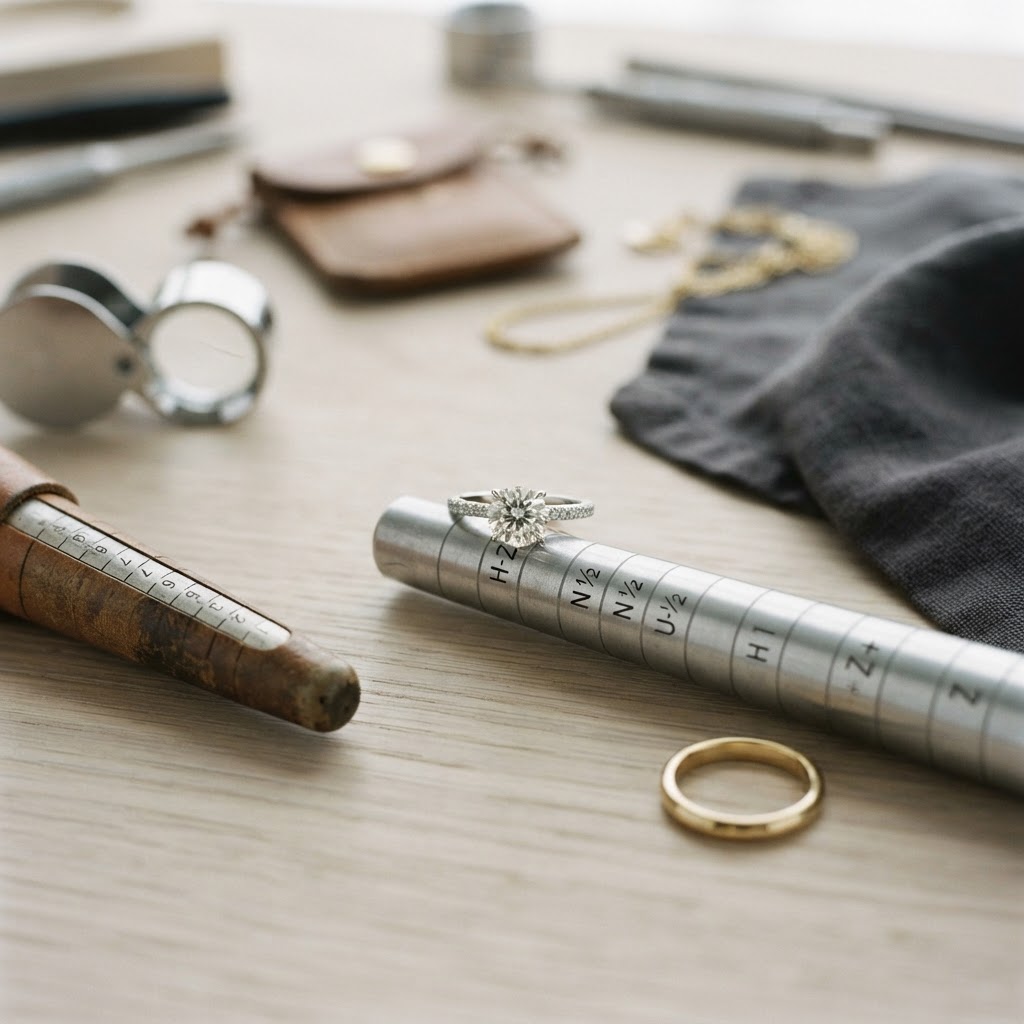
Measurement and Verification: Online Ring Sizer Protocols and UK Standards
A digital measurement is only as accurate as its calibration protocol. Most users encounter data discrepancies when they attempt to determine...
A digital measurement is only as accurate as its calibration protocol. Most users encounter data discrepancies when they attempt to determine dimensions across different jewellery brands. This inconsistency creates a logical fear of ordering a bespoke ring in an incorrect size. You require a reliable method to convert screen-based visuals into precise physical measurements.
This guide establishes a systematic framework for using a ring sizer online UK. It provides a structured workflow for accurate size determination through digital calibration and UK measurement protocols. You'll track your measurements using the alphabetical Wheatsheaf system and identify how biological factors cause a half-size fluctuation in your data.
We define the mechanics of the ISO 8653 standard and explain how band width affects the final fit. By following these clinical steps, you'll generate a verified data point for a ring maker tool. This process ensures your bespoke design maintains structural integrity and fits correctly. Every measurement follows a logic-driven path to ensure your data is ready for the manufacturing stage.
Key Takeaways
- Convert millimetres to the UK alphabetical Wheatsheaf system with mathematical precision to ensure data consistency.
- Calibrate your ring sizer online UK using ISO/IEC 7810 ID-1 cards to eliminate errors caused by varying display densities.
- Identify how diurnal cycles and temperature variables alter finger tissue volume to determine the optimal window for measurement.
- Transfer verified dimensions directly into the Ring Maker tool to maintain the structural integrity of bespoke platinum mounts.
Understanding UK Ring Size Standards and Geometric Parameters
The UK ring sizing protocol relies on the Wheatsheaf system. This alphabetical scale categorises the internal circumference of a band. Every letter corresponds to a specific millimetre (mm) value. Accuracy in this data collection stage is essential for the bespoke design service. A ring sizer online UK provides the initial snapshot of these dimensions. Most professional jewellers utilise these standardised increments to maintain cross-brand consistency.
This system provides a clear mathematical relationship between physical measurements and standardised labels. Precise data inputs prevent errors during the manufacturing of platinum mounts. You must treat these measurements as technical data points rather than estimates. This objective approach ensures the final product meets the required specifications for structural integrity.
The UK Alphabetical System Explained
The scale begins at size A, representing an internal circumference of 37.8mm. It extends to Z and beyond (Z+ sizes) for larger requirements. Each full letter increment represents a specific increase in circumference. Half-sizes are utilised to increase fit precision. These increments are vital for bespoke platinum rings where structural integrity is a priority. Small adjustments ensure the band remains secure without compromising comfort.
The UK system differs from international ring size standards. For example, the United States uses a numerical scale. European standards often use the internal circumference in millimetres, following ISO 8653. Understanding these conversions is necessary for verifying data from different sources. You should always confirm the specific standard used by a ring sizer online UK before recording your final measurement.
Circumference vs Diameter: Data Accuracy
Internal circumference is the preferred metric for measuring a finger directly. This measurement captures the entire perimeter of the digit. It accounts for biological variations in finger shape and knuckle width. Internal diameter is used when measuring an existing ring. This data point is useful for surprise engagements where the finger is unavailable for direct measurement.
Small deviations lead to fit failure. A 0.1mm discrepancy in diameter significantly alters the final comfort level. You should verify both metrics to ensure data redundancy. Once you have a verified size, you can input this data into the Ring Maker tool. This interface uses your precise measurements to calculate the required material for the mount and ensure a functional fit.
Online Measurement Protocols: Calibration and Accuracy Verification
Digital measurement tools require a physical reference point to ensure data validity. Screen display densities vary across hardware. A pixel-based measurement on a smartphone does not match the same measurement on a desktop monitor. This discrepancy necessitates a strict calibration protocol when using a ring sizer online UK. Without this step, the resulting size data is technically invalid for bespoke manufacturing. Precise display synchronisation is the only way to achieve parity between digital graphics and physical dimensions.
Standardisation is achieved through the use of universally recognised physical objects. The industry standard involves using an ISO/IEC 7810 ID-1 card. These cards maintain a consistent width of 85.6mm globally. By aligning this physical object with the digital interface, you create a 1:1 scale environment for your data collection. This process adheres to the geometric parameters defined in ISO 8653:2016, which dictates how internal circumferences are measured and recorded. Using a standardised card eliminates the variables introduced by different device manufacturers.
Step 1: Screen Calibration Methodology
Place a standard credit card or ID card against the display surface. Align the left edge of the card with the start of the on-screen calibration line. Adjust the digital zoom slider or interface controls until the right edge of the card matches the digital marker exactly. This process synchronises the software with your hardware's specific pixels-per-inch (PPI) rating. Verification is required after the initial adjustment. Use a physical metric ruler to confirm that the on-screen markers match a physical millimetre scale. Any deviation exceeding 0.1mm requires immediate recalibration to maintain data integrity.
Step 2: Digital Ring Matching
Select a ring that currently provides a comfortable fit on the intended finger. Place this ring flat against the screen over the digital sizing circles provided by the ring sizer online UK. Adjust the digital output until the circle matches the internal diameter of the physical ring. The digital circle must align perfectly with the inner edge of the mount. Do not include the metal of the band in this visual alignment. Record the resulting alphabetical size. This verified data point is now suitable for input into the Jewellove Ring Maker tool. If you require technical assistance with your data collection or wish to verify your snapshot, you can book a consultation with a specialist.
Comparison of Physical vs Digital Sizing Methodologies
Physical and digital methodologies serve distinct functions in the measurement workflow. Digital tools prioritise speed and accessibility for preliminary planning. Physical tools provide the tactile verification required for final manufacturing. A ring sizer online UK offers an efficient starting point for remote data acquisition. Professional procurement requires a comparison of these methodologies to ensure data accuracy and structural integrity.
The choice between methodologies depends on the required precision level. Digital snapshots are suitable for initial consultations. Physical gauges are necessary for finalising specifications. This dual-track approach minimises the risk of fit failure. It ensures that the recorded data aligns with the technical requirements of the workshop.
Physical Measurement Tools: Pros and Cons
Physical tools are categorised by material and precision levels. Plastic ring sizer belts are widely available and easy to operate. They allow for multiple measurements throughout a diurnal cycle to track tissue volume changes. However, plastic lacks the rigidity of precious metals. Professional metal sizer rings remain the industry standard for bespoke platinum commissions. These tools mirror the final product's physical behaviour and provide a precise snapshot of the required internal circumference.
The "Paper Strip" methodology is frequently cited in non-professional guides. This method has low reliability scores due to material deformation. Paper stretches during the measurement process, leading to significant data errors. Professional protocols also discourage the "String and Ruler" method. These techniques often result in 1.0mm deviations from UK ring size standards. Such errors are unacceptable for high-precision jewellery manufacturing where 0.1mm increments matter.
Digital Sizer Efficiency Analysis
Digital tools accelerate the initial stages of the custom design process. They allow users to generate data snapshots without waiting for physical kits to arrive by post. This efficiency is beneficial for preliminary budgeting and visualising mount proportions. A ring sizer online UK functions as a reliable facilitator for remote clients who require immediate results to begin their design journey.
Digital interfaces have specific limitations regarding knuckle-to-base ratios. A screen cannot measure the mechanical resistance required to pass a ring over a joint. This "drag" is a critical data point for long-term comfort and security. Physical verification is mandatory when selecting high-value loose diamonds. The structural integrity of a bespoke mount relies on a fit that accounts for both the digit's base and its widest joint. Relying solely on digital data for expensive commissions increases the risk of fit failure and subsequent resizing requirements.
Variables Affecting Measurement Precision: Temperature and Biological Factors
Finger dimensions are not static data points. Biological behaviour dictates that tissue volume fluctuates throughout a 24-hour cycle. These variations cause a finger to change by as much as half a ring size. A ring sizer online UK provides a snapshot of a single moment in time. You must account for these environmental and physiological variables to ensure the final data is reliable for manufacturing. Precision relies on understanding how blood flow and temperature centre the digit's physical state.
Data consistency is achieved through repeated measurement protocols. Single-point data collection is prone to error. You should treat the measurement process as a data-logging exercise over several hours. This approach mitigates the risk of capturing an outlier dimension caused by temporary biological states. It's the only way to establish a mean size that remains comfortable across all conditions.
Environmental and Biological Volatility
Temperature serves as a primary driver of measurement error. Cold environments trigger vasoconstriction, which reduces the circumference of the digit. High temperatures or physical exercise cause vasodilation, resulting in expanded tissue volume. You should avoid recording data immediately after exercise or exposure to extreme cold. The following protocol increases data reliability:
- Measure the intended finger three times at different intervals (morning, afternoon, and evening).
- Calculate the mean alphabetical size from these three snapshots.
- Ensure the sizer passes over the knuckle with slight mechanical resistance.
- Verify that the digit is at a neutral room temperature before starting the measurement.
Knuckle resistance is a critical security parameter. A ring must require a firm pull to pass over the joint. If the sizer slides off without resistance, the recorded size is too large. This leads to the potential loss of the finished piece during daily activity.
Geometric Variables: Band Width and Thickness
The geometry of the band significantly alters the perceived fit. Wider bands cover more surface area on the finger, which increases friction against the skin. Most professional standards require a half-size increase for any band measuring 5mm or wider. This adjustment compensates for the "squeeze" effect of a broader mount. If you're using a ring sizer online UK to design a wide wedding band, you must apply this mathematical offset to your baseline data.
Interior profiles also impact the final measurement requirement. A "comfort fit" profile features a domed interior that reduces the contact area with the skin. A "standard fit" profile is flat and provides more surface contact. You should also account for dominant hand discrepancies. The fingers on your dominant hand are typically half a size larger than those on your non-dominant hand. Always measure the specific finger intended for the ring rather than assuming symmetry between hands.
Integrating Measurement Data into the Custom Design Workflow
Data integration is the final stage of the measurement workflow. You transfer your verified alphabetical size into the Ring Maker tool interface to begin the technical specification of your piece. This digital environment uses your specific data to calculate the volume of platinum required for the mount. Precise inputs ensure that the structural integrity of the ring remains within technical tolerances. For clients based in Lanarkshire, this digital snapshot serves as the baseline for physical verification during a local design consultation.
Accurate sizing influences the geometric balance of the final product. A ring sizer online UK provides the necessary metrics to begin the procurement process with confidence. You should organise your size data within a centralised wishlist to facilitate future acquisitions. This structured approach allows for efficient management of multiple data points for different fingers or users across a single account. It ensures that every snapshot is logged and ready for manufacturing.
Bespoke Design Protocols
Verified size data is a prerequisite for custom design consultations. Proportions of centre stones must be scaled against the band's circumference to maintain visual and structural symmetry. Metal pricing snapshots are also generated based on the weight derived from your specific size data. Larger sizes require more raw material, which impacts the final quote. Accuracy is non-negotiable for pavé settings or full eternity bands. These styles feature stones set around the entire perimeter; physical resizing is technically complex and often impossible without rebuilding the entire mount from scratch. Getting the data right during the ring sizer online UK stage prevents these logistical failures.
Post-Procurement Verification and Care
If the initial measurement protocol fails, standard resizing procedures apply to most solitaire and three-stone designs. You'll need to submit a new data snapshot to the workshop for adjustment. Fit maintenance requires regular jewellery care and biannual inspections to ensure the band hasn't deformed over time. Changes in your physical profile or diurnal cycles may require data updates in your procurement wishlist. Collaborative design teams can also track size data for multiple users within a single management interface. This ensures consistency across complex bespoke projects involving multiple stakeholders or recipients.
Standardise Your Measurement Data for Manufacturing
Accurate data collection is the foundation of structural integrity in high-value jewellery. Utilising a ring sizer online UK requires strict adherence to calibration protocols to ensure display parity. You've identified how diurnal cycles and band geometry impact the final fit. These factors are critical when commissioning bespoke platinum and diamond pieces through a systematic workflow. Every data point must be verified to prevent fit failure in the finished mount.
Our Lanarkshire-based experts apply these precision-focused measurement protocols to every custom project. This methodical approach ensures your data is verified before the manufacturing stage begins. You now possess the tools to generate reliable dimensions for the Ring Maker interface. This objective process removes the uncertainty from remote procurement and aligns your specifications with professional standards.
Begin your custom design journey with technical confidence and verified data.
Frequently Asked Questions
How accurate is an online ring sizer for a UK purchase?
A calibrated ring sizer online UK is accurate within a 0.1mm tolerance when following the credit card calibration protocol. This method synchronises your display density with physical dimensions. However, digital tools only provide a snapshot of internal diameter or circumference. They don't account for the mechanical resistance of the knuckle. For high-precision platinum commissions, we recommend Lanarkshire clients use these digital results as a preliminary data point before final workshop verification.
What is the most reliable way to find my ring size at home?
The most reliable home methodology involves using a physical ring sizer belt in conjunction with a calibrated digital tool. This dual-track approach provides data redundancy. You should measure your finger at three distinct intervals during the day to find the mean alphabetical size. Jewellove provides a professional ring sizer online UK and physical kits to ensure your bespoke design data is precise. This systematic process minimises the risk of fit failure during the custom design workflow.
Can I use a ruler to measure my ring size in millimetres?
Using a standard ruler introduces a high margin of error due to parallax and visual estimation. A ruler measures internal diameter, but the UK alphabetical system relies on internal circumference. A discrepancy of just 0.5mm results in a full size difference. Professional protocols require digital callipers or calibrated sizing tools for 1:1 parity. Lanarkshire clients seeking structural integrity for loose diamonds should avoid manual ruler measurements in favour of standardised geometric tools.
Why do finger sizes change between the morning and the evening?
Diurnal cycles and temperature fluctuations cause significant changes in tissue volume. Finger circumference is typically smaller in the morning due to lower temperatures and reduced blood flow. Volume increases by the evening as activity and warmth centre blood flow in the extremities. This biological behaviour results in fluctuations of up to half a ring size. You must record your dimensions when your body is at a neutral temperature to ensure a consistent data snapshot.
Is there a difference in size between the left and right hand?
Biological asymmetry means your dominant hand is typically half a size larger than your non-dominant hand. This discrepancy is caused by increased muscle development and blood flow in the hand you use most frequently. You must measure the specific finger intended for the ring. Assumptions of symmetry lead to procurement errors. Lanarkshire clients should log separate data points for each hand within their Jewellove wishlist to maintain accurate records for future purchases.
What happens if I order a bespoke ring in the wrong size?
If a bespoke ring is ordered in an incorrect size, the workshop initiates a resizing protocol. Solitaire designs are adjusted by modifying the band, but pavé settings and eternity rings often require a complete rebuild to maintain structural integrity. This process incurs additional logistics and material costs. Clients in Lanarkshire can prevent these issues by attending a physical design consultation for final verification. Accurate initial data is the only way to ensure the mount remains secure.
How does the width of the ring band affect the size I should choose?
Wider ring bands cover more surface area and create more friction against the skin. You should increase your measurement by a half-size for any band measuring 5mm or wider. This mathematical offset ensures the ring remains comfortable without restricting blood flow. Narrower bands follow standard alphabetical sizing without adjustment. You can test these geometric variables using the Ring Maker tool to see how different widths impact the required material volume and final fit specifications.
Should I measure my knuckle or the base of my finger?
You must account for both the knuckle and the base of the finger to achieve a secure fit. The ring must slide over the knuckle with slight mechanical resistance to prevent accidental loss. Once seated at the base, the band should feel secure without causing tissue indentation. If your knuckle is significantly larger than the base, you may require a specialised sizing adjustment. Lanarkshire specialists can provide data on "comfort fit" profiles to manage these specific geometric requirements.