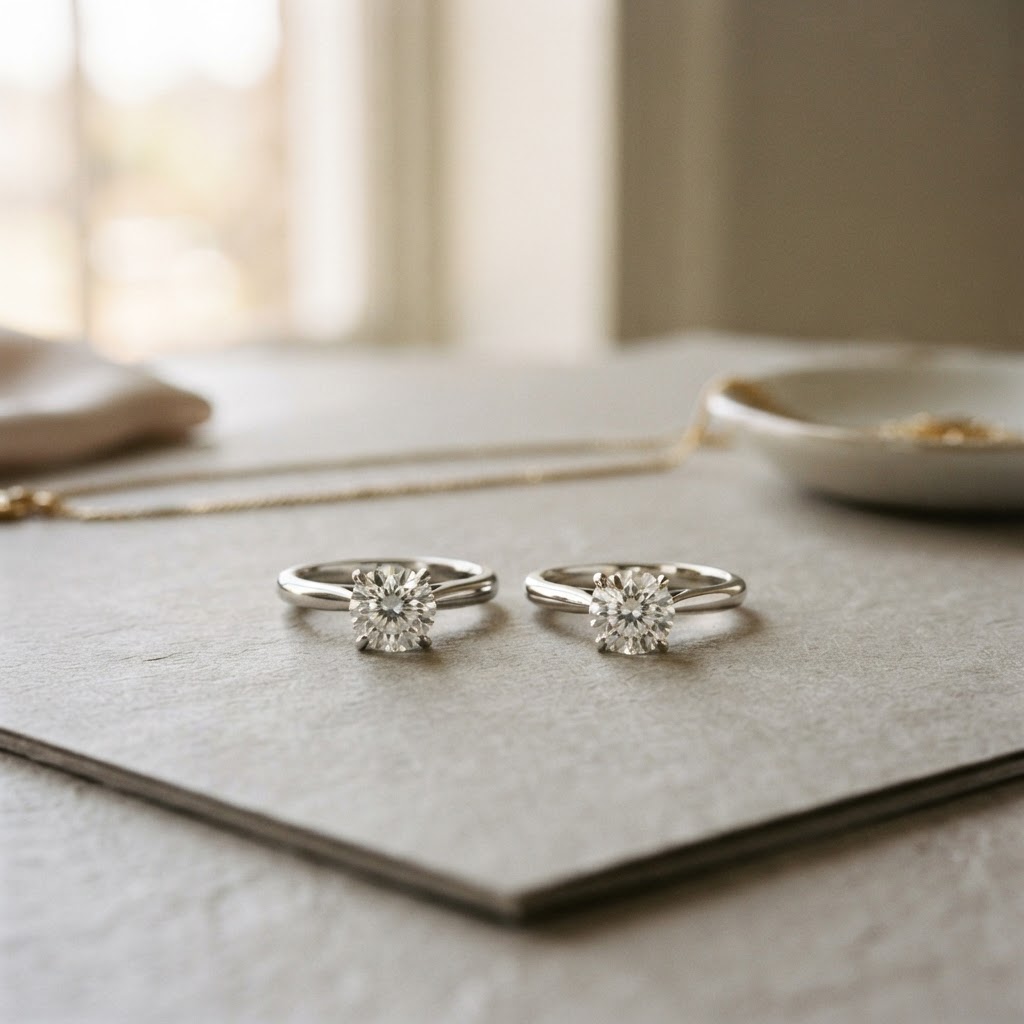
Platinum vs White Gold Ring: A Technical Comparison and Selection Guide
In 2026, platinum trades at approximately 40% of the price of gold per gram, yet a platinum ring setting typically costs 40% to 60% more than its...
In 2026, platinum trades at approximately 40% of the price of gold per gram, yet a platinum ring setting typically costs 40% to 60% more than its white gold counterpart. You likely recognise that these metals appear identical at the point of purchase, but their structural behaviours diverge over time. Selecting a platinum vs white gold ring involves more than an aesthetic choice; it's a technical decision based on material density and maintenance cycles.
This article provides a systematic analysis of the economic and structural parameters defining this choice. It delivers a clear data-driven framework for metal selection. It explains UK hallmarking standards and identifies why white gold requires periodic rhodium plating whilst platinum does not. You'll gain an objective understanding of long-term maintenance cost projections to ensure your procurement process is efficient and informed.
Key Takeaways
- Identify the purity standards for UK jewellery, specifically the 950 hallmark for platinum and the 750 hallmark for 18ct white gold.
- Evaluate the structural integrity of a platinum vs white gold ring by comparing metal displacement behaviours with gold erosion patterns.
- Establish a long-term maintenance schedule based on the rhodium plating requirements of white gold versus the natural patina development of platinum.
- Utilise the Ring Maker tool and real-time price snapshots to execute a data-driven material selection for bespoke designs.
- Assess the aesthetic lifecycle of each metal, focusing on colour stability and the technical differences between cool white and warm white profiles.
Material Composition and Purity Standards in the UK
Precious metal sales in the UK must adhere to the Hallmarking Act 1973. This legislation mandates independent verification of metal purity for items exceeding specific weight thresholds. For gold, this threshold is 1 gram. For platinum, the limit is 0.5 grams. These standards ensure transparency during the selection of a platinum vs white gold ring. Purity levels are categorised by parts per thousand, providing a clear data point for consumers.
Platinum Purity and Alloy Components
950 platinum consists of 95% pure metal and 5% alloy components. This high purity level qualifies the material as hypoallergenic. It is a functional choice for users with nickel sensitivities. Common alloy components include cobalt, ruthenium, and iridium. These elements enhance the metal's casting performance and surface hardness. Platinum's fundamental properties dictate its high resistance to corrosion and chemical attack. The "950" hallmark provides a verified snapshot of this material integrity. It confirms the metal's status as a premium industrial and jewellery asset.
White Gold Composition and the 18ct Standard
18ct white gold contains 75% pure gold. The remaining 25% consists of white metal alloys. This ratio corresponds to the "750" hallmark verification. Pure 24ct gold is unsuitable for structural jewellery use. It lacks the rigidity required to secure gemstones in complex settings. Manufacturers integrate palladium or nickel to transition the metal from its natural yellow hue toward a white profile. Palladium acts as an effective bleaching agent for high-value bespoke designs. Nickel is frequently utilised in lower-purity 9ct (375) alternatives to reduce procurement costs. These alloy choices impact the metal's long-term colour stability.
Standardisation allows for an objective comparison between these two materials. Platinum maintains its natural colour profile throughout its lifecycle. White gold relies on specific alloy integration and surface treatments to achieve a similar aesthetic. Use the platinum vs white gold ring data parameters to assess which purity standard aligns with your structural requirements. Each hallmark serves as a reliable indicator of metal value and composition.
Physical Property Analysis: Density, Hardness, and Structural Integrity
Technical comparisons of a platinum vs white gold ring must begin with mass and volume metrics. Platinum is one of the densest precious metals available for jewellery manufacturing. Its density is approximately 21.45g/cm³. In contrast, 18ct white gold has a density of approximately 15.6g/cm³. This 37% variance in density means that two rings of identical dimensions will possess different weights. Platinum provides a substantial feel on the finger. Many users associate this increased mass with higher perceived value and durability.
Density and Weight Metrics
Density directly influences the volume-to-weight ratio in ring design. A standard 2mm wedding band cast in platinum will weigh significantly more than the same band in 18ct white gold. You can calculate this difference by applying the density constant to the ring's volume. High density also correlates with long-term material retention. Dense metals are less prone to thinning over decades of wear. This makes platinum a reliable choice for items intended for daily use over a lifetime.
Hardness (Vickers Scale) vs Malleability
Material hardness is measured using the Vickers scale (HV). 18ct white gold typically registers between 125 and 140 HV. Annealed 950 platinum is softer, often ranging from 80 to 110 HV. However, these numbers don't tell the full story of structural integrity. White gold is harder but more brittle. It's prone to metal erosion. When you scratch gold, a small amount of metal is removed from the surface. Platinum is more ductile. According to Platinum's fundamental properties and data found in GIA's guide to white metals, platinum experiences metal displacement rather than loss.
When platinum is scratched, the metal moves aside but remains on the ring. This creates a natural patina over time. It also ensures the ring does not lose its structural mass. This behaviour is critical for securing high-value stones. Platinum claws are less likely to snap under mechanical stress. They bend instead of breaking. This malleability allows a jeweller to push the metal over a diamond with greater precision. It creates a secure, permanent grip on the gemstone.
For those prioritising the security of loose diamonds, platinum's displacement properties offer a technical advantage. It maintains the integrity of the setting even as the surface accumulates wear. You should factor these wear patterns into your decision-making process. Evaluate your lifestyle and daily activity levels before selecting your metal. If you require a setting with maximum resistance to metal loss, platinum is the superior technical option.
Long-term Maintenance Protocols and Economic Impact
Selecting a platinum vs white gold ring requires a multi-year economic projection. Initial procurement costs represent only a snapshot of the total investment. White gold requires recurring chemical treatments to maintain its aesthetic profile. Platinum involves different mechanical maintenance protocols. Use the metal price snapshot tool to track real-time market fluctuations before finalising your bespoke design. This systematic approach ensures budget transparency over the ring's entire lifecycle.
The Rhodium Plating Process
White gold isn't naturally white. It's an alloy with a yellowish base. Manufacturers apply a rhodium electroplating layer to achieve a bright, reflective finish. This layer is sacrificial. Friction from daily wear removes the plating over 12 to 24 months. Signs of depletion include yellowing on the underside of the band and a loss of lustre. Restoring the finish requires a professional cleaning and re-plating cycle. This recurring task adds a predictable expense to the long-term maintenance budget. Failure to maintain the plating results in a visible shift in the metal's colour profile.
Platinum Care and Polishing Requirements
Platinum maintenance focuses on surface texture rather than chemical restoration. It doesn't require plating because the metal is naturally white. It develops a "patina" as surface scratches accumulate over time. This occurs through metal displacement. The metal isn't lost; it's simply moved. You can restore the original mirror finish through professional polishing. This process doesn't compromise the ring's structural mass. Following UK hallmarking requirements ensures your metal purity is verified and legally compliant at the point of sale. This verification is essential for maintaining the asset's long-term value.
Consider a 10-year operational window for your jewellery. White gold often has a lower initial price point. However, five to ten plating cycles significantly increase the total cost of ownership. Platinum has a higher initial setting cost due to its density and the specialised labour required for its high melting point. It eliminates the recurring plating expense entirely. Economic data from 2026 suggests platinum is the more efficient choice for long-term daily wear. It maintains its structural integrity without the need for chemical coatings. Use a data-driven framework to calculate which metal aligns with your maintenance capacity and financial objectives.
Aesthetic Lifecycle: Colour Retention and Surface Wear
Aesthetic performance depends on the metal's natural colour stability and its response to mechanical abrasion. A platinum vs white gold ring will exhibit distinct visual changes over a five-year period. These changes affect the reflective index of the surface and the perceived colour of the centre stone. Understanding these shifts is essential for maintaining the intended appearance of high-value jewellery.
Visual Comparison of Metal Tones
18ct white gold achieves its characteristic "bright white" finish through a sacrificial layer of rhodium. This finish is highly reflective and neutral. As the plating wears, the underlying warm white tone of the 750 gold alloy becomes visible. This transition creates a chromatic inconsistency across the band. Platinum possesses a naturally cool, steely white tone. It doesn't rely on coatings. Aged platinum develops a darker, gunmetal-like appearance. This tone remains consistent throughout the metal's depth. It doesn't shift toward yellow.
Pairing metal with loose diamonds requires an analysis of colour grading. Stones in the D-F range (colourless) benefit from the bright neutrality of rhodium-plated gold or high-purity platinum. Diamonds in the G-H range (near colourless) may appear whiter when set in platinum due to the metal's slightly darker, steely contrast. You should evaluate how the metal tone interacts with the specific nitrogen levels in your diamond. This interaction dictates the overall visual temperature of the setting.
Surface Wear Patterns
Surface wear alters how light interacts with the ring. White gold is susceptible to micro-scratching. This process involves the actual removal of metal particles. These scratches create a dull surface that reduces the metal's reflective index. Platinum exhibits burnishing behaviour. When the surface is impacted, the metal shifts rather than erodes. This displacement creates a textured patina. This patina is a collection of microscopic ridges and valleys on the metal's surface.
Technical differences in wear patterns affect the refractive quality of the ring:
- Gold Erosion: Results in a loss of sharp edges and a reduction in band thickness over decades.
- Platinum Displacement: Maintains the original mass but results in a matte surface texture.
- Refractive Quality: A polished surface provides specular reflection. A patina surface provides diffuse reflection.
You can restore the specular reflection of either metal through professional refinishing. However, the frequency of these interventions impacts the metal's lifespan. Use the Bespoke Design Service to select a metal that aligns with your preferred aesthetic lifecycle and maintenance capacity. Platinum provides a stable colour foundation whilst white gold offers a higher initial brightness that requires periodic restoration.
Systematic Selection Framework: Data-Driven Material Procurement
Material procurement for high-value jewellery is an objective workflow. It requires a methodical alignment of lifestyle data, budget parameters, and structural requirements. Selecting a platinum vs white gold ring is the final step in a technical decision tree. Use the Ring Maker tool to simulate design outcomes in real time. This interface allows you to test how specific architectures interact with different metal densities before committing to a bespoke build.
Lifestyle and Durability Mapping
Your daily activity level dictates the necessary metal performance. High-impact lifestyles involving manual labour or frequent abrasive contact require the structural integrity of 950 platinum. Platinum's displacement behaviour ensures that the ring's mass remains constant despite surface wear. Office-based environments with lower mechanical stress are suitable for the high-lustre finish of 18ct white gold. You must decide between a maintenance-free patina and a high-lustre profile that necessitates periodic rhodium plating. Intricate or lightweight designs often benefit from the rigidity of white gold alloys. Heavier, minimalist bands are better suited to platinum's density.
Procurement Strategy for Bespoke Rings
The Bespoke Design Service utilizes Lanarkshire design protocols to ensure every setting meets strict integrity standards. Integrating metal price snapshots into your budgeting phase is essential for financial transparency. In August 2026, platinum trades at approximately 40% of the price of gold per gram. However, a platinum setting typically costs 40% to 60% more due to its density and complex manufacturing requirements. You should balance this setting cost against your desired diamond carat weight to optimise your total investment.
Follow this checklist for a systematic acquisition:
- Carat Weight Analysis: Use the Diamond Quiz to identify the optimal stone parameters for your metal choice.
- Dimensional Accuracy: Request a Ring Sizer to verify fit metrics before the customisation phase begins.
- Maintenance Projection: Calculate the 10-year cost of rhodium plating versus the one-time premium for platinum.
- Hallmark Verification: Ensure the final product meets UK 950 or 750 purity standards.
Selection is data-driven. By categorising your requirements into these functional areas, you eliminate the uncertainty associated with traditional retail experiences. This framework provides the logic needed for a precise and durable jewellery investment. It ensures your choice between a platinum vs white gold ring is based on verified material performance and long-term utility.
Finalising Your Material Procurement Strategy
Executing a final decision on a platinum vs white gold ring requires a synthesis of structural and economic data. You've identified that 950 platinum offers superior material retention through displacement. You've also recognised that 18ct white gold provides a high-lustre finish at the cost of recurring rhodium plating cycles. These technical parameters dictate the long-term utility and maintenance budget of your jewellery.
Our specialist Lanarkshire bespoke design service applies these protocols to every custom project. We integrate real-time metal price snapshots and technical 4Cs diamond grading to ensure procurement accuracy. This systematic approach eliminates the variables associated with standard retail models. You now possess the data-driven framework necessary to secure a durable and high-value asset.
Access the Ring Maker Tool to compare platinum and white gold specifications and begin your customisation process today. We look forward to facilitating your bespoke design.
Frequently Asked Questions
Is platinum more durable than 18ct white gold for an engagement ring?
Platinum offers superior long-term durability regarding structural mass. It displaces metal during contact whilst 18ct white gold erodes. This displacement creates a surface patina that protects the ring's integrity. For Lanarkshire clients seeking a bespoke engagement ring, this material behaviour ensures the setting remains secure over decades. White gold requires more frequent monitoring of claw thickness due to gradual metal loss. It is harder but more brittle than platinum.
How often does a white gold ring require rhodium plating in the UK?
Standard maintenance for white gold in the UK suggests re-plating every 12 to 24 months. Daily-wear rings experience higher friction levels that accelerate rhodium depletion. You'll observe a transition from bright white to a yellowish hue as the plating thins. Our Lanarkshire design protocols recommend scheduling professional cleaning and plating to maintain the original aesthetic profile. Frequency depends on individual wear patterns and skin acidity levels.
Why is platinum more expensive than white gold if the metal prices are similar?
Higher procurement costs for a platinum vs white gold ring stem from metal density and manufacturing complexity. Platinum is significantly denser, requiring more grams of metal to cast the same design. It also possesses a higher melting point. This necessitates specialised equipment and increased labour hours for finishing. Use our real-time price snapshots to track market fluctuations and calculate the specific cost variance for your bespoke configuration.
Does platinum scratch more easily than white gold?
Surface scratches occur more readily on platinum due to its lower Vickers hardness compared to 18ct white gold. However, these microscopic marks don't represent metal loss. The metal simply shifts to create a matte patina. White gold is more resistant to light scratches but loses physical mass when the surface is abraded. This technical distinction is a primary factor in the platinum vs white gold ring selection framework for active users.
Can I change a white gold ring to platinum later?
A white gold ring cannot be chemically or physically transformed into platinum. These are distinct elements with different atomic structures. If you wish to switch materials, you must initiate a new project through our Bespoke Design Service. This involves removing your loose diamonds from the existing 18ct gold setting and manufacturing a new 950 platinum mount. This process ensures the structural integrity and hallmark verification of the final piece.
Is platinum or white gold better for sensitive skin or metal allergies?
950 platinum is the optimal choice for individuals with metal sensitivities or allergies. It is 95% pure and naturally hypoallergenic. 18ct white gold is an alloy containing 75% gold and 25% other metals, which may include nickel or palladium. Nickel is a common allergen that can cause skin irritation as the rhodium plating wears thin. Platinum provides a chemically stable and irritation-free experience for long-term daily wear.
Will my white gold ring turn yellow over time?
White gold will exhibit a colour shift over time. The natural alloy possesses a warm, yellowish undertone that is masked by a rhodium electroplating layer. As this sacrificial layer erodes through daily contact, the underlying yellow hue becomes visible. This is a normal technical characteristic of the material. Restoring the bright white finish requires a professional re-plating process to replace the rhodium coating on the 750 gold base.
How does the weight of platinum compare to white gold on the finger?
Platinum feels significantly heavier on the finger than white gold. It has a density of approximately 21.45g/cm³ compared to 15.6g/cm³ for 18ct white gold. This 37% increase in mass is noticeable in identical designs. Many users in Lanarkshire prefer this substantial weight as it conveys a sense of permanence and value. You can verify your size requirements using our Ring Sizer to ensure the additional mass remains comfortable.